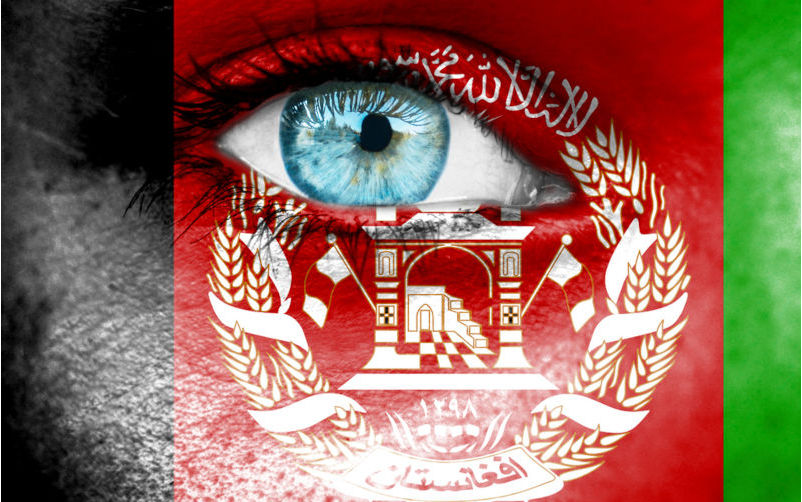
Afghanistan silence is a dangerous illusion
December 3, 2025
As Afghanistan disappears from global headlines, media neglect enables extremist resurgence, regional instability, and a deepening humanitarian crisis.
In late September 2025, Afghanistan plunged into digital darkness as nationwide internet blackout severed the country from the world.
From social media platforms to international flight coordination, virtually every aspect of modern connectivity was disrupted, leaving the population isolated. Yet this crisis barely registered in Western headlines, eclipsed by other global events.
Four years after the fall of Kabul, Afghanistan has largely disappeared from mainstream media coverage, even as extremist threats emanating from its territory continue to escalate and pose risks that could extend far beyond the region. This neglect is not merely an editorial oversight; it constitutes a dangerous abdication of journalistic responsibility that allows grave security and humanitarian threats to fester unchecked.
Within Afghanistan, the media environment is markedly more dire. In its 2025 World Press Freedom Index, Reporters Without Borders ranks the country 175 out of 180 – its lowest position ever – citing the systematic closure of independent outlets, widespread arrests of journalists, routine torture, and enforced self-censorship.
A United Nations report published in November 2024 documented how Taliban-appointed “minders” are now embedded in newsrooms, directly dictating editorial content and vetoing stories deemed unfavourable to the regime. Female journalists, who once constituted a significant proportion of the profession, have been entirely excluded from on-air roles and, in many cases, driven out of the industry altogether.
This suffocating domestic stranglehold severely restricts international correspondents’ access to verifiable, on-the-ground information, thereby perpetuating a self-reinforcing cycle of journalistic silence.
While global headlines are consumed by other crises, Afghanistan remains a volatile crucible of violent extremism. The Islamic State of Khorasan Province (ISIS-K) – ostensibly the Taliban’s principal rival – has markedly intensified its operations, carrying out more than 20 attackS in 2025 alone, including a suicide bombing in Kabul that claimed fourteen lives.
United States intelligence assessments now warn that ISIS-K possesses both the intent and the growing capability to project attacks into Europe and North America within a matter of months, exploiting Afghanistan’s porous borders and persistent intra-Taliban factionalism. Meanwhile, al-Qaeda, far from being eradicated, has quietly reconstituted itself under Taliban protection, re-establishing training camps in the eastern provinces and resuming long-range attack planning against Western targets.
This latent volatility erupted in October of 2025 with the most serious armed clashes between Taliban forces and the Pakistani military since the 2021 takeover. The confrontation was precipitated by Pakistani airstrikes targeting Tehreek-e-Taliban Pakistan (TTP) sanctuaries in Afghanistan’s eastern provinces, and Kabul itself. The ensuing skirmishes resulted in dozens of fatalities on both sides and led to the indefinite closure of critical border crossings, notably Torkham and Chaman.
Islamabad has repeatedly accused the Taliban regime of providing safe haven to TTP militants, who have sharply escalated attacks inside Pakistan, culminating in a suicide bombing in Islamabad on 11 November 2025 that claimed 12 lives. A fragile ceasefire, initially brokered in Doha and subsequently extended during talks in Istanbul, remains precarious with Russia, Iran, and Turkey attempting to mediate amid persistently stalled negotiations.
These escalating confrontations starkly illustrate how the Taliban’s unwillingness or inability to curb cross-border extremist networks by actively destabilising the wider region – yet they have scarcely penetrated the prevailing veil of international media indifference.
Geopolitical calculations are central to this pervasive media amnesia. With the withdrawal of NATO forces complete, Afghanistan no longer possesses the strategic salience – or the ‘vital national interest’ framing – that once guaranteed sustained Western journalistic attention. Major donors, including the European Union, the United Kingdom, and the United States, now route the bulk of their humanitarian and budgetary assistance through opaque back-channel mechanisms, thereby minimising public scrutiny that might reveal the extent to which such aid indirectly sustains the Taliban administration. This deliberate evasion occurs against the backdrop of an accelerating erasure of women’s rights – a process Human Rights Watch has aptly characterised as an “intensified crackdown” – yet one that elicits little sustained international outrage.
The October 2025 border clashes, which displaced thousands of civilians and precipitated a 54 per cent collapse in bilateral Pakistan–Afghanistan trade for that month alone, vividly demonstrate how the absence of consistent global scrutiny emboldens the Taliban regime to confront and defy its neighbours with virtual impunity.
This systematic erasure carries profound and far-reaching consequences. In the absence of sustained international scrutiny, the Taliban regime evades meaningful accountability for providing sanctuary to terrorist networks whose operational planning continues to target Western capitals.
At the same time, authentic Afghan voices – women’s rights defenders, exiled intellectuals, and clandestine journalists operating inside the country – are progressively marginalised and silenced, thereby perpetuating a humanitarian catastrophe of staggering proportions: nearly half the population now faces acute food insecurity and the imminent threat of famine.
Renewed, rigorous coverage must not be misconstrued as an act of charity; it is an imperative of collective self-preservation.
Media organisations and international platforms have an obligation to invest in secure, encrypted reporting technologies, to amplify the work of diaspora and underground Afghan journalists, and to reframe Afghanistan not as a concluded chapter of yesterday’s war, but as a continuing source of transnational risk that demands vigilant attention.
In an era defined by hyper-connectivity, the near-total opacity now enveloping Afghanistan should serve as a stark wake-up call to the global community. Deliberate indifference does not neutralise the threat; it merely permits it to metastasise unseen in the shadows.