America’s justification for attacking Venezuela: Part 1 – a calculated insult to us all
December 3, 2025
The United States’ escalating actions against Venezuela reveal more about imperial power, criminal methods and strategic denial than any genuine concern about drugs or rule of law.
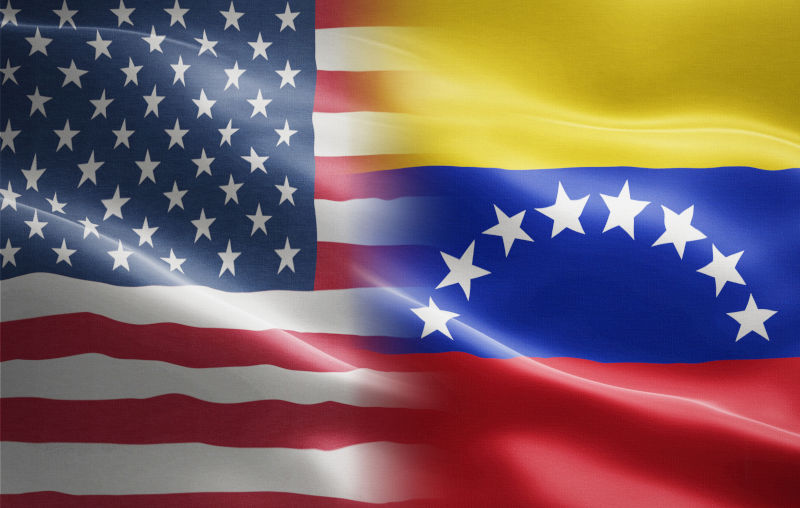
Australia, and all the other nation states on the planet share a common status: in terms of the rule of law – domestic and international - and mutual respect, we are irrelevant to whatever grand strategic purposes the United States is bent on achieving. The current strategy against Venezuela which, in plain terms, involves serial murder on more than 80 counts on the high seas, internal destabilisation, and the threat of invasion, is but the latest example of the antics of a rogue superpower.
To the extent that Australian governments (and others for that matter) remain silent they debase themselves: their ritual declarations of commitment to rules-based orders less an indication of a strong principle than merely a weak sentiment. Moreover, it is so unnecessary and cowardly, and so very dangerous.
Unnecessary because what is on offer in this fiasco is the projection of an American psychosis – in this case concerning a widespread addiction to dangerous drugs - on to Venezuela (among others).
It takes the form of delusions and disorganised thinking and is more a symptom of any number of causal factors in societies and organisations under severe physical and mental stress and trauma. Overall, the attribution of cause, or causes for the dire predicament is elsewhere: American exceptionalism assumes America’s essential purity; it is the non-American world that infects.
This is the stuff of fable. Or perhaps Madison Avenue without the sophistication of the Brothers Grimm or Hans Christian Andersen. And even then the advertising agencies might pass on a contract that would require sanistising the very special relationship that the United States has with the interface of politics and the world of drugs.
Given this focus, if the literature (reports, sworn testimony, empirical evidence resulting from robust research) relating to the period since the entry of the United States into World War II is consulted, the immediate impression is that one is reading an extended narrative of a government-sanctioned global organised crime syndicate operating continuously for 85 years, and counting.
Strictly speaking, a single focus rapidly reveals fractures requiring their own focus. Thus, and this list is only indicative, the record reveals: close relationships with (officially designated) organised crime and / or war criminals in the United States; Central America; and Central, South, and Southeast Asia.
In the research conducted by Alexander Cockburn and Jeffrey St. Clair on the infamous _Operation Paperclip_ – which brought over 1,600 Nazi scientists to the US – the record is of the CIA and other agencies facilitating their transfer from Nazi death camp laboratories to the US where they worked on chemical and biological agents. Some of these were subsequently tested, in breach of all relevant codes of ethics, on black people and patients in mental hospitals.
The reasons for this enmeshment remain the same. It is either a case of supporting drug-running regimes in order to achieve a strategic advantage or acquiring a superiority in the use of drugs which can alter the behaviour of individuals, large crowds, or whole communities.
They are marked by four defining features. First, all are self-destructive criminal enterprises notwithstanding the attempts to legalise some of them. Second, all eventually qualify as “blowback” - the unintended and unwanted consequences of the covert actions in question. Third, the operational membrane between them is porous. And fourth, there is an inevitability to the confused analysis that attends these outcomes.
Consider the current situation– the US buildup in the Caribbean and off the Pacific coasts of Colombia and Peru. Nowhere in Trump Administration pronouncements is it seen as an unsatisfied demand problem. Rather, the world is expected to believe that the crisis in American drug use is the result of an overwhelming supply, predominantly of opioids such as fentanyl to which Americans succumb in the hundreds of thousands. Venezuela is named as a principal cause, and so must be attacked.
To believe this requires substituting the Trump administration’s’ preferred reality for the substantial and relevant body of expert knowledge and understanding of drug production and distribution in Central America.
The region – which for current purposes includes Colombia, Costa Rica, El Salvador, Guatemala, Honduras, Mexico, Nicaragua, Venezuela, and Trinidad and Tobago – is widely described as a “narco free-for-all.”
The fast boats that are being sunk and their crews which are being murdered on the high seas are not, however, even if carrying drugs, headed for the United States. They have sufficient range to reach Trinidad and Tobago. From there, cargos of cocaine and marijuana would be shipped onwards to West Africa, Europe, and the US.
Fentanyl, manufactured from precursors imported from China, on the other hand, is smuggled into the US, mainly from Mexico and usually by US citizens. Thus, if the source and distribution of opioids are the problem, and not the other forms of drugs, the wrong target is being attacked. Or there is an ulterior motive for the attacks.
This conclusion is underlined by the fact that, hitherto, the US has not deployed force at current levels in the Carbbean-Pacific area since the Cuban Missile Crisis of 1962. And also, by President Trump’s decision to pardon the former President of Honduras, Juan Orlando Hernandez, recently convicted after being extradited to the US and sentenced to a 45-years in prison for, inter alia, partnering with cocaine traffickers.
Could the ulterior motive relate in some way to the fact that, beneath the ground, there is a vast wealth that dwarfs whatever substance processing and manufacturing takes place above it?
Indeed, a brief inventory of these natural resources are more than sufficient to place Venezuela is the same category as other lust-objects in President Trump’s gaze. Consider their size and world ranking of known reserves:
Oil: 303 billion barrels, #1
Natural gas: 201 trillion cubic feet, #8 (and possibly #4)
Gold: 8,900 tons, #1
Iron Ore: 14,600 million tons, #8
Bauxite: 320 million tons, #12
Nickel: 28.9 million tons, #1
To this schedule should be added Copper and Coltan in amounts yet to be proven and / or certified.
It is here that scepticism must be accompanied by cynicism: the rational questioning mindset that requires evidence and a logical train of thought before accepting claims needs to be reinforced when it finds that the rationalisation offered – another war on drugs – is but a distraction from the underlying reality which is a blatant display of imperial self-interest pursued by criminal means.