Beijing makes domestic spending its top priority – Asian Media Report
December 20, 2025
From China’s new investing in people strategy to Thailand’s threat to continue border fighting, revelations about Korea’s martial law bid, South Asia’s climate emergencies, the restoration of democracy in Bangladesh, and Seoul’s imaginative food waste scheme, the latest Asian media coverage highlights our region’s pressures, problems and opportunities.
China is mounting a top-level campaign backing a shift in its economic strategy to a systematic attempt to stimulate domestic demand and improve social welfare. It is aimed at encouraging consumers to open their wallets.
Hong Kong’s South China Morning Post said the new imperative was labelled “investing in people”.
It said the concept was first raised in the Communist Party’s recommendations in October for the next five-year plan and endorsed by the central economic work conference, held earlier this month to set out the policy priorities for 2026.
A book explaining the five-year plan proposals defined investing in people as empowering people by boosting public investment in such areas as childcare, elderly care, health, education and training.
“The return from investing in physical assets is declining while we have long underinvested in livelihoods and comprehensive human development,” the book said. “ In the transformation of growth towards a demand- and innovation-driven pattern, it is imperative to increase investment in people.”
Latest figures show an almost stagnant economy, underscoring the need to stimulate demand. Retail sales in November grew by only 1.3 per cent, year on year, SCMP reported – the sixth straight month of a slowdown in sales. Fixed asset investment fell by 2.6 per cent in the January to November period.
“The deceleration in consumption growth and the deepening property slump underscore the challenges Beijing faces in revitalising the economy," the paper said.
The central economic work conference – an annual meeting of the party’s Central Committee and the State Council, China’s cabinet – pledged to fully tap the country’s domestic market potential.
China Daily, an official English-language newspaper, said the conference put “boosting domestic demand” at the top of economic priorities for next year.
It also reported a statement by the Ministry of Commerce, the People’s Bank of China (the central bank) and the National Financial Regulatory Administration pledging stronger financial support for consumer spending.
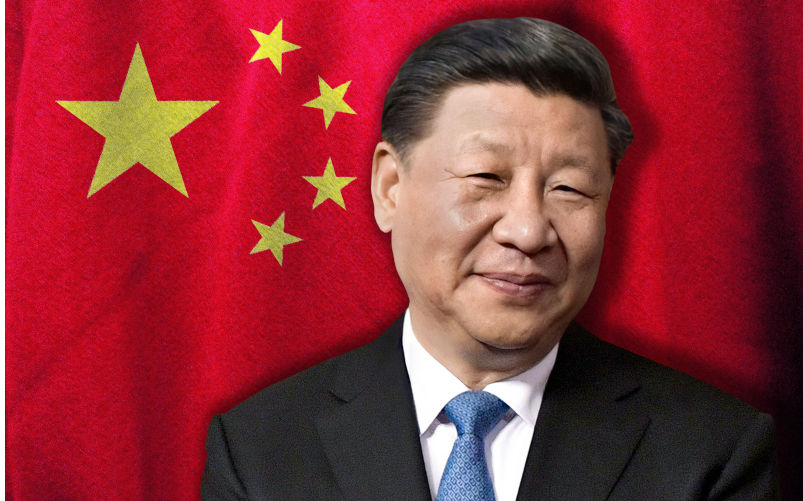
The paper quoted President Xi Jinping as saying, in an article in Qiushi Journal, the party’s flagship magazine, that expanding domestic demand was crucial for economic stability and security.
It was not a temporary measure but a strategic move, Xi said.
Thai PM triggers elections, hoping for battlefield success
Thailand will go to the polls on 8 February, even if the border war with Cambodia is still causing deaths and chaos in nearby provinces.
The country’s Election Commission said this week it could manage elections in the provinces bordering Cambodia, The Nation news site said.
About 400,000 people had been evacuated and were housed in shelters, it said.
Thai Prime Minister Anutin Charnvirakul dissolved the House of Representatives on 12 December, automatically triggering an election that had to be held within 45 to 60 days. The commission announced the date this week.
Bangkok Post columnist Veera Prateepchaikul said Anutin, who leads a minority government, dissolved parliament because he faced a no-confidence motion. He would have been ousted from government if he had allowed the debate to take place.
Veera, a former Bangkok Post editor, said with nationalistic fever running high, success on the battlefield could turn into votes for Anutin’s Bhumjaithai Party.
But many voters remain undecided on which party they would support. Nikkei Asia, the online news and business magazine, said a recent poll found 40 per cent of voters did not know who they wanted to be prime minister.
Fighting between Thailand and Cambodia broke out again early this month, ending a peace deal declared by US President Donald Trump. He spoke to the Thai and Cambodia leaders on 12 December and said later they had agreed to stop all shooting but the fighting continued the next morning.
Nikkei Asia said bluntly: “Trump fails in renewed bid to end Thai-Cambodia border clashes.” It noted that Anutin contradicted a Trump claim that a “roadside bomb” that killed a Thai soldier was an accident. “Thailand will continue to perform military actions until we feel no more harm and threats to our land and people,” Anutin said.
Senior journalist Luke Hunt said on Wednesday that Thai F-16 fighters were striking deep inside Cambodia territory. Writing from Cambodia for ucanews.com, the Catholic Asian news site, Hunt said aerial bombardments were reported 90 kilometres east of the border, striking the edge of Seam Reap province, home of the Angkor Wat temples.
He said Thailand was insisting that Cambodia must be the side that initiated a ceasefire.
‘We’re screwed,’ Yoon’s wife says of martial law bid
Former South Korea President Yoon Suk Yeol declared martial law on 3 December 2024, citing as justification opposition budget cuts and the impeachment of government officials. Not so, special counsel Cho Eun-seok said this week: Yoon started planning his martial law bid as early as October 2023.
The December timing was planned to minimise the chances of US intervention, as the declaration would coincide with the political transition following the presidential election the previous month.
Cho led a special team that investigated over six months Yoon’s failed martial law attempt. The team found Yoon mentioned martial law to his aides many times, starting shortly after his inauguration in May 2022, The Korea Times reported. Preparations began to intensify late in 2023.
Yoon and his associates planned to seize legislative and judicial authority and suppress opposition forces, the paper said.
The team found that Kim Keon Hee, Yoon’s wife, was not involved in the martial law plan, The Korea Herald said. Rather, Kim was upset and the couple had argued. “We’re screwed because of you,” she told Yoon, the investigation team found.
The remark suggested that Kim had her own plans and they had been derailed by Yoon’s action, the team said.
Viewed against the backdrop of Korea’s history of military coups, the team’s findings against Yoon were troubling and immeasurably saddening, The Korea Times said in an editorial.
“Yoon’s motives … provoke stirring questions about how person of such standing could regard constitutionally provisioned presidential power as a personal tool,” the editorial said.
It said Korea would have to wait for the court to hand down its verdict. But it said: “Yoon deserves heavy punishment for his seemingly heinous criminal activities again the country and its people.”
Note: The Herald said the Seoul Central District Court would deliver its verdict on Yoon’s separate obstruction of justice charge, relating to his efforts to hinder attempts to arrest him, on 16 January.
Divided South Asia must unite on climate
South Asia, home to almost two billion people, is warming more rapidly than the rest of the world. A temperature increase of 1.5 degrees Celsius is not in the feared future, says climate activist Aisha Khan. It is the current experience of millions.
“For decades, the region’s political energy has been consumed by border disputes, identity politics, and historical grievances,” says Khan, the chief executive of Pakistan’s Civil Society Coalition for Climate Change. “Yet none of these rivalries will matter if climate change renders our lands uninhabitable and our economies unviable.”
Glaciers in the Third Pole (the high mountain region, with the world’s third-largest ice mass) are melting rapidly, she says, threatening water security in Pakistan and India. Recurrent droughts are driving migration and deepening poverty in Afghanistan. Glacial lake outburst floods are a threat in Nepal. Bangladesh faces rising sea levels.
The World Bank estimates that South Asia could lose up to 10 per cent of its GDP by mid-century, Khan writes in an op-ed in Pakistan’s Dawn newspaper. Agriculture is under threat from high temperatures and unpredictable rainfalls. Cities like Lahore, Delhi and Dhaka are suffering from smog and from water shortages. Health systems are collapsing under the stress of diseases and heat-related illnesses.
For the poorer people of South Asia, Khan says, adaptation is not a policy debate, it is a matter of daily survival.
The real threat to regional stability does not lie across a frontier, she says. “It rests in its atmosphere, rivers and the Third Pole that bind the landmass.
“… [L]ogic suggests that the region cannot afford another century of hate and hostility.”
Bangladesh elections will forge political future
Bangladesh is moving to restore democratic government and introduce governance reforms following last year’s student-led uprisings that forced former Prime Minister Sheikh Hasina out of office and into exile in India.
Nobel laureate Muhammad Yunus, leader of the interim government installed after the protests, has set 12 February as the date for the elections. Yunus has faced fresh protests over delays in promised reforms and initially avoided setting a date. Eventually, he announced elections would be held in June 2026, before public pressure forced him to move the date to April – and then to February.
An essay in The Diplomat, the Asian online news magazine, says the election is highly significant as voters will choose new legislators and take part in a referendum on a reform package known as the July Charter.
The package, developed after last year’s uprising, includes proposals to curb executive powers, strengthen the independence of the judiciary, enhance the autonomy of state institutions, including the election commission, and prevent the misuse of law enforcement agencies.
The essay, by political analyst Bahauddin Foizee, says the Bangladesh Nationalist Party will be a strong contender in the elections. The party and Hasina’s Awami League traded power in the past but the league is barred from taking part in February’s elections.
Other contenders will be Jamaat-e-Islami, an Islamist party that had been banned from contesting elections under Hasina’s rule, and the National Citizen Party, formed by student leaders involved in the uprising.
“The upcoming elections will test the country’s ability to maintain order,” the essay says. “On a more positive note, the February 2026 elections and referendum on state reforms mark a crucial juncture in Bangladesh’s political trajectory.”
City to pay people who cut waste
Christmas is a time for gifts, family lunches and… food waste. But food waste is not just a Western problem. In South Korea, the city of Seoul is trying a new waste-control policy: paying people to toss out less food waste.
South Koreans discard 95 kilograms of food waste each year, almost one-third higher than the global average of 79kg. Last year, the cost of processing food waste reached 823.5 billion won (more than A$840 million).
When social and economic costs – including collection, transport, incineration, composting and environmental damage – are added, the total yearly cost is estimated at 20 trillion won (A$20.5 billion).
Many apartment complexes in Seoul are equipped with “smart” waste bins that weigh waste and then charge residents – a “pay-as-you-throw” system. The Seoul Metropolitan Government’s new system will reward residents who cut their food waste, The Korea Herald reports.
Residents who reduce waste by 10-to-30 per cent (or more) can qualify for cash-equivalent rewards under the city’s Eco-Mileage system, a points-based scheme introduced in 2009 to reward people, schools and businesses for reducing energy consumption. The points can be used for tax payments and utility bills or converted into gift certificates.
Korea has long taken a firmer approach to food waste than many other countries, the paper says. The Government banned direct landfilling of food waste in 2005. Six years later, it stopped the dumping of food waste leachate (contaminated water) in the ocean. In 2013, it introduced a disposal payment system based on volume and that has evolved into the “smart” bin weighing system.
Seoul officials now want to encourage voluntary change rather than rely on penalties, the Herald says.