Trembling before the religion of AI
December 14, 2025
We like to think we have moved beyond religion, yet our reliance on AI reveals a new metaphysics shaped by imagination, projection and fear. Adrian Rosenfeldt explores how digital systems have taken on the psychological role once held by the divine.
Religion has always been a strange and unstable phenomenon. Where it once drew the most serious and considered thinkers of a generation, today it is dismissed, caricatured, or invoked in ways that miss its psychological and symbolic depth.
Much of the modern contempt for religion comes from a highly visible evangelical subculture, especially in America, that treats scripture as factual reportage rather than symbolic narrative. A 2022 Gallup survey found that about a quarter of Americans believe the Bible should be taken literally, with higher percentages among evangelical Protestants. This belief flattens religion into crude propositions and ignores its metaphorical and imaginative capabilities. In this form, faith becomes easy to dismiss and hard to take seriously.
I devoted my PhD thesis to the God debate. Many thought that was madness. I remember a dinner with my then girlfriend and an Italian filmmaker. When I told him about my project, he waved it aside: “That has all been done and dusted.” That remark captures the prevailing assumption of modern culture, that religion is no longer worthy of serious consideration.
Yet this dismissal overlooks the fact that religion has always been rooted in human imagination, and that even science is not free from this dimension of experience. In studying the writing and persona of Richard Dawkins, I found someone who shows remarkable imaginative power despite his famously dogged rationalism. In his autobiography _An Appetite for Wonder_ (2013) he speaks lyrically of the wonder of the universe, while at the same time insisting that science is sufficient and that we do not need gods or spirits.
But we cannot escape the fact that we are human. Our imaginative faculty is both our greatest gift and our deepest vulnerability. We project ourselves outward, whether in religious cosmology or scientific wonder. The nineteenth century philosopher Ludwig Feuerbach was among the first to articulate this:
Man, this is the mystery of religion, projects his being into objectivity, and then again makes himself an object to this projected image of himself.
For Feuerbach, what we call ‘God’ is really a reflection of ourselves. When we say God is love, we are saying that love is our highest ideal. In this sense, God becomes a projection of human imagination, a metaphysical canopy that reveals our dreams, fears and desires. To study religion, then, is to study human psychology.
Some may object that this is sleight of hand. Religion might once have been a window into human psychology, but surely today it is irrelevant to scientists and rational minds.
But what if this misses the point? What if humanity never stopped projecting? What if a new metaphysics has already replaced the old?
So what is this new metaphysics?
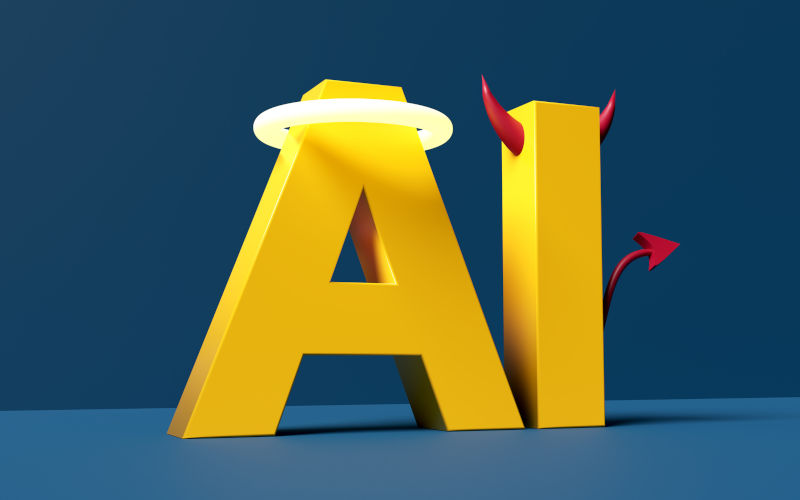
When we ask Google, or scroll through Instagram, or consult ChatGPT, this is not a simple technological act; it is a metaphysical gesture. We reach beyond ourselves into a domain that appears larger than any individual mind, a space that seems to hold more than we could ever hold alone. We think we are post religious. Instead, we have built a metaphysics of code, silicon and stored human experience. We have not abandoned transcendence. We have digitised it, and this new metaphysics is already provoking a subtle but unmistakable fear that something more powerful than us is taking shape.
Silicon Valley makes this especially clear. It prides itself on rationalism and engineering precision, yet it unconsciously recycles religious archetypes. Tech leaders promise salvation through innovation. They proclaim that AI will transcend humanity or inaugurate a new age. Mark Zuckerberg himself has noted, “When people in the tech industry talk about building this ‘one true AI,’ it is almost as if they think they are creating God or something.” There is an eschatology of progress, a priesthood of technologists and a doctrine of digital immortality. The tech world has not escaped superstition. It has created new forms of it.
Australians often pride themselves on practicality and a suspicion of ideological posturing. Yet AI slips past this scepticism by presenting itself as neutral and scientific. Many who would never defer to supernatural authorities now defer to recommendation algorithms and predictive systems in job applications, news consumption and even small daily decisions.
This introduces a profound shift in how we seek knowledge. For millennia, questions directed toward God were met with a silence that encouraged imagination. It forced humans to interpret, to project meaning and to search inward. Today that silence has disappeared. AI responds instantly. The imaginative space that once thrived in the absence of reply begins to shrink.
The Internet intensifies this further. Every utterance and choice can be archived, replayed and scrutinised. We observe ourselves living. AI amplifies this reflexivity. Instead of trusting intuition, people increasingly hand their cognitive labour to machines. The mind becomes so self aware that it struggles to act. It resembles Hamlet’s reflexive hesitation, not because of conscience but because of the continuous feedback and surveillance of digital life. For many young people today, it feels impossible to decide without consulting a digital authority.
This digital reflexivity is not only changing how we think, but what we believe.
Our ancestors believed in God without understanding how belief functioned. We believe in AI while roughly understanding how its outputs are produced. Yet this knowledge does not weaken our trust. It often strengthens it because it appears grounded in what we call science.
Crucially, people do not simply trust AI; they increasingly fear it. Recent international surveys, including a recent Pew Research global poll, show that a majority are more anxious than excited about artificial intelligence, worried about job loss, loss of control and systems moving beyond human oversight. A Reuters Ipsos survey from 2025 similarly reports large majorities fearing permanent displacement. The more powerful the tools become, the more we suspect they might no longer need us.
The medieval believer surrendered meaning to divine order. The contemporary rationalist surrenders truth to algorithmic logic. In both cases the individual hands interpretive authority to something external. Human beings have always searched for an external locus of certainty. In our age that longing has found a new object. We are not only relocating the functions once assigned to God. We are doing something stranger. We are creating a mind outside ourselves, fully aware that we have made it, and then treating it as though it were wiser than we are and might one day surpass us.
We imagine ourselves more rational than our ancestors. Yet we are the first culture in history to knowingly construct its own god, recognise that it might eclipse us, and then tremble before it.