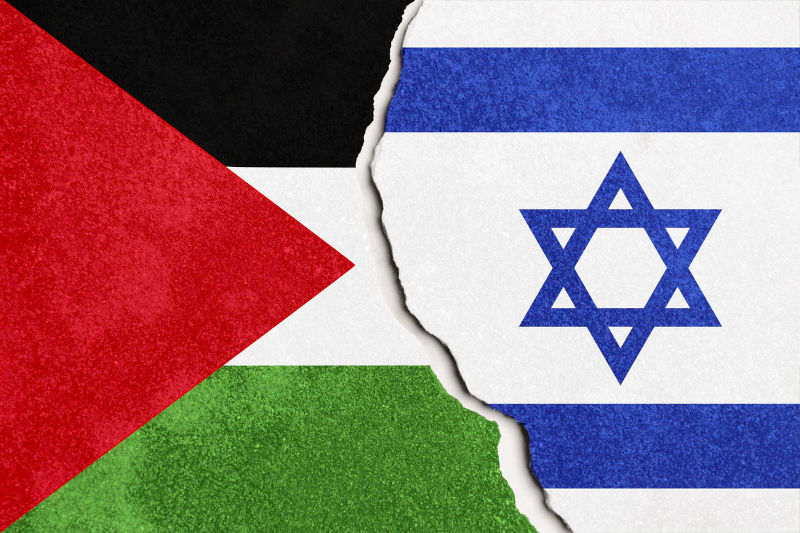
Between identity and politics: Unpacking the systematic conflation of “Antisemitism” and criticism of Israel
December 30, 2025
Whenever Jews anywhere in the world are subjected to an attack or a threat, Israel, along with a wide network of political and media supporters, is quick to frame the incident as a direct extension of historical antisemitism.
Violence is presented as the product of deep rooted hatred against Jews as Jews, as if the contemporary political context, and what the State of Israel does in the name of Judaism, has no bearing on what is taking place. This simplified and politically convenient explanation ignores a fundamental reality: it is Israeli policies, not Jewish religious identity, that play the most decisive role in shaping reactions and anger around the world.
This does not, in any way, deny the existence of antisemitism or downplay its danger. Hatred of Jews is real, historically entrenched, and often violent. The moral and political problem begins when this reality is used as a shield to protect a state that practices colonialism and systematic violence, and when Jews as a diverse human community are deliberately conflated with Israel as a political and military system accused of committing grave crimes.
Israel, which prominent international and Israeli human rights organizations describe as an apartheid system, and which has committed acts amounting to genocide in Gaza, presents itself as the State of the Jews and the global guardian of Judaism. This claim does not protect Jews. Instead, it places them in the line of fire, tying their fate to the crimes of a state that does not represent all Jews and does not speak in their name morally or religiously.
Protecting civilians is a principle, not a political tool
One of the core principles of the human rights framework is that every civilian deserves protection, regardless of religion, ethnicity, gender, or political background. Attacking Jews because of their religious identity is a condemned crime, just as attacking Palestinians because of their national identity is a condemned crime. Yet Israel, through its colonial and military practices, has undermined this principle and turned it into a selective tool, invoked only when it serves its interests.
In Gaza, the world witnesses scenes of total devastation: neighborhoods reduced to rubble, hospitals destroyed, children dying from bombardment, hunger, or lack of medicine. At the same time, official Israeli statements justify this violence using collective language, speaking of defending Jews or protecting Jewish civilization. Such language does not pass without consequence. When mass killing and starvation are linked to a religious identity, it becomes easier for some people, wrongly and dangerously, to project these crimes onto an entire religious community.
Israel then returns to claim that any angry reaction is antisemitism. In this sense, Israel is not merely a victim of hatred, but one of the primary forces producing a dangerous environment for Jews themselves, by turning them into a moral and political shield for state crimes.
Zionism: a colonial political project, not a religious doctrine
To understand this complexity, a clear separation must be made between Judaism as a religion with multiple currents, and Zionism as a settler political project. Judaism is a faith and an identity whose followers lived for centuries in diverse societies and faced persecution in many places. Modern Zionism, by contrast, is a political movement that emerged in late nineteenth century Europe, in the context of rising European nationalisms and European antisemitism.
Theodor Herzl, the founder of political Zionism, did not conceal the colonial nature of the project. In his writings and correspondence, he described Zionism as a colonial venture and sought the backing of European imperial powers. His well known letter to Cecil Rhodes, one of the most prominent symbols of British colonialism, was not metaphorical but a direct request for support for a colonial adventure. More importantly, Herzl himself proposed geographical alternatives to Palestine, such as Uganda and Argentina, confirming that the goal was not the fulfillment of a religious prophecy but the establishment of a settler entity for European Jews.
Christian Zionism played a central role in this context, especially in Britain. Support for Jewish settlement in Palestine did not stem from concern for Jewish safety, but from imperial and theological readings that viewed Palestine as a site for fulfilling religious prophecies and, at the same time, as a strategic base for the empire. This convergence of theology and politics culminated in the Balfour Declaration of 1917, which granted land Britain did not own to a people who did not live there, while disregarding the Palestinian presence.
Violence as a foundational tool
Before the establishment of the Israeli occupation, armed Zionist militias practiced systematic violence against Palestinian civilians. Bombings, assassinations, and massacres were not individual deviations but part of a clear strategy aimed at emptying the land of its indigenous population. The Deir Yassin massacre of 1948 is not an isolated event but a stark example of the use of terror as a weapon to force Palestinians into flight, in what later became known as the Nakba.
This foundational violence continued after the establishment of the occupation in different forms, but it preserved the same logic: control of land, fragmentation of Palestinian society, and the imposition of a permanent colonial reality.
In recent decades, terms such as apartheid are no longer confined to Palestinian discourse. International organizations like Human Rights Watch and Amnesty International, alongside Israeli groups such as B’Tselem, have concluded that Israel operates a systematic regime of racial segregation based on laws and practices that explicitly discriminate between Jews and Palestinians.
In Gaza, Israeli policies have gone beyond the framework of occupation to what international law experts and human rights organizations describe as genocide. The deliberate destruction of infrastructure, the targeting of the health system, and the blocking of food, medicine, and water are actions that cannot be justified militarily and fall within the logic of collective punishment and slow extermination.
Weaponising antisemitism: from protection to repression
Antisemitism is a real and dangerous phenomenon. Yet this reality has been politically exploited on a wide scale in what can be described as the weaponization of antisemitism, meaning the use of the accusation as a tool to silence legitimate criticism of Israel rather than to confront genuine hatred.
The British Jewish anti Zionist activist and writer Tony Greenstein is among the most prominent voices exposing this practice. In his writings, he explains how accusations of antisemitism are used to smear journalists, activists, academics, and even anti Zionist Jews, simply because they criticize Israel or support Palestinian rights. For Greenstein, this practice does not fight racism but strips the concept of its moral meaning.
The definition of antisemitism promoted by the International Holocaust Remembrance Alliance offers a clear example. Adopted by many states and institutions, this definition includes examples that conflate criticism of Israel with antisemitism, making it an effective tool for suppressing protests, targeting academics, and restricting public debate. Many legal experts have warned that this definition protects a state rather than a human community.
The irony is that the European far right, historically known for its hostility toward Jews, has become one of Israel’s strongest defenders. This support does not reflect a genuine transformation in racist views, but rather a convergence of interests: image laundering, justification of Islamophobia, and the outsourcing of violence onto the Other.
Conclusion: political awareness, not hatred
At its core, this is not a religious issue, but a political and ethical one. It is the issue of a colonial system based on dispossession, discrimination, and violence. Understanding this reality, and distinguishing between Judaism as a diverse religion and Zionism as a political project, is not antisemitism. It is a necessary condition for justice.
True justice requires protecting Palestinians from genocide and protecting everyone from hatred. It also requires rejecting the transformation of a human community into a cover for the crimes of a colonial gang, and confronting the weaponization of accusations that suffocate debate and block accountability. Only such clarity can break the cycle of violence and open the horizon for a peace based on justice rather than domination.