India and China in deep water over Himalayan hydropower
December 18, 2025
India and China are racing to build vast hydropower projects in the Himalayas. Framed as clean energy, the dams are also about territorial control, data sovereignty and strategic power in an AI-driven world.
In mid-2025, India launched a US$77 billion hydropower initiative to construct more than 200 dams in its northeast, especially in Arunachal Pradesh – territory China claims as southern Tibet. With a planned capacity of 75 gigawatts (GW), it mirrors China’s 2025 Yarlung Tsangpo Lower Reaches Hydropower Project, signalling an escalating geopolitical rivalry where hydropower, territorial control and data sovereignty converge.
India aims to transmit more than 76 GW of hydropower from the Brahmaputra basin by 2047 through a vast new network that includes 208 dams and 11 GW of pumped storage. Its centrepiece, the Upper Siang Multipurpose Project – a 280–300 metre, 11 GW dam on the Siang River – would be India’s largest. Framed as green energy, its deeper purpose is to counter China’s upstream control in Tibet and reinforce India’s water and energy security.
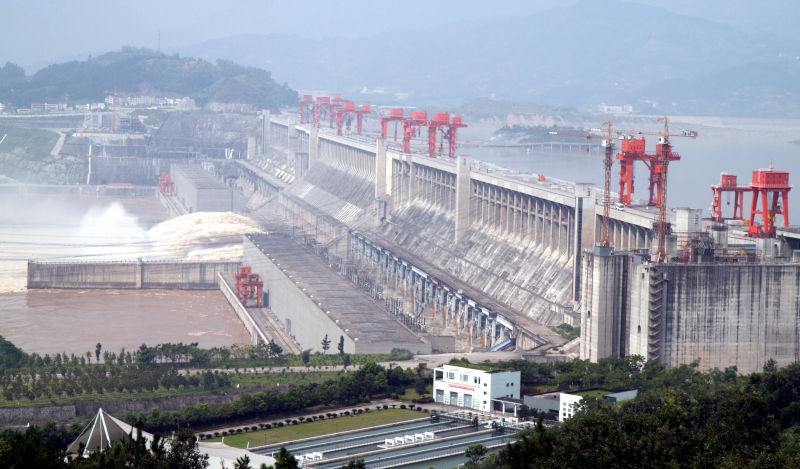
Meanwhile, China’s mega-dam at the Great Bend in southeastern Tibet is projected to be the world’s largest hydropower installation at 67–80 GW – roughly triple the Three Gorges Dam – at a cost exceeding US$160 billion. Beijing presents it as part of its ‘green transition’, but New Delhi views it as strategic leverage.
Past incidents – such as China’s withholding of hydrological data before the 2000 Yigong Zangbo outburst flood – fuel distrust. Without a water-sharing treaty, India fears Beijing could weaponise water, using ‘hydro-leverage’ to induce drought or floods downstream. Chinese proposals to divert Tsangpo waters towards Xinjiang heighten these concerns. Arunachal Pradesh Chief Minister Pema Khandu has called India’s hydropower push a ‘ national security necessity’ and a safety valve if China weaponises its upstream dams.
Hydropower on the Brahmaputra–Yarlung Tsangpo has become an arena where climate rhetoric masks a deeper battle over strategic autonomy, energy security and AI infrastructure.
China is integrating its projects into the State Grid’s AI-driven ‘ smart energy brain’. India is tying hydropower to digital sovereignty through AI-enabled dam monitoring, sediment modelling and partnerships under the National Mission on Transformative Mobility and Battery Storage.
As both countries electrify data centres and AI compute facilities, hydropower directly shapes their compute capacity – a foundation of modern geopolitical power. Control of water flow is increasingly translating into control of digital capability.
This convergence amplifies threat perceptions. Beijing worries that India’s dams, built with US–Japan support, could enable downstream monitoring of Chinese grids. India sees China’s Great Bend project as a dual-use hydrological–digital platform for managing water flows and expanding real-time satellite–AI surveillance.
Both sides have strengthened cyber units focused on smart grid infrastructure, with China building capabilities through the People’s Liberation Army’s Strategic Support Force and India through the National Technical Research Organisation. The Brahmaputra basin is emerging as a high-altitude energy–data theatre in which dams are potential digital chokepoints.
Asia’s future water conflicts will centre on transboundary rivers. As the source of many of Asia’s rivers, China has resisted binding water treaties to preserve what analyst Brahma Chellaney calls its ‘ hydrological hegemony’.
India’s response is to build counter-capacity. The United States reinforces this view. During his 2025 visit to Delhi, US National Security Advisor Jake Sullivan described China’s dam-building as part of its coercive infrastructure strategy, echoing effects seen on the Mekong. Washington’s Indo-Pacific infrastructure strategy now treats clean energy investments as counterweights to China’s Belt and Road Initiative.
The rivalry is part of a wider ‘energy cold war’. China’s hydro-tech statecraft extends its digital and physical footprint across the Himalayas, while India’s Atmanirbhar Bharat (‘self-reliant India’) energy doctrine aims to reduce dependence on Chinese grids, solar modules and rare-earth components.
Dams are not just concrete. They are algorithms of sovereignty, influencing energy flow, data control and regional geopolitics. China’s state-owned giants such as PowerChina and Sinohydro combine unmatched engineering capacity with AI-enhanced logistics and robotics. India lags technologically but benefits from greater transparency and partnerships with Japan’s JICA and US clean energy funds.
Unlike the Mekong River Commission or the Indus Waters Treaty, China and India have no institutional mechanism to manage the Brahmaputra. This lack of rules is dangerous, especially now that AI-powered infrastructure is involved.
Both countries rely on AI-based hydrological forecasting, smart grid controls and autonomous monitoring, creating new cyber vulnerabilities. A targeted intrusion into spillway automation, grid-balancing algorithms or upstream sensor networks could mimic a natural disaster. China’s growing cyber capabilities in the People’s Liberation Army’s Strategic Support Force and India’s evolving tools under the National Cyber Security Strategy increase the risk.
With mistrust rising along the China–India border and competition intensifying in semiconductors and AI, hydropower infrastructure has become a dual-use digital flashpoint. A blackout or dam-system malfunction, whether intentional or accidental, could trigger a crisis. Proposals for satellite–AI verification or real-time data exchange remain unlikely amid strategic decoupling.
The Brahmaputra–Yarlung Tsangpo confrontation crystallises ‘hydro-digital geopolitics’, where control of water mirrors control of information. For Beijing, the dam secures technological supremacy and firmer control in Tibet. For Delhi, it symbolises sovereignty and deterrence.
Both powers seek strategic autonomy as energy and data merge into a single system of power, yet risk ecological damage, regional instability and potential conflict. The Himalayas are becoming the flashpoint of Asia’s energy geopolitics, where every drop of water and every watt of electricity carries strategic consequence.
Republished from the East Asia Forum, 15 December 2025