Israel and police polarise Sydney Mardi Gras
December 10, 2025
Sydney’s Mardi Gras is facing a defining struggle over its purpose and identity. As corporate sponsors and political interests push for a safer, apolitical parade, grassroots activists are fighting to keep the event rooted in protest, solidarity and free expression.
The genocide in Palestine has generated a vast and energetic international solidarity movement which is challenging political parties and other social movements to step up. And this is the case in the queer movement, with a conflict symptomatic of “elite capture” in the Sydney Gay and Lesbian Mardi Gras (SGLMG), which held its annual general membership meeting on 28 November.
In the lead up to the 49th mardi gras parade in early 2026, the fight is about the spirit and soul and identity of the parade, and the independence of a key community and social justice movement event from big business and government. This is a conflict evident around the world, with Pride marches bifurcating into establishment or radical incarnations.
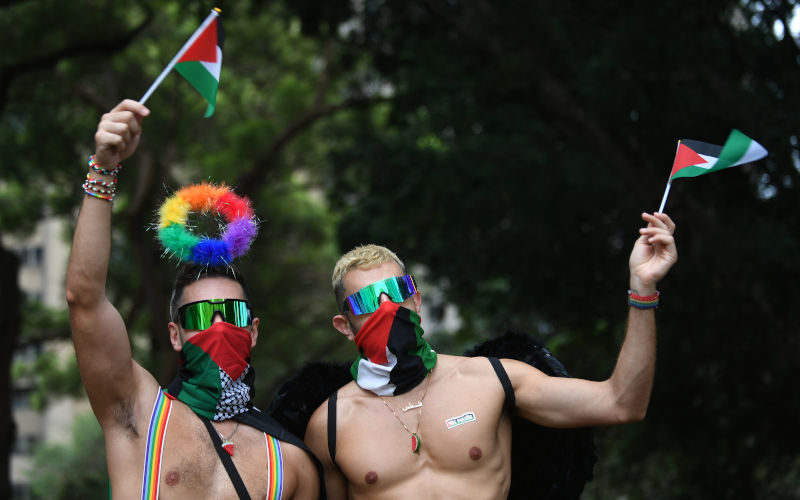
In recent years a radical team, Pride in Protest (PiP), has had directors elected to the board. It’s a loose alliance of queer Greens, anarchists, trans, refugee and sex worker activists, who have been engaged in anti-racist and Palestine solidarity demonstrations. They have been carrying ‘No Pride in Genocide’ banners in recent Mardi Gras parades.
This year there was an orchestrated reaction: a well-resourced campaign supporting ALP and Liberal political staffers for the Mardi Gras board elections, called Protect Mardi Gras. They cast Pride in Protest as badly behaved disruptors bent on destroying the Mardi Gras festival and parade. ‘Protect’ promoted rhetoric about “inclusion”, which ultimately focused on the Police Force and big business sponsors.
It seems that premier Chris Minns may be sensitive to messages in the parade about Police corruption, racism and violence, increasing repression of protests and free speech, failure to advance equality or drug law reform, and about NSW government solidarity with Israel.
State governments want a toned-down, apolitical family-friendly celebration, like Moomba, that will earn tourist dollars for travel and hospitality businesses, on the backs of volunteer community labour and creativity. Mardi Gras is an important event for Sydney – like Vivid, the Festival of Sydney, Sydney Film Festival and Writers’ Festival. As a broadcast, it amplifies social, political and advertising messages well beyond Sydney.
With the twenty-first century global decline in democracy and human rights particularly impacting on queer people, there is increasing relevance of the political messages in the parade about freedom, not just in Australia, but across the globe.
The parade is loved because of its satire, inversion, subversion, sexuality, topicality, humour, glamour, edginess, outrageousness and resistance. In the Christian tradition of mardi gras/carnival, or the Feast of Fools, it about speaking truth to power rather than worshiping it.
People want to see the grassroots community groups in the parade: the dancers, sexual tribes, health and disability groups, and the groups of workers and volunteers: teachers, vets, nurses, lifesavers, construction and tradespeople, welfare, fire and emergency services… and unions, not glorifying their employers.
There is a difference between the creativity of Qantas workers and the love they received from the crowds when they first came in the parade, and how people feel about a float celebrating Qantas as a high-profit company and employer. A big difference between Acceptance, and Catholics fighting to transform the church, and a float lauding the church hierarchy. A difference between queer police marching, and the Police Force as an institution, with uniformed and armed officers.
Some 46.6% of members voted in the meeting against having the Police Force officially in the parade, motivated around the record number of Aboriginal deaths in custody in NSW this year, “unfinished business” around a history of gay murders, invasive drug searches, transphobia, and instances of violence against peaceful protesters, such as Greens candidate Hannah Thomas.
Recent years have seen tightened censorship of parade entries, and a non-transparent “curatorial” committee, which each year rejects community groups as too sexual, political or satirical. One veteran creative entrant who previously was told sponsors could not be satirised, has now been told there can be no satire of “figures in public life”. Must we expunge the memories of Doris Fish and the giant shoes of Imelda Marcos, or Fred Nile’s head on a platter? Each year the parade rejects one of the union groups, Union Pride, teachers, this year nurses.
Big business advertising floats comprise a significant percentage of the 12,000 people in the parade, (and in the ABC broadcast coverage), though sponsors are and can be rewarded in other ways. Information about the benefits and obligations of sponsorships are effectively secret, “commercial in confidence”. In recent years, big business advertising floats have promoted companies like Coles, Woolworths, Amazon, Marriott hotels, ANZ, Amex, Star Casino, Deloitte, Qantas, and Optus, despite major ethical and legal scandals about how they treat staff and customers, or in the case of some of the American companies, their financial support for the right of the Republicans.
In December 2023, the then SGLMG executive officer, Gil Beckwith, sent an open letter to Prime Minister Anthony Albanese supporting a ceasefire in Palestine, and saying the mardi gras would reject any sponsorship by Israel – a wise move after the successful boycott of the Festival of Sydney in 2022 over Israeli embassy sponsorship.
As part of its investment in pinkwashing, as a counter move, Israel paid for a SGLMG board member to go on a solidarity tour with other international Pride groups, and conservative American transwoman influencer, Caitlyn Jenner, in June 2025, a visit drastically interrupted by the exchange of missiles with Iran. This year a motion on rejecting SGLMG linkages with Israel was defeated 557 to 563 votes, presumably with Protect Mardi Gras faction proxies voting for “inclusion”.
Pride in Protest motions on Trump and transphobia, public funding for the parade, and on pushing federal and state politicians towards meaningful anti-discrimination law reform were passed. There were 1627 members voting in the elections for four director positions on the board. According to PiP scrutineers, Luna Choo, topping their ticket, gained 528 first preference votes. Kathy Pavlich, incumbent SGLMG Co-chair, gained 358. Aspiring ALP politician, Savannah Peake, gained 293, and Liberal Party member and former Dave Sharma staffer, Jarrod Lomas, gained 199 – both on the Protect Mardi Gras ticket.
The board now has two activists from Pride in Protest, two from ALP, one from Liberal Party, and two others. In the past, the board has used various measures to suspend PiP members from the board. The elected directors would do well to manage political and reputational risk wisely, recognising how significant parts of the community are hostile to Mardi Gras linkages with Israel, and inclusion of Police and big business advertising floats in the parade.