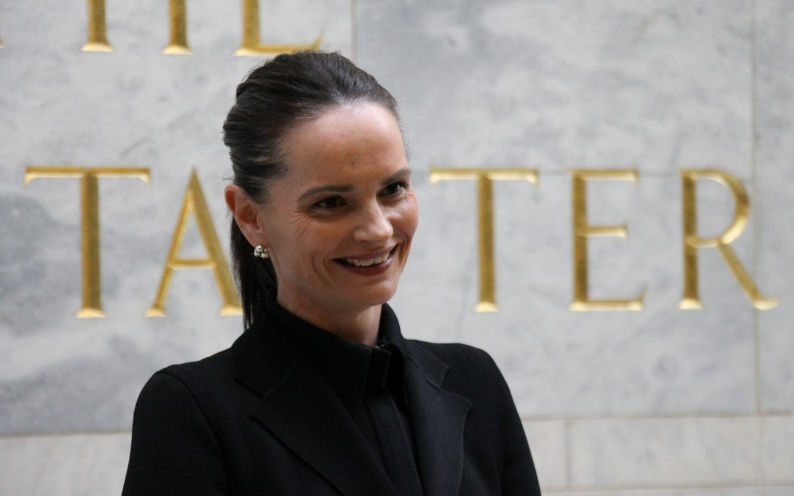
Judge says law still failing to see "deeper truth" of dispossession
December 11, 2025
An ACT Supreme Court judge has confronted the limits of native title and criminal sentencing, arguing the law still falls short of reckoning with Indigenous dispossession.
An ACT Supreme Court judge has starkly laid down the gauntlet to lawmakers and judges over Indigenous dispossession and its continuing catastrophic consequences in the criminal law.
Speaking to the Australian Legal Convention at the High Court last month, Justice Louise Taylor addressed head-on any suggestion that her comments could be seen as judicial “activism”.
She was well aware of Chief Justice Stephen Gageler’s recent enjoinder that the global judiciary should “stick to the knitting” of black-letter law lest judges be seen as partisan or political. However, Justice Taylor said she did not believe her speech would “fall foul of that which His Honour would endorse”.
“I am confident because nothing we will say [Her Honour appeared in a session with Queensland Supreme Court Justice Lincoln Crowley] is anything other than a recitation of reason, a statement of objective truth,” she said.
Justice Taylor, the first Indigenous woman to become a Supreme Court judge in Australia, drew two landmark High Court cases into sharp perspective saying that:
- The nation’s native-title regime may not have lived to the promise of Mabo No 2 over the three decades since that historic judgment; and
- The 2013 case of Bugmy – in which the High Court found Aboriginal people “as a group are subject to social and economic disadvantage measured across a range of indices” and held that such a background was a relevant sentencing consideration – had had “limited traction”.
Mabo changed the common law so it was not left, in the words of then Chief Justice Sir Gerard Brennan “frozen in an age of racial discrimination”.
However, now in an age of truth-telling, Justice Taylor said, “Whether the native-title regime lives up to the promise of the truth that was told in Mabo No 2 is perhaps a matter of perspective …
“But the causal connection between the attempt to extinguish our unique connection (described by colonial administrator James Stephen in 1838 as the “impending catastrophe” of our “extermination") – the connection between that catastrophe and the challenges which attend to the lives of our people in modern Australia is undeniable.”
Bugmy is a case often deployed by those representing Indigenous defendants in sentencing proceedings. Indeed, it led to the establishment of the Bugmy Bar Book, compiled by public defenders, prosecutors and Aboriginal legal services, with nominees on its project committee from various judiciaries and academia.
Yet Justice Taylor said that, even in the criminal-law perspective of Bugmy, “the special position of our people with respect to this land and the consequent unique effect of colonisation upon us as a people, found limited traction”.
High Court Justice Michelle Gordon had spoken of the “deeper truth” in a 2020 judgment “about the unsevered connection between our people and the land and waters that now make up the territory of Australia.” In the same judgement, Justice James Edelman had referred to the inseparable tie to the land “with metaphysical bonds that are far stronger than those forged by the happenstance of birth on Australian land or the nationality of parentage.”
But, Justice Taylor continued: “In coming to give effect to justice that is individual there is no warrant, this court determined, for overarching acknowledgement of the ‘deeper truth’ by a sentencing court of our connection to this land and because of that – the distinctive, systemic effects on us of the brutal, relentless attempt to sever it.
“For justice to be individual then, those effects must be proven for each offender, despite what our over-representation in prisons across the country might say about the modern-day manifestations for us as a peoples, of colonisation.
“The attempt to ‘exterminate’ us was facilitated by laws which entrenched our dispossession – by the theft of our land, by erasing and demonising our culture and by undermining our individual and collective dignity. Those laws ensured that the spoils of colonisation were locked in and they were not for us.”
Justices Taylor and Crowley were speaking only weeks after participating in the inaugural International Indigenous Judges Conference.
“It was an experience at once uplifting and deeply dispiriting,” Justice Taylor said. “Our small Australian contingent was easily outnumbered by Maori and Canadian First Nations judges.
“Another truth that this profession specifically must confront is that our people are often the subjects of law and yet so rarely administering it. The pace of progress is glacial and must be, by now, partly explained by institutional resistance to us as legal decision-makers.”
There was some hope that the law could transform, with a preparedness to imagine that the law could offer redemption, as long articulated by Professor Megan Davis.
Justice Taylor suggested it was this redemptive power that Justices Mary Gaudron and William Deane had been contemplating in Mabo, when they explained why terra nullius and 150 years of real-property law had to go.
Those propositions had “provided the legal basis for the dispossession of the Aboriginal peoples of most of their traditional lands”, their judgment said. “The acts and events by which that dispossession in legal theory was carried into practical effect constitute the darkest aspect of the history of this nation. The nation as a whole must remain diminished unless and until there is an acknowledgement of, and retreat from, those past injustices.”
It took a century and a half to get to Mabo.
“I cannot help but observe,” Justice Taylor concluded, “that it took another 30 years for Lincoln to be the first Aboriginal person appointed to a superior court in this country.
“If the skeleton of principle gives our body of law its shape, then those who administer it must surely put the meat on the bones of how the law lands in the lives of all Australians.”

