One fire, one-sided view: how the ABC's fire 'analysis' became narrative
December 12, 2025
Australia’s public broadcaster is trusted because it separates analysis from opinion. A recent ABC news analysis article blurs that line – with serious consequences for credibility.
Here in Australia, few institutions are as deeply woven into the public’s trust as the ABC.
The media outfit is funded by the people, held to a higher standard than News Corp, and tasked with upholding a set of editorial principles – pillars of its mandate: accuracy, impartiality, independence, and fairness.
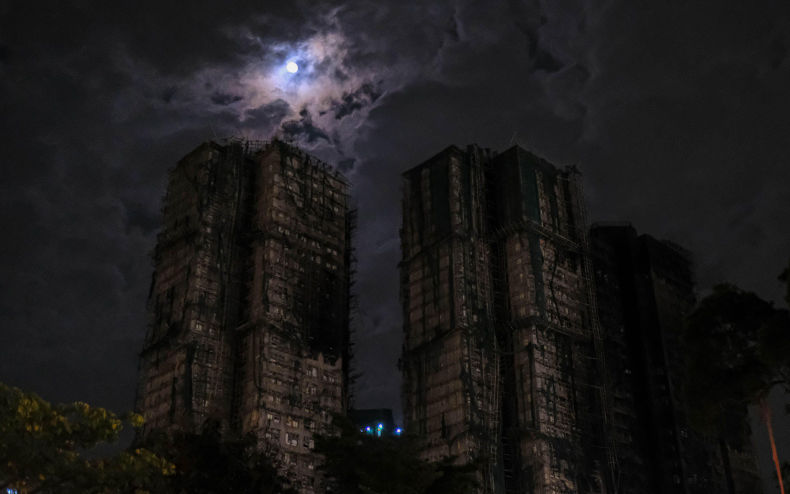
That’s what makes the ABC’s recent ’news analysis’ — _One fire, two systems: Hong Kong's grief meets Beijing's red lines –_ all the more troubling.
Let’s make it clear, the article, which centres on the deadly fire in Hong Kong’s Jordan district, doesn’t fall short because it chose a difficult or political subject.
On the contrary, the ABC should be reporting on events like that, as they matter to Australia’s large and engaged Chinese-Australian communities.
It falls short, however, because it steps away from journalism and wanders into something else – storytelling in service of a conclusion, something you’d least expect from your public broadcaster.
The article draws entirely from one source of perspective – the grief and frustration of residents.
These voices are no doubt important. They reflect pain, fear, and distrust. But when all other perspectives are excluded, the story stops being analysis.
Investigative bodies, fire safety experts, regulatory authorities – a proper news analysis needs these perspectives. Without them, it becomes what we have here: a political metaphor wrapped in personal anguish.
There is no mention of inspection records, no interview with safety engineers, no exploration of systemic oversight failures. No consideration of other possibilities – construction fault, human error, institutional miscommunication.
Here, they’re missing. What we get instead is a single emotional current, flowing directly into a political reading of the event.
At issue is not simply what the article includes or omits, but what it claims to be. This piece is labelled as ‘News Analysis,’ and that label carries weight. Analysis, as distinct from commentary, is expected to interpret facts, weigh perspectives, and connect them with care. It is not the place for rhetorical devices or pre-determined conclusions. But that’s what we’re given.
Poetic lines like “faith that the system exists to protect them is fading” aren’t grounded in verified fact. They are interpretations, untested and unbalanced, that slide into opinion. The ABC’s own policy draws a line between analysis and commentary for a reason. Confusing the two will only hurt the masthead of an institution Australians are taught to trust.
Empathy is vital for every journalist – especially in tragedies. But journalism cannot stop here. It must test what people say. It must ask uncomfortable questions. And it must resist the urge to settle quickly on a single story when the truth is likely to be more complicated.
In this article, there are no official responses, regulatory context, or forensic clarity. The absence of those voices means the whole foundation is missing.
When no verification is attempted, and suspicion is simply echoed, the reader walks away with a conclusion that feels preordained.
This article doesn’t ask what caused the fire. It asks what the fire can be made to symbolise. That’s a different question altogether – and a dangerous one for public broadcasting to lean into.
Disasters often reveal failures – of systems, governance, or accountability. But journalism’s job is to uncover those links, not assume them. The suggestion that the fire represents an inevitable outcome of Beijing’s political structure may fit a familiar narrative, but it needs to be proven, not presumed.
When human suffering is used as editorial scaffolding for a larger argument – without rigour or balance – it undermines the seriousness of the event and the credibility of the institution reporting it.
This concern becomes sharper when we look at what else the ABC chose to cover — or not cover.
While the Hong Kong fire received a full, emotive, politically weighted piece and two lengthy features on the English platform, Taiwan’s decision to ban the Chinese-language platform RedNote – an act many argue as intervention on free speech – received only a passing mention on the ABC’s Chinese-language site. No English-language coverage. No analysis. No editorial weight.
Earlier RedNote stories from ABC, sometimes framed it as digital influence (and sometimes threats, of course), received extensive coverage. But when the narrative shifted – and Taiwan made a decision that raised censorship concerns – the interest quietly disappeared.
This inconsistency raises real questions about how stories are prioritised, and whether facts are being filtered through narrative assumptions.
Let’s not mistake this for an argument against scrutiny. Beijing, Hong Kong, Taiwan – these are critical subjects that deserve fearless, informed journalism. But they deserve it within the rules the ABC sets for itself. Those rules aren’t constraints. They’re the reason people trust the institution in the first place.
Analysis must follow facts. Fairness must precede conclusion. Public broadcasting must resist the temptation to turn complex geopolitical realities into linear moral tales.
The ABC remains Australia’s most trusted news source because it has spent decades building an account of public trust. But it should also remember: every time opinion masquerades as analysis, every time narrative replaces verification, another withdrawal is made.
And no amount of public funding can buy back credibility once it’s spent.
