Radar lock or editorial block? The ABC's China-Japan report has blind spot
December 19, 2025
A story published by the ABC framed a military encounter as an act of aggression. But subsequent details told a more complicated story that Australia’s public broadcaster never revisited.
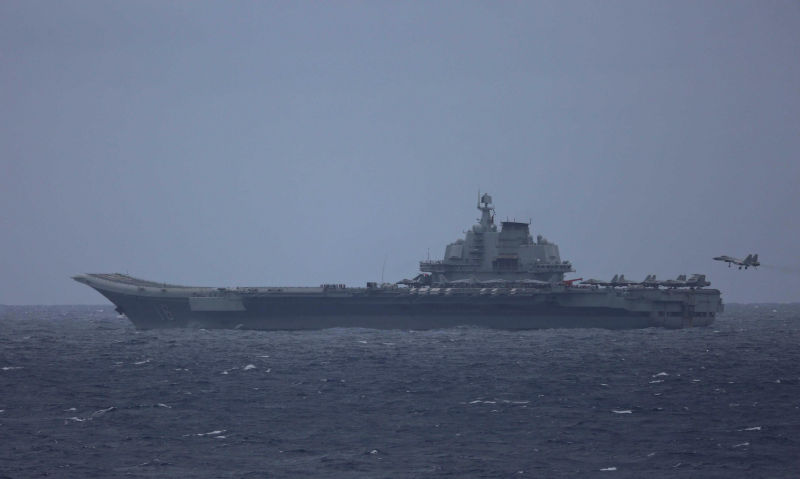
On December 11, the ABC published a short article titled US backs Japan in dispute with China over radar incident. It was a standard Reuters wire story – no byline, no follow-up, and no real analysis. It essentially just summarised Tokyo’s claim that a Chinese warship had locked its radar onto a Japanese fighter jet.
The headline was heavy. The framing was decisive. And the follow-up… never came.
Yet in the days that followed, new information surfaced – information that should have warranted, at minimum, an editorial update. And one might have expected Australia’s public broadcaster, of all institutions, to lead that charge. Instead, the ABC sat still.
Japan’s own media, including its leading English-language outlet _The Japan Times_, didn’t accuse China of a “radar lock.” It used a more precise, less inflammatory term: radar illumination.
“The Liaoning aircraft carrier twice illuminated Air Self-Defense Force jets with radar,” it reported, quoting the Japanese defence chief as saying, “the Chinese side conducted intermittent radar illumination for approximately 30 minutes.”
Radar illumination is military speak for scanning or searching – a provocative move, yes, but a far cry from a fire-control lock-on that implies intent to shoot. The distinction is not semantic. It moves the event from the realm of “targeted aggression” to “tense surveillance” – a critical shift, especially in contested airspace.
Even more curiously, Japan’s own Ministry of Foreign Affairs actually used that wording, days ago. In an official statement on its .go.jp site dated 7 December, the MOFA described the incident as “intermittently illuminated by its radar” – not “locked,” not “engaged,” not “painted for attack.”
It was the diplomatic equivalent of raising an eyebrow, not throwing a shoe.
This wasn’t buried in an obscure press corner. It was on the homepage, in both English and Japanese, freely available to anyone with a browser and half a minute. Did no one at the ABC think to look?
Even more compelling was the terse but revealing radio exchange released by China’s Ministry of Defence:
China: “This is China Navy Warship 101. Our formation organises shipborne aircraft flight training as planned.” Japan: “This is Japan Warship 116. I copied your message.”
It’s a civil, clear exchange. It shows that both sides knew exactly who the other was and what they were doing. While these logs were released by Beijing, they went largely unchallenged.
Usually, a direct recording from the scene of a major military standoff is exactly what a newsroom would jump on. And yes, The Japan Times quoted this.
But here again, the ABC fell mute.
This isn’t a case of the ABC lacking the talent to cover the story. They have some of the most experienced China reporters in the country and bureaus specifically set up to handle this kind of regional reporting. The information wasn’t hidden or classified; it was right there on the Internet for anyone looking.
This omission reveals more than a gap in the facts; it highlights a mechanical failure in our national broadcaster’s editorial reflexes.
When the ABC outsources breaking regional news to international wire services, it often forgets to on-sell the follow-up. The initial accusation moved with the velocity of a push notification.
The Chinese rebuttal – complete with radio transcripts and an alternate narrative – was met not with equal urgency but with a kind of institutional torpor. A “wait-and-see” posture that, in the end, became “see no further.”
And that’s a shame. Because this isn’t about capability. The ABC has the tools, the talent, and the reach. What it failed to show was editorial curiosity.
According to the ABC’s own Editorial Policy 4.1 on Impartiality:
“Present a diversity of perspectives within a reasonable timeframe… so that no significant strand of thought or belief within the community is knowingly excluded or disproportionately represented.”
If ever there were a “significant strand of thought,” it’s the official response from the other side of a military incident involving two of Australia’s key regional partners.
No one is asking the ABC to validate China’s version. But surely, its readers are entitled to know that it exists. That Japan’s own description of the event has nuances. That there is more than one version of what happened in the skies over the East China Sea that day.
And we are not taking about “both-sidesism”, we are just talking basic journalism.
At a time when much of Australia’s media is saturated with voices urging ever-closer alignment with one side – from officials, former envoys, defence contractors, and well-funded think tanks – the ABC plays a uniquely vital role.
And they exist for a reason. Because unlike commercial media – some of which are now foreign-owned, yet curiously loud in proclaiming themselves the voice of true-blue Australian values – the ABC is not here to tilt with Tokyo or clash with Beijing.
It is here to serve the Australian public with impartial, informed, and independent journalism. Especially on matters where Australia’s alliances are being tested – not merely followed.
When one of our closest partners claims provocation, and the other offers verifiable logs in response, the job of a national broadcaster is not to clap for either, but to inform all – with context, caution, and a refusal to outsource its curiosity.
The radar may have been switched off in the cockpit. But there’s no excuse for it to be off in the newsroom.
What happened over East China Sea on that day is one thing.
What didn’t happen in Ultimo is another.