Selective humanity: Gaza’s donkeys or its children?
December 2, 2025
International law requires equal protection for civilians in war. Yet recent actions by Western states reveal a troubling pattern in how humanitarian principles are applied – selectively, politically, and at devastating human cost.
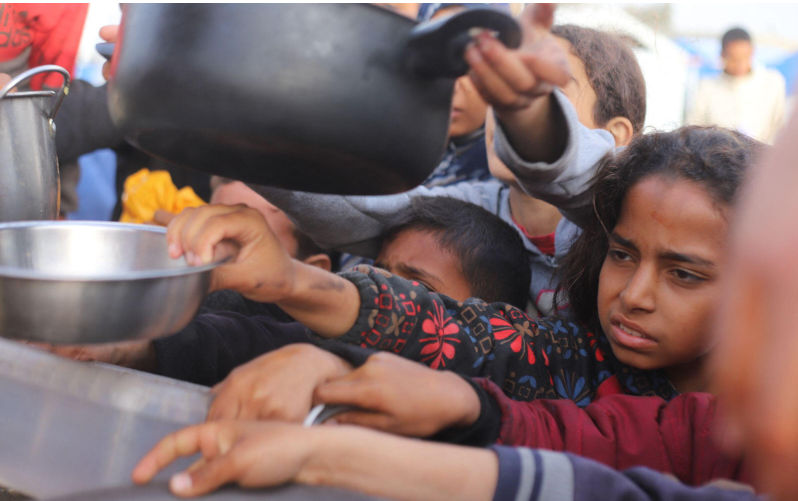
The population of the Gaza Strip has been enduring an unbearable siege for more than two years, and the resulting suffering has reached a level never known before. According to the United Nations, more than 2.3 million Palestinians are at risk of dying, starving, or not receiving medical assistance; among them are tens of thousands of patients in need of urgent treatment abroad.
Counting humans killed and the injured reveals the extent of the disaster: the number of the dead has exceeded 70,000, which includes more than 20,000 children, and over 190,000 have been injured. Almost 70 per cent of the healthcare infrastructure is in ruins, and the whole healthcare system has gone down in the area.
In addition, there are millions of internally displaced people who have to live in temporary camps under very difficult conditions; they have to cope with starvation spreading around and the supply of the most critical medicines and medical equipment being very limited.
Amid this tragic context, in November, Germany announced the reception of four donkeys from a zoo in Gaza, airlifted to Berlin to “care for them and protect them from the bombing.” At the same time, it refused to receive dozens of Palestinian children suffering from cancer or life-threatening chronic diseases, citing “lack of legal or security conditions.” This glaring contradiction is not a mere isolated incident; it reflects a deep moral and humanitarian crisis and exposes the essence of what can be called “selective humanity.”
This affair, however, brings up major issues and questions: in what way, if any, do the countries that profess adherence to human rights and humanitarian principles tell such a tale? Is it the case that human beings are in a sense a publicity-bearing commodity while the real disasters are left unattended? What might the legal and political ramifications of such conduct be?
International, legal and humanitarian aspect
The four Geneva Conventions of 1949 along with their supplementary protocols impose on states the duty to protect non-combatants during wars, to supply them with food and medical assistance, and to make it easy for the delivery of humanitarian aid.
The Fourth Geneva Convention’s Article 55 mandates the authority in control to see to it that the civilian populace gets enough food and medicine then to allow aid to be delivered.
Simultaneously, Article 16 of the same convention gives the sick and wounded the right to be shielded from discrimination and, if necessary, their relocation for treatment should also be made possible.
The Convention on the Rights of the Child, ratified by Germany, states in Article 24 that every child has the right to the highest attainable standard of health, including access to necessary treatment for chronic and life-threatening illnesses.
International human rights law guarantees every individual the right to life, health, and a dignified existence, condemning the deliberate deprivation of essential medical care.
Legal analysis of the incident
Germany’s adamant refusal to accept sick Palestinian children, at the same time that it is hurrying to rescue donkeys, is a clear violation of the spirit of these conventions. This pattern of behaviour can be interpreted as a systematic discrimination against Palestinian non-combatants and might be considered by the International Criminal Court as crimes against humanity under the Rome Statute, among which is “deprivation of essential medical care to civilians” if such deprivation results in death or severe suffering.
What seems to be an isolated media event is, in truth, a breach of international law, which is a reflection of the implicit moral complicity in the targeting of the Palestinian civilian population by denying them their basic rights.
The globally circulated image of a donkey being carried on a German military plane to Berlin, while Palestinian children die under rubble or due to lack of essential medicines, is not a fleeting incident – it is a shocking expression of a deeper phenomenon: humanity has become a tool for propaganda.
Western media focused on “the story of the four donkeys,” with emotional interviews and images showing the animals’ welfare in their new shelter, while ignoring the deaths of Palestinian children and their deprivation of treatment. For example, nine-year-old Layan died after being denied travel for leukemia treatment, and seven-year-old Mohammad had both legs amputated after Germany refused his entry citing “lack of financial sponsorship.”
These contradictions highlight a severe moral decline, showing that Palestinian human life is valued according to political interests, while animals are treated as uncontroversial symbols of humanity.
This decline demonstrates that what major states call “humanity” is often selective, guided by politics and interests rather than moral principles and ethical values. Attention to animals can be interpreted as a means to avoid political accountability for human rights violations, presenting a publicly “humanitarian” image with no tangible effect on affected civilians.
Previous cases: the pattern repeats
This is not new; there is a long history of selective humanity:
Syria 2017: The UK received a rescue dog from Aleppo, but at the same time, it turned down the offer to take in hundreds of orphaned Syrian children via the resettlement programs.
Afghanistan 2021: The fall of Kabul saw France airlift some of the canine and feline population while at the same time shutting its doors to a great number of Afghans who had collaborated with the military and were in danger.
Ukraine 2023: The loss of zoo animals in Europe was heavily felt even though the mass killings of civilians in Yemen’s Mar’ib and Hodeidah received no such attention.
The lesson is clear: when the victims’ situation does not align with Western political interests, their rights are neglected, making them less valued than animals. This pattern exposes the superficial, selective, and image-focused nature of the “humanity” proclaimed by major states.
Ethical manipulation: how western media shapes selective humanity
Western media is no longer merely a news broadcaster; it has become a creator of ethical priorities. The Gaza donkeys story attracted millions of views and interactions because it was ‘safe,’ did not require confronting Israel, and did not threaten political funding. In contrast, genuine humanitarian stories are politically complex and difficult to cover without facing diplomatic and political consequences, so they vanish from media front pages.
This distortion of collective conscience has produced generations of politicians and journalists who fear even mentioning Palestine unless it involves an animal or a tree. The result is complete loss of trust in international institutions and Western states and the rise of radical discourse viewing the West as an irreconcilable adversary.
It also affects the global civil society, creating frustration and despair among activists and human rights defenders and leading populations in conflict zones to distrust any humanitarian promises from major states.
The moral lesson: true humanity does not choose
The incident with the Gaza donkeys is not merely a media error or administrative decision; it is a moral scandal revealing the true face of selective humanity. When a Palestinian animal is valued more than a Palestinian child in the eyes of a state claiming to respect human rights, it reflects a complete collapse of the ethical standards and humanitarian values upon which post-World War II Europe built its image.
Humanitarian deception is no longer hidden; it is now public, documented, and flaunted. Every day that passes without holding states accountable for their selective humanity adds to their historical shame.
Gaza’s salvation will not come from exporting its donkeys but from the world realising that humanity cannot be divided and that the dignity of a Palestinian child is no less valuable than that of any other creature on earth.
The most important lesson: true humanity begins with recognising and protecting the basic rights of civilians without selection or discrimination. Any selectivity is deception, and any deception in humanity undermines the credibility of the values claimed by major states, leaving the most vulnerable to suffer tragically.