The politics of forgetting: Australia, Gaza and moral silence
December 3, 2025
From the “Great Australian Silence” to Gaza, deliberate forgetting has long provided political cover for injustice. Silence, not ignorance, is the problem.
In 1995, half a century after the Holocaust, and in response to the Australian literary community’s celebration of Helen Demidenko’s literary fraud The Hand that Signed the Paper, Robert Manne felt compelled to write The Culture of Forgetting (1996). The title is a powerful – and I think transferable – phrase, to describe the way in which communities can, through a kind of moral-intellectual laziness, unwittingly but dangerously contribute to the distortion of historical fact. Even a fact as in front of your nose as the Holocaust.
But what about when the distortion of historical fact occurs, not through ignorance or a moral-intellectual laziness, but through a forgetting so deliberate that it constitutes a conscious denial?
In his 1968 Boyer Lecture, Australian anthropologist WEH Stanner used the phrase “the Great Australian Silence” to describe just such a kind of forgetting: the ongoing denial by white Australia of the dispossession of First Nations peoples from their lands and all the horrors that dispossession entailed.
Stanner’s forgetting is of a different kind to that described by Manne in relation to the Demidenko Affair, which the latter has called a “cultural accident of a revealing kind”. Stanner’s forgetting, by contrast, was no accident. It was performed in service of an underlying end: the provision of moral cover for an ongoing political project and the avoidance of collective shame.
Long after you first hear them, phrases like the culture of forgetting or the great Australian silence stick in the brain. They stick because they so effectively describe a phenomenon that you knew to be true but couldn’t quite name conceptually.
I got thinking about both phrases recently in relation to the Australian Labor government and the genocide in Gaza.
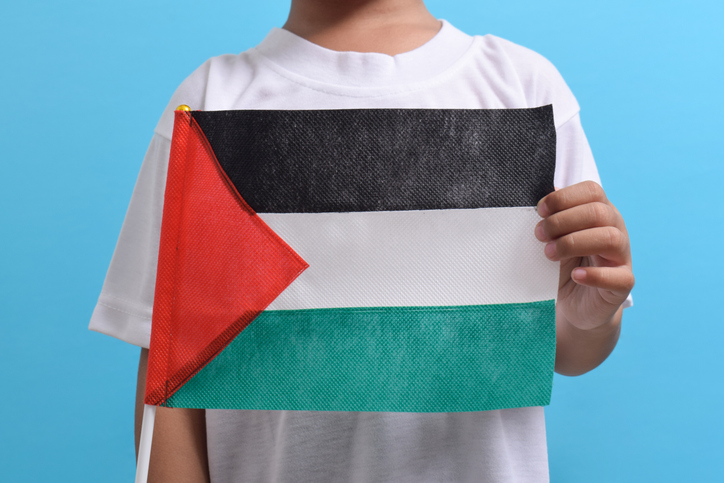
Israel’s genocide – now proclaimed as such by a multitude of credible scholars and expert authorities – is accepted as fact by billions of people across the globe, including 50 per cent of US voters. Many, though, continue to deny it.
Among those who deny the genocide – either explicitly, or by refusing to name it and speak truthfully about it – are Donald Trump, the wanted war criminal Benjamin Netanyahu, and the entire front bench of the Australian Labor Government.
While they will never admit it publicly, the Albanese Government’s chief political goal in respect to the Middle East is not the establishment of a Palestinian state. It’s our collective national forgetting about Gaza. The government’s strategy? Solidarity in ministerial silence about Israel’s crimes.
On 24 November, UN experts cited reports that Israel had violated the 9 October “peace” plan 393 times, killing 339 Palestinians (including 70 children) and wounding 871 others in the process. The response of the Labor government to this news? Silence. Not even a press release from the foreign minister. The shame. Imagine if the dead and injured were Israelis…
The Great Labor Silence on Israel’s genocide brings me to Mark Dreyfus’s appointment last week as Australia’s Special Envoy for International Human Rights, a role formerly held by such globally respected human rights luminaries as Philip Ruddock.
Is Dreyfus qualified for the role?
You might, like me, assume that the starting point for someone appointed to such a role would be the public acknowledgement of the occurrence of an ongoing, expert-declared genocide. Too much? What about the forceful condemnation of war crimes committed as part of the military campaign you deny is a genocide? I must have set the bar too high. Dreyfus has done neither.
It gets worse. In January 2025, Dreyfus travelled to Israel and met with leaders of the government committing the genocide, including Israeli President Isaac Herzog. After the meeting, Dreyfus released the following statement on X: “It was a great honour to meet the President of the State of Israel, Isaac Herzog, in Jerusalem today. We reflected on our longstanding personal friendship which echoes the bonds of friendship between so many Israelis and Australians and our two great nations.”
On 16 September 2025, eight months after the Dreyfus visit, a UN Commission concluded that Dreyfus’s longstanding friend Herzog had “incited the commission of genocide”. In its report, the UN pointed specifically to comments Herzog made on 13 October 2023, 15 months before Dreyfus flew to Israel.
What was Dreyfus’s response to the UN’s expert conclusion that his longstanding friend had incited a genocide? Total silence.
Was any of this enough for Albanese and Wong to decide not to appoint Dreyfus as Special Envoy for International Human Rights? Of course not - they’re the two driving the whole charade. Albanese himself thanked the wanted war criminal Netanyahu in August.
This is how a culture of forgetting works: you ignore the facts, stay totally silent, and hope that the silence spreads.
The only possible way you can understand Dreyfus’s appointment as Special Envoy for International Human Rights is if you understand that the political class in Australia operate in world in which political calculation trumps morality.
In his National Book Award-winning One Day, Everyone Will Have Always Been Against This (which everyone should read), Omar El Akkad wrote the following about this kind of moral corruption: “Rules, conventions, morals, reality itself: all exist so long as their existence is convenient to the preservation of power. Otherwise, like all else, they are expendable.”
I wish Dreyfus the best of luck in his new role. Perhaps he can meet with Philip Ruddock for a few pointers. Let us know if he wears his Amnesty International badge, Mark. After all, it’s appearances that matter.
