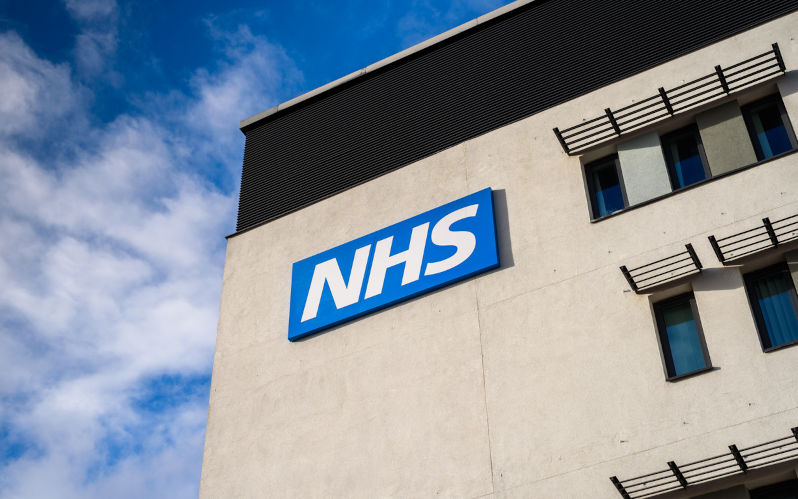
UK–US drug deal risks turning the NHS into a casualty of Trump trade politics
December 3, 2025
A new agreement with the Trump administration would force Britain’s National Health Service to pay billions more for medicines to avoid tariffs – prompting outrage from MPs, health experts and patient advocates.
The government of British Prime Minister Keir Starmer faced swift backlash on Monday after the Trump administration announced a deal under which the United Kingdom’s prized National Health Service would pay higher prices for new medicines in exchange for tariff exemptions.
The agreement in principle, outlined in a statement by the Office of the United States Trade Representative, was seen by UK lawmakers and advocacy groups as a gross capitulation to US President Donald Trump and the pharmaceutical industry that would harm the NHS and British patients for years to come.
“Giving in to Big Pharma’s demands to hike the price of medicines spells disaster for our NHS, and for the lives of ordinary people,” said Global Justice Now, a UK-based group. “We are being held to ransom. Our government must stand up to Big Pharma and for our NHS by reversing course.”
Under the three-year deal, the NHS would boost the net price it pays for new pharmaceutical drugs, many of which emerge from the US, by 25 per cent – a change that’s expected to cost British taxpayers roughly £3 billion. In return, Trump has agreed not to impose tariffs on UK pharmaceuticals.
Helen Morgan, the Liberal Democrat MP for North Shropshire, denounced the new agreement as “a Trump shakedown of the NHS.” As evidence, she pointed to US Health and Human Services Secretary Robert F. Kennedy Jr.‘s celebration of the bilateral deal.
“It cannot go ahead,” said Morgan. “RFK Jr. has put it in black and white: Trump demanded these pay rises to put Americans first, and our government rolled over. Patients stuck on crammed hospital corridors, or unable to get an ambulance, won’t forget it.”
“The British people didn’t vote for this,” Morgan added. “The government must put this agreement to a vote in parliament.”
Andrew Hill, a visiting health economics researcher at the University of Liverpool, similarly criticised the deal.
“The UK hasn’t benefited from this at all, but we’re having to pay all this extra money,” said Hill. “More money spent on drugs means less money spent on ambulances, doctors, nurses, simple health interventions.”
In addition to facing the threat of Trump tariffs, the UK government was under pressure from the powerful pharmaceutical industry to jack up NHS drug spending. The Guardian reported in September that “big pharmaceutical companies have ditched or paused nearly £2 billion in planned UK investments so far this year” as the firms “accused the government of not spending enough on new medicines.”
Survey data released just ahead of Monday’s deal announcement shows that 64 per cent of the British public is opposed to the NHS paying higher prices for medicines.
“This is a betrayal of NHS patients,” said Diarmaid McDonald, executive director of the advocacy group Just Treatment. “Big Pharma have got what they want. Donald Trump has got what he wants. In the face of their coordinated threats, the government has folded and thousands of patients will pay for this with their lives, as precious funds get stripped from other parts of the health service to line the pockets of rich pharmaceutical execs.”
“MPs need to urgently hold the government to account,” McDonald added, “and demand they publish the evidence showing the impact of this catastrophic move.”
Asked at a Monday press briefing if the deal would actually benefit US patients and consumers, as the Trump administration has claimed, or if the alleged revenue generated by the agreement would just be “sucked up” by the drug companies, White House Press Secretary Karoline Leavitt did not have an immediate answer.
“I’m going to be honest with you, Ed,” Leavitt told the reporter: “I’ll get you an answer to that question after the briefing.”
Peter Maybarduk, Public Citizen’s Access to Medicines director, argued in a statement that the agreement wouldn’t help Americans or Britons.
“ Drug prices are far too high everywhere, including in the UK, backed by patent monopolies and contributing to rationing and preventable suffering,” said Maybarduk. “This outrageous giveaway to Big Pharma does nothing to lower prices in the United States. It only hurts UK patients while distracting from the serious action needed at home to hold Pharma accountable and make medicine affordable and available for all.”
Republished from Common Dreams, 1 December 2025