Bondi, Christchurch and what a Royal Commission can – and can’t – do
January 6, 2026
After four ideologically driven attacks in six years, Australia is again asking how to respond. The Christchurch Royal Commission offers a nearby example of how inquiry, grief and prevention can be approached.
There have been four terror attacks involving Australians in the last six years.
Three of these had a religious dimension. In two, the attackers were Christian or claimed to be acting to protect a Judeo-Christian civilisation. In the third – the Bondi Hannukah tragedy – the joint attackers were Muslim and the targets Jewish.
The only attacker in these four events born overseas was Sajid Akram.
All of the attackers were lone or family actors. None was part of a terrorist cell but all were influenced by Internet groups.
Only one of these attacks was studied by a Royal Commission – the Australian Brenton Tarrant’s assault on two mosques in Christchurch. Would Australia benefit from a Royal Commission into the Bondi massacre? It is worth spending a little time considering the Royal Commission into the Christchurch events.
In date order these attacks started with Australian Brenton Tarrant’s assault on two mosques in Christchurch in 2019.
Brenton Tarrant killed 51 people in an assault on two mosques in Christchurch in 2019. He claimed to be a “cultural Christian” and had been seduced by the “Great Replacement Theory” which is a driving idea in extreme right attacks on multiculturism and non-white, particularly Muslim, immigration in Europe, the US and to some extent Australia. He carried out the attack in New Zealand, but could equally well have done it in Australia in different circumstances.
In December 2023 the Wieambilla attack killed two police officers and a civilian. The perpetrators, the Train family, were fundamentalist Christians who believed in an imminent second coming of Christ. They were obsessive conspiracy theorists and saw themselves as “sovereign citizens”. They recorded themselves during the attack and posted online in the hope of advancing their beliefs. The killings were classified as a terrorist attack by the Queensland police.
On 26 August 2025, two police officers were killed and a third injured in a shooting at Porepunkah while attempting to execute a warrant. The alleged shooter was a self-proclaimed sovereign citizen known to police. Unlike the Wieambilla incident, it has not been classified as a terrorist act because, while the perpetrator was ideologically motivated, the attack was not intended to advance a political, religious or ideological cause or to intimidate the public or coerce the government.
The latest terror attack, and equally appalling in intent and potential scale as the Christchurch event, was the Bondi Hannukah attack. While Sajid and Naveed Akram’s video manifesto hasn’t been released, police allege it included violent antisemitic rhetoric and attacks on Zionists, and identified with ISIS ideologies.
To date only the Christchurch attack has been subject to a national Royal Commission.
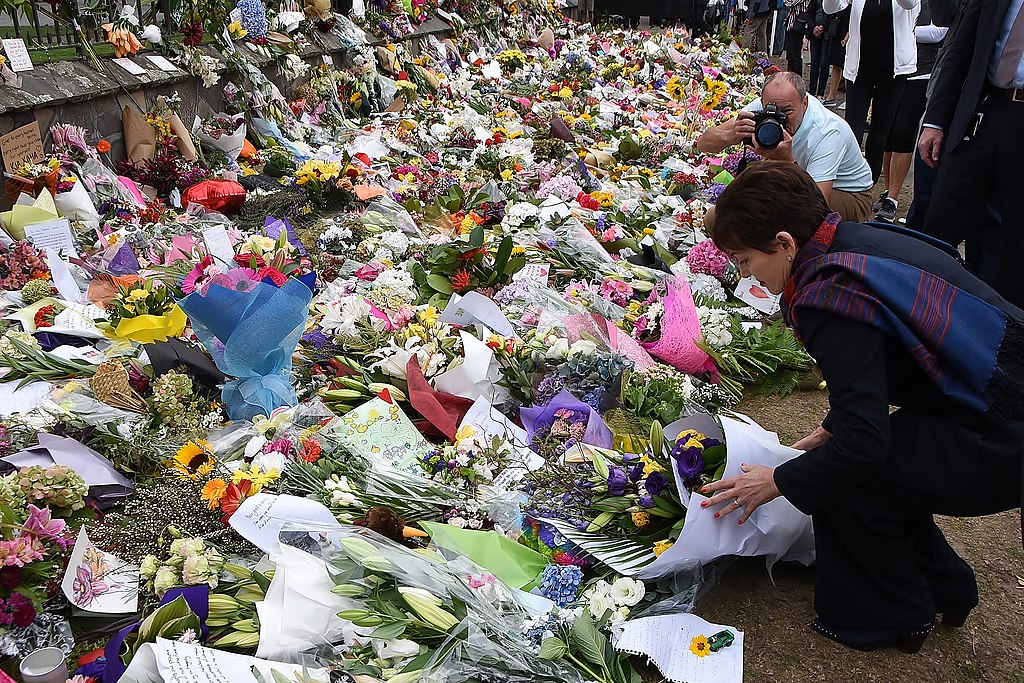
Ten days after the Christchurch massacre the New Zealand government announced a Royal Commission which took close to two years to complete (73,500 pages of evidence and submissions were considered) while the NZ Government’s formal response took a further four years. However, the government acted quickly to tighten New Zealand’s lax firearm controls. It had also promised more rigorous hate speech laws but these never eventuated due to intense public debate about freedom of speech.
The Royal Commission’s Terms of Reference principally focused on whether any public sector agencies were at fault for failing to detect and prevent the attack. It concluded they were not, but that there had been excessive concentration on the risks of radical Islamic attacks at the expense of consideration of right-wing assaults. One of the Royal Commission’s major conclusions was the importance of social cohesion:
“Social cohesion, inclusion and diversity were not on our original work plan. But, as our inquiry progressed and our engagement with communities deepened, it became clear that these issues also warranted consideration. Social cohesion has many direct benefits to individuals and communities. In contrast, societies that are polarised around political, social, cultural, environmental, economic, ethnic or religious differences will more likely see radicalising ideologies develop and flourish. Efforts to build social cohesion, inclusion and diversity can contribute to preventing or countering extremism.”
The Commission avoided the usual process of public hearings, instead holding private consultations with victims and their families, submitters (1,100 community groups made formal submissions) and examining 47 witnesses on oath in camera. This preserved secrecy where that was necessary and reduced the risk of inflaming community tensions.
It could be asked what has changed as a result of the Royal Commission that would not or could not have happened with an internal review and policy process. The answer may be ’not a huge amount.’ Some of the recommendations on gun control had already been put in train before the Commission reported and a number of the Commission’s recommendations on intelligence and police structures and coordination have not proceeded.
This suggests that the establishment of a Royal Commission does not necessarily delay government action, require or even benefit from public hearings, or result in all of its recommendations being accepted - and the window of opportunity for strong action is brief after a tragic event and Royal Commissions are almost inevitably slow.
Perhaps the Christchurch Commission’s most important role was to provide the community with a means to work through its anger and grief – think of those 73,500 pages of submissions and evidence – in a way which helped build cross community links and understanding.
This is something that the prime minister would do well to think about and quickly. The process is often as important as the outcomes. An independent review gives reassurance and people need to feel they have been heard.
It is important that the focus is forward looking as much as retrospective. How do we stop this happening again? How do we build community cohesion? How do we combat antisemitic, Islamophobic, far right and Christian nationalist and “sovereign citizen” violence? And how can a Royal Commission do this without becoming a rancorous and divisive field day for the worst amongst us?