Avoiding false conclusions
January 9, 2026
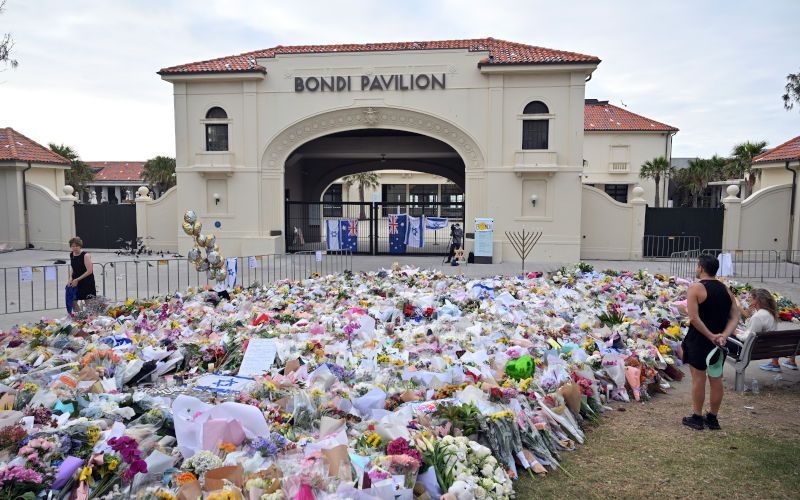
In the aftermath of the Bondi attack, explanations have been offered quickly and with strong moral force. Misidentifying the causes of violence, however, risks obscuring political responsibility and undermining efforts to reduce future harm.
It has been some weeks now since the events of a Sunday evening in Bondi. We were all shocked at those events. Now that the initial emotion attached to the killings has perhaps dissipated somewhat, it is appropriate to stand back and consider the position, with a view to avoiding false conclusions.
There can be no justification for such violence, and we must work to reduce all forms of such behaviour. In doing so, however, we – and by that, I mean our government – must focus rationally on the nature and causes of such and work to reduce same. The word ‘antisemitism’ was immediately grasped and spoken of as if it were the cause. It may have been, and if it was, that must be condemned. It may, however, not have been. It may have been Zionism and the horror that has visited upon Gaza these past two years.
Take this possible scenario. We are told by senior members of the Jewish community in Australia that 80 to 90 per cent of Jewish people in Australia support Israel’s stand in Gaza. We might assume that a similar or significant percentage supports Israel’s policies in the West Bank and East Jerusalem. Those facts might give rise to anger towards Jewish Australians on the part of a Palestinian, Arab, Muslim, or indeed any Australian.
Such person may be frustrated by the inaction of his or her government. There’s ample evidence of such inaction in respect of Gaza for example, by the current Australian government. When Prime Minister Albanese says, as he did after the Bondi event, that we must reject “hate, violence and terrorism” it is necessary that we reject all hate, violence and terrorism, including that of settlers and members of the IDF in the West Bank, East Jerusalem, Gaza, Lebanon, and elsewhere.
Failure to so reject such hatred and violence, by saying nothing about it – particularly in the context of an Israeli government which refuses to comply with international law by terminating its illegal occupation of Palestinian lands – is bound to give rise to the sort of frustration that may have been a factor in the actions of the perpetrators of the evil in Sydney.
As I have suggested, peace and humanity would be best served by governments focusing rationally on the nature and causes of violent behaviour and working to reduce all such.
Please ask yourselves these questions. If Israel had complied with the Advisory Opinion of the ICJ given on 19 July 2024 and ended the occupation, and ceased all settlements, what are the chances that the Bondi event would not have occurred?
Alternatively, if Israel had refused to accept and implement the ICJ decision and in response Australia, rather than doing nothing, or next to nothing, had sought guidance from the 18 September UN General Assembly Resolution and as a consequence imposed relevant sanctions on Israel appertaining to trade, cultural and sporting activities, would the chances that the said angry Palestinian, Arab, Muslim or other Australian have been less frustrated, and the Bondi event less likely to have occurred?
I am not saying that if Israel had complied with the ICJ’s Advisory Opinion, or if Australia had imposed sanctions, that Bondi would not have occurred. I am simply saying that the chances would have been less, and Australia would have complied with its obligation to reduce risk.