Grief, proximity and the failure of moral judgement
January 12, 2026
After Bondi, intense grief and fear shaped public response. But emotional proximity can distort moral judgement, narrowing debate and crowding out the analysis needed to prevent future violence.
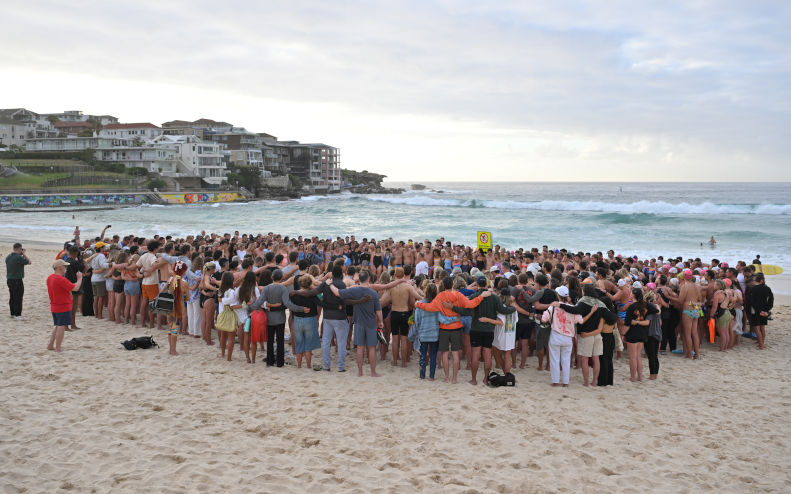
The killings at Bondi were shocking, intimate and profoundly unsettling. Fifteen people were murdered in a place many Australians recognise as familiar and safe. The grief that followed was real and human, intensified by proximity and by the knowledge that this violence occurred not in a distant conflict zone but in the midst of ordinary life. There is nothing irrational or shameful in that response. It is how human beings are wired to react when threat enters their own world.
What must be resisted, however, is the temptation to allow grief to harden into certainty, and emotion to substitute for judgement. Moments of collective shock are precisely when our capacity for rational moral reasoning is at its weakest, not because we lack intelligence or goodwill, but because stress narrows perception. Under threat, the mind seeks clarity, blame and reassurance. Complexity becomes intolerable. Context is rejected as excuse. Explanation is confused with justification.
Yet it is precisely in these moments that restraint and analysis matter most.
To examine the conditions from which violence emerges is not to excuse it. Terrorism is always morally indefensible, particularly when it targets civilians. That truth does not weaken when placed alongside an honest examination of causation. On the contrary, refusing to ask why violence occurs guarantees only that it will recur. Moral condemnation without understanding may satisfy emotional urgency, but it offers no path toward prevention or peace.
There is a further discomfort that must be acknowledged. Our response to death is not evenly distributed. The loss of lives close to home can evoke deeper anguish than the deaths of tens of thousands in a distant place. This does not make us callous; it makes us human. Emotional proximity powerfully shapes moral attention. But when public policy and political judgement are driven by this asymmetry alone, emotion ceases to be a guide and becomes a distortion.
Human beings do not make their best judgements under threat. This is not a moral failing; it is a biological one. When danger appears close, the nervous system prioritises survival over reflection. Attention narrows, emotional intensity rises, and the brain shifts from deliberation to defence. Under stress, we seek simple explanations, identifiable enemies and rapid closure. The world divides more easily into “us” and “them”.
Proximity intensifies this process. Violence that occurs nearby is processed differently from violence that occurs elsewhere. Familiar places anchor memory and vulnerability; when they are violated, the response is visceral. Distant suffering arrives abstracted, mediated through screens and statistics that cannot fully convey the human cost. The danger arises when this emotional asymmetry is mistaken for moral priority.
This is where judgement begins to fail. When deaths close to home are experienced as uniquely meaningful, while far greater losses elsewhere are registered only faintly, emotional response begins to masquerade as ethical reasoning. Strong feeling is taken as evidence of moral clarity. Those who urge caution or context are treated as cold or complicit. Explanation is recoded as apology. The space for serious moral reasoning collapses.
Political actors understand this dynamic well. Grief and fear are powerful instruments. They create loyalty, silence dissent and frame complex realities as moral tests.
Leaders face a choice: to steady emotion and widen understanding, or to amplify outrage and narrow thought. Too often, the latter prevails, not because it is wise, but because it is effective.
There is no moral ambiguity about the deliberate killing of civilians. It is always wrong. No political grievance or historical injustice can justify it. But to say that violence is unjustifiable is not to say it is uncaused. Political violence rarely emerges from inherent hatred or cultural pathology. It is almost always rooted in lived conditions: sustained deprivation, humiliation and loss of agency.
For Palestinians, these conditions are neither recent nor incidental. Decades of land loss, restricted movement, economic strangulation and political disenfranchisement have produced a society under constant pressure. Ordinary civic life has been eroded. Futures have narrowed. This does not mean that most people living under such conditions become violent, they do not – nor does it absolve those who commit acts of terror of moral responsibility. But moral responsibility and causal understanding are not mutually exclusive.
The alternative explanation, that violence flows primarily from religious fanaticism or innate hatred offers emotional comfort at the cost of truth. It reassures those at a distance that nothing fundamental must change, because the problem lies entirely with “them”. History does not support this view. Political violence has repeatedly intensified under repression and declined when rights, recognition and lawful avenues for redress were expanded.
Any serious discussion of Israel and Palestine must therefore begin with a clear distinction between Jewish people, Judaism as a faith, and the Israeli state as a political entity. Jewish communities worldwide are not responsible for the actions of the Israeli government, just as Muslim communities are not responsible for acts committed in the name of Islam. Collapsing identity, faith and state power into one fuels antisemitism while shielding government policy from legitimate scrutiny.
The Israeli state is explicitly organised around ethno-religious dominance, with legal and civic arrangements that privilege Jewish citizens over others. Palestinians live under fragmented legal regimes that deny equal rights. This structure invites comparison with apartheid South Africa, not as rhetorical provocation, but as analytical analogy. In both cases, domination is justified as security, and resistance is cited as proof of the need for repression.
History offers a crucial corrective to the idea that such violence is inevitable. In Northern Ireland, political terror declined not through repression but through justice, rights and political settlement. The transformation was structural, not cultural. Violence receded as dignity and lawful redress expanded. The lesson is not that all conflicts are identical, but that humiliation and exclusion reliably fuel violence, while justice can interrupt it. Moments of collective grief place a particular obligation on political leaders. Leadership is measured not by volume or certainty, but by restraint. Yet too often grief is politicised rather than guided. Tragedy becomes a loyalty test. Nuance is treated as weakness. Emotional certainty is mistaken for moral strength.
If peace is the objective, not rhetorical peace, but the reduction of suffering in real lives, then outrage cannot be the organising principle. Rational analysis must prevail over emotional reflex. Rights must take precedence over domination. And leadership must resist the temptation to exploit tragedy for short-term advantage.
The hardest discipline in moments like these is not feeling less, but thinking more clearly while feeling deeply. Without that discipline, we are left with cycles of grief, outrage and retaliation, endlessly rehearsed. With it, however fragile and contested, there remains at least the possibility of peace.