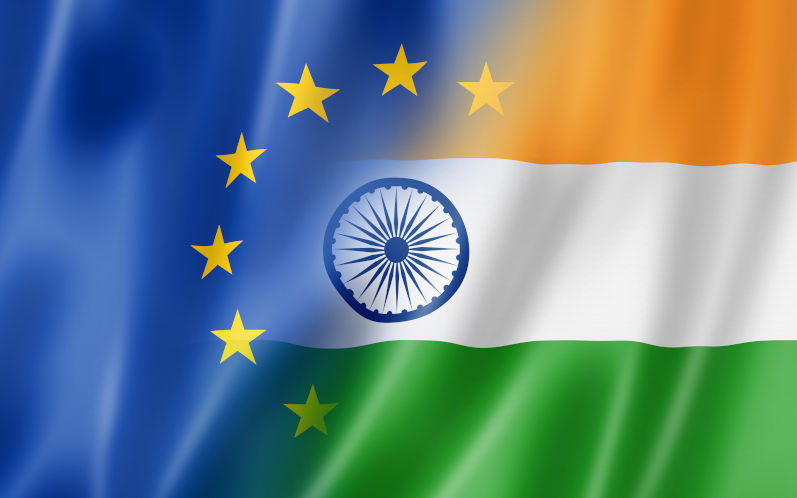
Historic EU-India trade deal to slash auto tariffs, double bloc’s India exports by 2032
January 30, 2026
Brussels diversifies away from China and US risks, while the pact makes India a more attractive place for European firms to sell vehicles and fuel growth.
After nearly two decades of efforts, the European Union and India have formally concluded negotiations in New Delhi for a free-trade deal, shoring up the 27-member bloc’s ambitions to diversify trade ties while navigating tariff pressure from Washington and a ballooning deficit with Beijing.
The agreement, announced on Tuesday and praised by European Commission president Ursula von der Leyen as “the mother of all trade deals”, is poised to reduce or eliminate tariffs on 96.6 per cent of the EU’s exports to India, by value.
Pending ratification, the deal could still take months to be finalised and implemented.
It is expected to double the bloc’s goods exports – valued at €48.8 billion (A$83 billion) in 2024 – to the world’s most populous country by 2032, according to a statement from the European Commission.
European automotives, many of which have struggled to grow and profit in China, need a new market, and India could be it. Previously, selling cars there was more difficult due to a 110 per cent import tax. This new trade deal would drop that tax to 10 per cent, with an import quota of 250,000 vehicles per year.
The EU’s top three exports to India – machinery, aircraft and medical equipment – would largely see their tariffs cut to zero, the commission added.
The deal came amid intensifying frictions in the transatlantic relationship between the EU and the United States, fuelled by repeated tariff threats from the administration of President Donald Trump, most recently in his bid to acquire Greenland.
Observers see the deal as crucial for strengthening bilateral trust.
“Given the geopolitical context, it’s important to have agreements that build confidence for both Europeans and Indians,” said Philippe Le Corre, senior fellow with the Asia Society Policy Institute’s Centre for China Analysis in Paris.
“People need to hear some good news, and Europe needs to show that it is doing something in the other areas of the world.”
Hildegard Mueller, president of the German Association of the Automotive Industry, praised the improved ties with the world’s third-largest single market for passenger cars.
“It will bring about urgently needed improved market access in an increasingly protectionist global environment, even if not all barriers are removed,” she said, adding that Brussels must ratify the agreement quickly.
German carmakers have long hoped for more growth in the Indian market. Despite being the market leader in India in the premium luxury segment and selling roughly 20,000 cars in 2024, Mercedes-Benz should be able to do better in the market, CEO Ola Kallenius said during last year’s Munich auto show.
“India has 1.4 billion people, Sweden has 9.5 million people, and we also sell about 20,000 cars. That doesn’t feel right to me,” he said as he expressed hope that New Delhi would reduce tariffs.
Europe’s agricultural sector could also stand to benefit from the agreement. The tariffs on European wine would be reduced from 150 per cent to 75 per cent, and eventually to as low as 20 per cent, depending on the quality. Similarly, tariffs on European spirits would be slashed from up to 150 per cent to 40 per cent – a reduction hailed by trade group spiritsEUROPE as a “game changer”.
India is the second-largest spirits market globally by volume, after China, and EU spirits would benefit from the deal, a group statement said on Tuesday.
The president of the French Federation of Wine and Spirits Exporters, Gabriel Picard, stressed the importance of the agreement, noting in a statement that, “for months, our exports have been disrupted both to the East and to the West”.
Trade with the US and China, two main export destinations for European wine and spirits, has come under geopolitical pressure. Despite a conciliatory conclusion, China’s anti-dumping actions against European cognac stirred tensions, while the Trump administration imposed a 15 per cent tariff on European wine and spirits, and Trump repeatedly threatened 200 per cent tariffs on French and European wine.
Le Corre cautioned that this does not mean Europe can or will completely turn its back on China, and that it will remain a key market. India also hosts challenges for European businesses, including a complex domestic environment and slow bureaucracy, but it is a good start, he said.
Unlike the stalled free-trade agreement with Mercosur – a South American trade bloc including Brazil and Argentina – the deal with India does not open up Europe’s agricultural market to Indian imports. The Mercosur pact has faced fierce opposition from French farmers wary of cheap competition from countries with looser regulations, leading to a delay by the European Parliament last week.
The absence of agricultural sensitivities should make it easier for this agreement to go through the ratification process, according to Ignacio Garcia Bercero, senior fellow at the Brussels-based Bruegel think tank.
Republished from the South China Morning Post on 28 Jan 2026