Trump and Putin can still save the last nuclear arms limit
January 20, 2026
The New Strategic Arms Reduction Treaty (New START) expires in weeks. A simple extension could preserve limits on US and Russian nuclear arsenals and buy time for deeper cuts.
There is still just enough time for Presidents Trump and Putin to extend the only remaining disarmament treaty that imposes limits on their strategic nuclear arsenals, the New Strategic Arms Reduction Treaty (New START), which is set to expire on 5 February 2026 – just three weeks from now.
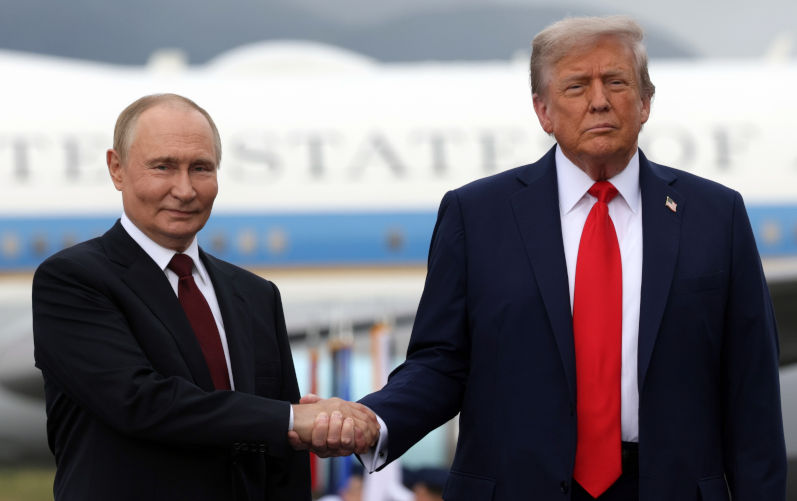
To do so, they would simply need to agree to continue abiding by the New START limits of 1550 warheads, 700 delivery vehicles and 800 launchers. As Trump asserted in July, “this is not an agreement you want expiring” and, in September, Putin announced that Russia is “prepared to continue adhering to the central quantitative restrictions” of New START for another year after its expiration, if the US “acts in a similar spirit”. Trump responded that “it sounds like a good idea to me,” but has done nothing.
The Treaty currently remains in force, although Putin stopped its implementation in 2023 because of US support for Ukraine and the US responded in kind. What this means in practice is that, although they continue to abide by their agreed-upon limits, the US and Russia no longer exchange New START data or notification on movement of their strategic nuclear forces. As well, the Treaty’s short-notice, on-site inspections, paused during Covid, have not resumed.
As Lavrov recently confirmed, this extension requires no negotiations. All that is needed is a simple announcement by Trump and a phone call with Putin to discuss the possibility of reactivating implementation. The 2025 National Security Strategy which no longer mentions Russia as a threat, and was welcomed in Moscow, should encourage this kind of constructive engagement. Crucially, the extension would avoid the serious instability and massive cost of a new nuclear arms race and allow more time for the parties to negotiate follow-on agreements.
On several occasions, Trump has acknowledged the dangers of nuclear war and the folly of spending a trillion dollars on modernisation of nuclear weapons when there are already ‘50 or 100 times’ (his estimate) the numbers needed to end life on earth. He has called for “denuclearisation”, and there were reports that, during his first term, he and Putin discussed significant cuts to their nuclear arsenals and might have achieved them, if it hadn’t been for the 2020 election.
Now back in office, he has repeatedly said that he wants denuclearisation talks with Russia and China, but only “once things settle down” (presumably meaning the end of the Ukraine war). However, denuclearisation should take precedence, since time is of the essence. It is also an overarching issue that might help reduce Russia’s security concerns and positively affect US-Russia relations.
To move beyond New START, Trump and Putin would need to negotiate additional agreements for significant cuts to their nuclear stockpiles. At some point, they will also need to include the other nuclear weapon states. However, since multi-party negotiations are always more difficult than bilateral talks, negotiation should, in the first instance, take place solely between the US and Russia.
Since these two superpowers have 87 per cent of the world’s nuclear weapons, other nuclear weapon states cannot be expected to become involved until significant progress is made. However, when it becomes clear that steep reductions in their weapon systems have increased their security and reduced their costs, others will be more likely to follow.
Similar efforts were considered by Ronald Reagan and Mikhail Gorbachev in 1986 when they met in Reykjavik to discuss the elimination of nuclear weapons. The outcome, however, foundered on a difference of opinion on how to achieve this goal. Gorbachev proposed a three-point, 15-year plan, but Reagan was convinced that his idea of building the Strategic Defense Initiative to intercept incoming missiles before they reached their targets was best. He even offered to share SDI with the Soviets, arguing that once both sides deployed it, they would be free to eliminate their nuclear weapons.
Gorbachev, however, did not believe that Reagan would share SDI technology, and since the Soviet Union could not build such a system without bankrupting itself, feared that it would confer nuclear superiority on the US. Thus, when Gorbachev insisted that SDI be confined to the ‘laboratory’ for ten years, Reagan refused. The result was that an historic opportunity was lost. Certainly, Trump should be careful not to fall into the same trap as Reagan by insisting that his Golden Dome proposal be a prerequisite for substantial cuts, since Putin is as unlikely as Gorbachev to agree, for similar reasons.
In charting this path, Trump would have advantages over former US presidents. He doesn’t mind breaking with tradition or doctrine. He has a Cabinet, Pentagon and Congress that will go along with him. He has a good relationship with Putin and a working relationship with Xi and the leaders of the other nuclear powers (including Kim Jong Un). Such an initiative requires boldness and persistence, both of which Trump possesses.
Moreover, denuclearisation would be popular at home for Trump. According to a 26 November YouGov poll, almost half of Americans think it likely that the US will get into a nuclear war in the next ten years, and two-thirds are ‘very’ or ‘somewhat concerned’ about personally experiencing nuclear war. Few believe that nuclear weapons are making the world a safer place and 56 per cent believe that countries with nuclear weapons should get rid of them – if all do.
A concerted effort over the remaining three years of Trump’s presidency to achieve substantial reductions of nuclear weapons, laying the groundwork for their eventual elimination, would surpass Reagan’s efforts and – however legion his other failings – give at least some genuinely positive cause to cement his place in history. It would also earn him the everlasting gratitude of the world’s people for having removed the greatest existential threat the world has ever known.