Iran in the vortex: what's really happening
January 16, 2026
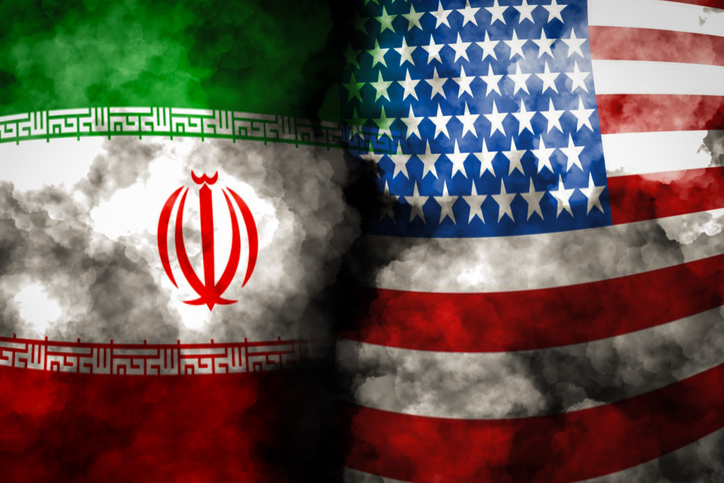
As protests unfold in Iran, Israeli and US figures openly talk of regime collapse. Foreign interference risks worsening violence and derailing change from within.
Former Israeli Defence Minister Yoav Gallant told Israeli army radio this week that Israel must be ready to act when the Iranian ‘regime’ is ready to fall.
“At this moment, when what matters most is the mass action on the ground, we need to stay in the background and steer things with an invisible hand," said Gallant, who is the subject of an ICC arrest warrant.
Former CIA director and US Secretary of State Mike Pompeo tweeted this week: “Happy New Year to every Iranian in the streets. Also to every Mossad agent walking beside them."
I don’t believe this was a case of letting the cat out of the bag; I think this is both true and a form of psy-ops (psychological warfare), trying to unnerve the Iranian government and encourage the kind of harsh crackdown that regimes resort to when they feel cornered. MI6, CIA and Mossad are active in Iran, much to the frustration of many of the large numbers of anti-government protesters determined to end the rule of the clerics.
According to Israeli and Western sources, tens of thousands of Starlink terminals were smuggled into Iran to bypass any Internet shutdown. Yet the government – apparently using sophisticated Chinese ‘kill switches’ – were able to disable most of them, thus decoupling people within Iran from external coordinators.
“Help is on the way,” Trump said on 12 January. How did that kind of ‘help’ go for Iraq, Libya, Afghanistan or so many other countries going back to the Guatemalan Silent Genocide or the Vietnam War? American ‘help’ resulted in the overthrow of the democratically-elected Mossadegh government and the installation of authoritarian rule under Shah Pahlavi in 1953. The West got their hands on the oil.
This time, if they can’t get regime change they will be happy with regime destruction, civil war and the end of the multi-century project for a unified and sovereign Iranian state. So far, things have not gone to plan.
Long-standing Israeli security analyst Ehud Ya’ari told Israeli Channel 12 this week that the Iranian government remained firmly in control and that there was no evidence of momentum in the protests.
“I want to say things that disappoint not only the viewers, but also me,” he said. “At the moment, we do not see a continued expansion of the uprising. It is not taking on new and larger dimensions, as it did in 1978–1979 before Khomeini returned to Tehran.”
This is inconvenient if the West indeed plans to launch a war. The first Gulf War was partially sold on the killing of imaginary Incubator Babies, the second Iraq War was sold on imaginary Weapons of Mass Destruction, the genocide in Gaza was launched amid lurid tales of imaginary Beheaded Babies. War propaganda peddled by our mainstream media demands worthy victims.
As shown in Palestine and in Iran, the West tends to have a spitting contempt for international law if it is their team that tramples on it. Two cornerstones we should never forget are:
Article 2(4) of the UN Charter - Prohibition of Force: All Members shall refrain in their international relations from the threat or use of force against the territorial integrity or political independence of any state.
And, yes, that does include powerful white countries. And yes, that does include Russia.
Secondly, we should never forget the 1965 UN Declaration on the Inadmissibility of Intervention in Domestic Affairs. Back in the 1980s the Reagan Administration secretly sold weapons to its enemy Iran to secretly fund Nicaraguan Contra death squads. In the 1984 Nicaragua Case at the International Court of Justice, international law was clarified by reaffirming that the principle of non-intervention “involves the right of every sovereign state to conduct its affairs without outside interference”.
Alastair Crooke, a former high-ranking member of Britain’s MI6, and an expert on Islamist revolution, says Mujahedeen-e-Khalq fighters trained by the CIA in Albania, along with Kurdish fighters trained by the US in Syria, infiltrated Iran recently and played an important role in the violence. “We’ve had demonstrations periodically in Iran but these were much more violent.” He suggests the ploy was to provoke retaliatory regime violence which could act as an accelerant to further popular escalation.
There is a large anti-government portion of the population in Iran which has long-standing and genuine grievances. I know and admire a few of them. There have also been equally large pro-government protests, largely unreported in the Western media.
Foremost amongst the anti-government protesters are women and, for that reason, I interviewed Aida Tavassoli, an Iranian women's rights activist with the Woman Life Freedom movement.
“I think the people of Iran are just so fed up right now,” she told me. “I’ve always said Iran is like a pressure cooker. Each uprising is like you put more steam in the pressure cooker. Eventually it will explode.”
Aida became active in advocacy for women’s rights in Iran in 2022 when Jina Mahsa Amini, a 22-year-old Kurdish-Iranian woman, died in a Tehran hospital after being arrested by Iran’s morality police for allegedly improper hijab wearing. Her death sparked major protests inside Iran and around the world. The circumstances of her death are, typically, contested.
“The whole world basically erupted into protests over the lack of women’s rights in Iran,” Tavassoli says. “The entire legislation of Iranian law is against women; they treat us as second-class citizens. We have basically no right to divorce, to the custody of children, to say no to child marriage. There’s a lot of honour killings in Iran, which we think are perpetuated by these discriminatory laws.”
This time around the most prominent anti-government groups rally around Reza Pahlavi, the son of the deposed Shah, who lives in the US, and is endorsed by Israel, the US and powerful parts of the Iranian diaspora. According to Iran watchers I follow, his popularity within Iran is limited.
Pahlavi is in direct contact with Trump. He publicly supported the American bombing of his own country last year. He has expressed a desire to be in Tehran sooner rather than later. “We will Soon Be By Your Side.” he tweeted to protesters, urging them to stay on the streets.
Images of rallies around the Western world in support of the anti-government action inside Iran typically show three flags prominent in the protests – the Lion and Sun flag of the Pahlavi regime, the Israeli flag, and the US flag. This alliance between the monarchists, the Israelis and the Americans is concerning for many Iranians, including anti-government people like Aida Tavassoli.
“It almost feels like Reza Pahlavi and his dear friends – the Israelis and Americans – are stealing our revolution,” Tavassoli says. She emphasises any change should come from civil society inside Iran not external actors.
London-based Middle East Eye (MEE), with reporters on the ground, quoted one of the protesters, Sara: “We want regime change, but we do not want our country to be destroyed. And given Israel’s record, it would not be surprising if they tried to exploit this situation."
Not in any way discounting the validity and determination of many anti-government protesters, the events of the past month show all the tell-tale signs of a US colour revolution.
The Islamic Republic is under the kind of pressure that the West has become adept at applying. The US reneged on the JCPOA nuclear agreement in 2018. Subsequent sanctions and further isolation are powerful. US-Israeli assassinations and missile attacks triggered the 12-day War last year. Some believe the sharp decline in the Iranian currency this month was part of an orchestrated destabilisation campaign. Combine this with corruption and what is widely assessed as incompetent economic management and you have all the ingredients for serious discontent. Ordinary Iranians are suffering and frustrated; many are turning against the government.
The US is moving more attack assets into the region; Israel apparently wants to try its luck again. Here we go, yet again. As Professor Glenn Diesen writes: “The result is always the same – from the Arab Spring onward. The country which was to be liberated is instead destroyed. So we've all seen this movie before.”
Protesters make the valid point that the Iranian government has shown itself incapable of the kind of reform that would recognise the pluralistic nature of Iranian society. Whether it is capable of reform is a moot point but all regimes crack-down on dissent in the face of serious external threats and that is why I believe the US-Israel-EU approach is disastrous and counterproductive. Change must come from within and not be imposed by powerful hostile countries – not least by ones actively pursuing genocide in Palestine.