Irony abounds: Indonesia gets human rights protection job
January 28, 2026
Indonesia has assumed the presidency of the UN Human Rights Council, raising questions about credibility, consistency and the future of scrutiny in places like West Papua and Iran.
Here’s bad news for Iranian dissidents protesting the 39-year rule of cleric Ali Hosseini Khamene; if they’re hoping for support from the UN Human Rights Council best get the update. It’s now led by Indonesia.
A glance at the public record of the Southeast Asian nation’s behaviour in West Papua shows there’s little chance of the Council’s involvement in Iran.
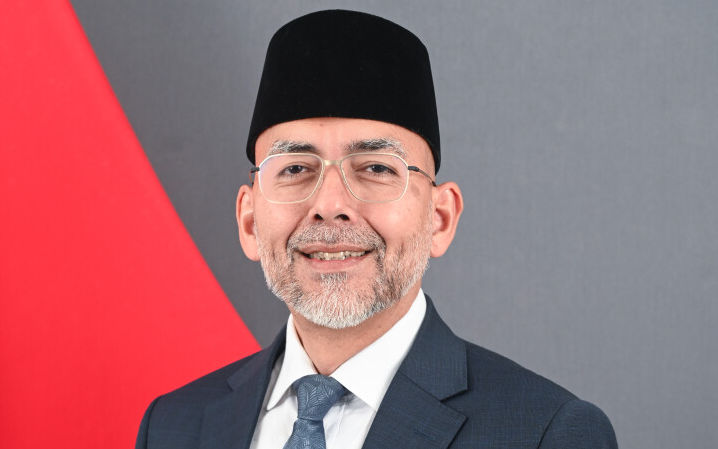
The one-year presidency of the Geneva-based UNHRC (not to be confused with the UNHCR refugee agency) has been passed to the world’s fourth largest nation; the Council is headed by Sidharto Suryodipuro, 59, who once served in Canberra and as Ambassador to India.
It’s the first time Indonesia has chaired the UNHRC since its establishment 20 years ago. Sidharto has the status of an ambassador and will rule three sessions scheduled for late February, June and September.
His appointment got off to a bad start with comments from Amnesty International: “Boasting that Indonesia ‘successfully won’ the position of president … is not based on the facts.”
The career diplomat inherited the rotational position from Switzerland’s Jürg Lauber; it was the turn of the Group of Asia and the Pacific Small Island Developing States_._
Indonesia got the job because it was the only candidate.
Indonesia is not an exemplar of human rights. It’s ranked as a “flawed democracy” by the US-based Freedom House, an NGO set up in 1941 to “combat fascism”.
What the UNHRC can do about the riots in Iran is probably limited to issuing statements deploring the bloodshed and urging talks.
Sidharto’s CV is a record of competence, though not as a backer of causes or settler of disputes. His actions on the Islamic theocracy of Iran are limited; coming from a country with the world’s biggest Muslim population is not an advantage. The two nations don’t share the same beliefs.
Indonesia follows Sunni Islam and bans Shia Islam. This is the faith practised in Iran.
The appointment has been savaged by the West Papua Freedom Movement’s Benny Wenda. He claims Indonesia is “unfit” to hold the position and “makes a mockery of the UN and their claim to uphold international law and human rights …
“Indonesia holding the presidency (of the UNHRC) is akin to apartheid South Africa leading it in 1980.”
Access to the three provinces of West Papua – the western part of the island that has Papua New Guinea on the eastern half – has long been denied by Jakarta to human rights defenders, foreign NGOs, humanitarian groups, media and diplomats.
Said Wenda: “Over 105,000 West Papuans are currently displaced due to Indonesian military operations.
“West Papuans had suffered breaches of international law on a daily basis for the past 63 years, not just in relation to violent conflict but through violations ranging from land rights being taken away to infringements on the right to freedom of speech.”
The official response has been curious. The government told Radio NZ that it wouldn’t respond to Wenda’s comments.
However, it added a confusing statement: “We would like to emphasise the issue of the enhancement of human rights protection that, unfortunately, nowadays become (sic) a worrying issue in most countries, be it developing or even developed countries”.
“One of the instruments that we would like to utilise more is the Universal Periodic Review_,_ especially since we already have a strong and established cooperation between related bodies, such as our National Commission on Human Rights.”
According to the UNHRC, “the Commission is a unique mechanism that calls for each UN Member State to undergo a peer review of its human rights records every 4.5 years.”
When the Commission reported on Indonesia in 2022, Jakarta rejected 59 of its 269 recommendations.
Indonesia-based Human Rights Watch researcher Andreas Harsono was reported as saying his country “has a very bad human rights record in West Papua.
“The conflict (involving demands for independence) is intensifying and spreading to new parts, with an increasing number of Indonesian troops deploying in the region and a growing number of weapons held by West Papuan militants.”
In the past Indonesia has not allowed the UNHRC reps into West Papua. We don’t know if the ban will remain now that Indonesia is running the organisation.
Said Harsono: “Indonesia is very good at wishy washy talk in delaying things, that’s what the Indonesian diplomats did over this UN visit to West Papua.”
In 2023, the Indonesian government ordered the UN resident coordinator in Jakarta, Valerie Julliand, to immediately leave the country due to UN criticism regarding human rights in West Papua.
Whether Sidharto can use his new position to finally unlock the door to the UNHRC delegates is unclear, but following his appointment he promised an open approach:
“I will engage closely with all member states, observers, non-member states, specialised institutions, national human rights institutions, civil society organisations, and regional organisations, recognising their vital role in the human rights architecture.”
Meanwhile, Indonesia’s Minister for Human Rights, Natalius Pigai , said Indonesia would use its position “to counter breaches of international law in Venezuela and elsewhere:
“(An Indonesian as UNHRC president) will help Indonesia change the world. We must not wait until 2045 (Indonesia’s centenary) to lead the world; we must start now and help build a better civilisation.”
Harsono claimed that Pigai, who comes from West Papua, had “rarely spoken of the issue” involving his province in his capacity as minister.
The NGO KontraS, the Commission for Disappeared and Victims of Violence (Komisi untuk Orang Hilang dan Korban Tindak Kekerasan) added:
“Paradoxically, the UNHRC is being led by a state that routinely disregards public aspirations and criminalises expression and protest within its own civic space.
“Indonesia has an opportunity to prove that human rights leadership is not simply a matter of diplomatic prestige, but of value consistency, principled advocacy, and genuine political will to place human rights above narrow state interests.
“Without critical reflection and concrete action, the presidency risks becoming an empty symbol that offers no meaningful contribution to democratic life at home.”

