Heatwaves, bushfires, and the words that save lives
January 17, 2026
As heatwaves and bushfire risks intensify, emergency language has shifted too. The challenge is to warn clearly without losing trust.
In early January, an elderly man was interviewed by an ABC journalist on Terrigal Beach on the New South Wales Central Coast. He was agitated, disagreeing firmly with the use of the word ‘catastrophic’ in relation to heatwave conditions and the potential for deadly bushfires. He provided a moment for us to reflect on the use of language in situations of potential disaster.
The man was suggesting that in Australia we have always had hot weather, and the modern approach to describing it amounted to exaggerating a well understood problem. In effect, he was saying, authorities and the media were imagining things; hot weather was part of the scene in summer, always has been, and we should just accept it. No need to hype it up.
This man – and there are many who share his perspective – was missing the point. Understanding of natural hazards changes over time, as do standards of dealing with it, and it should be no surprise if language follows suit.
Decades ago, awareness of heatwaves causing more deaths in this country than all other agents of natural disaster combined was lacking, although that reality has probably been the case for a long time. Moreover, atmospheric warming, even by seemingly small amounts, has almost certainly been exacerbating the problem.
Globally and in Australia, temperatures are on the rise – not massively (and not able to be sensed by individuals) but inexorably and at increasing rates. The small changes in average temperatures are likely to be having substantial impacts.
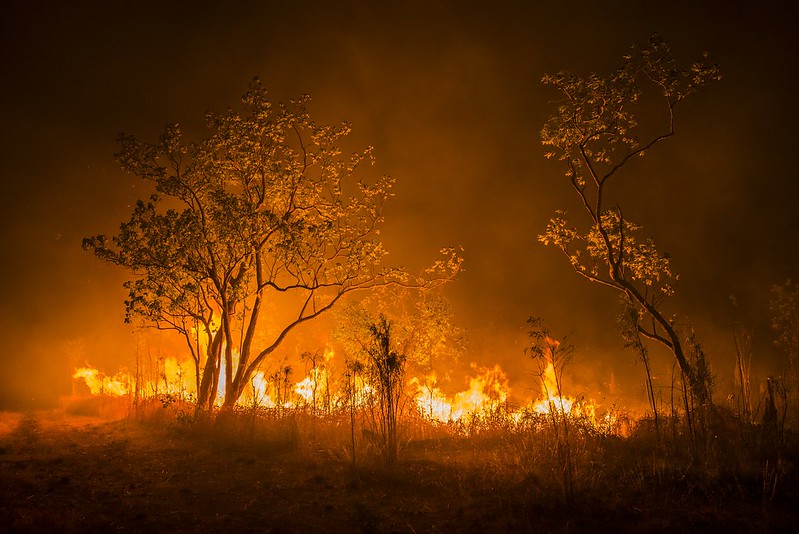
Rising temperature is not a matter of contention but one of simple observation, and it is probable that temperature increases are increasing the frequency, intensity, scale and duration of heatwaves. They are also exacerbating the age-old problem of bushfires, lengthening bushfire seasons and, in times of widespread drought (as in the Australian summer of 2019-20), creating fire hazards over larger areas than we have been used to. In that summer, there were fires burning simultaneously in all six states and both territories. This was unprecedented and brought severe problems of resourcing for the fire agencies.
Globally, the same problem has become apparent with fire seasons in the two hemispheres showing signs of overlapping. This too has caused difficulties of resourcing, the movement of fire-fighting responders and equipment between, for example, Canada and Australia becoming problematic. Meanwhile forest is being lost to fires at a higher rate than previously and in the northern hemisphere fires are burning further north than was previously the case – even into permafrost in the Arctic.
Beyond all that, emergency managers have come to realise that language that compels is needed to get people’s attention during emergencies. It helps to stimulate appropriate action on the part of those in potential danger.
The word ‘catastrophic’ has meaning in this context: it can be used to break through the torpor that people often feel in the face of looming disaster and which feeds the “she’ll be right” attitude that is integral to our reaction to matters of concern. It is a more compelling word than either ‘serious’ or ‘severe’, and more practical and less theoretical in sound than ‘extreme’.
People understand what ‘catastrophic’ means. It is an arresting word.
It is difficult to get people to evacuate from their homes. Homes are sanctuaries which we want to believe are safe. We don’t expect them to be flooded or burnt. We have to be persuaded to act to leave or protect them when these things become possible. The words we use in public communication (like warnings) must convince in order to elicit a response.
It is also difficult to overcome the feeling in some people’s minds – the elderly man on Terrigal Beach was probably an example – that authorities habitually tend to exaggerate danger. Using arresting language is part of the managerial effort these days because it can help to overcome the natural resistance that people feel about being given advice they’d rather not hear. Nobody welcomes being told or advised to leave home. Evacuation is nobody’s hobby.
These things are barriers that must be broken through.
Of course, care needs to be taken to avoid over-using arresting language or using it in inappropriate circumstances. ‘Catastrophic’ fire danger is not an everyday thing, and nor is advice to evacuate one’s home. Over-use could be dangerous in terms of the maintenance of community trust, something that emergency managers fear because of the well known and oft-quoted (and in emergency service training programs much discussed) ‘cry wolf’ phenomenon. Indeed, concern about the potential for crying wolf has tended to discourage the use of arresting terminology by the emergency services in the public arena in the past.
The use of words like ‘catastrophic’ might imply that this fear has receded in recent times. Not to use the word on infrequent occasions when it can be justified might now be seen as a risk in itself.
The ’here and now’ of all this is not the only matter of concern. There is incontrovertible evidence globally and in almost all parts of the world, including Australia, that average temperatures have increased over the past 150 years. Moreover they have definitively increased at an increasing rate, suggesting strong momentum and little likelihood of any imminent reversal. Heatwaves and bushfires are very likely therefore to become issues of increasing concern in both the near term and the longer one. The management challenge will become greater.
The prospect for our children and grand-children is anything but inviting. But the challenges of heatwaves and bushfires are already substantial – and increasing.