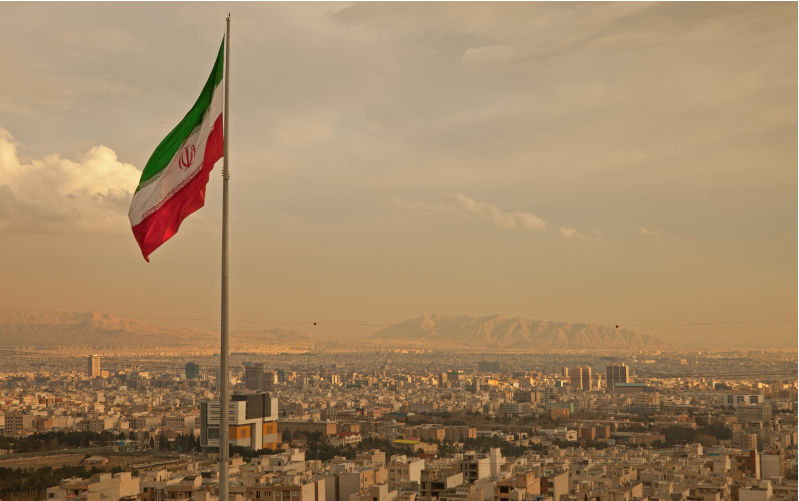
Protests and consequences: Gaza and Iran
January 18, 2026
Australians can condemn repression in Iran and still focus on Gaza, where our government’s leverage is real and our moral responsibility is direct.
In his discussion of the conflict in Kosovo, Noam Chomsky outlined three broad principles:
- People are responsible for the anticipated consequences of their choices of action (or inaction), a responsibility that extends to the policy choices of one’s own state to the extent that the political community allows a degree of influence over policy formation.
- Responsibility is enhanced by privilege, by the opportunity to act with relative impunity and a degree of effectiveness.
- For profession of high principle to be taken seriously, the principles must first and foremost be applied to oneself, not only to official enemies or others designated as untrustworthy in the prevailing political culture.
These principles can be invoked again today in response to claims that those who have campaigned to criticise Israel and end its genocide in Gaza have been conspicuously absent from the streets in support of protestors in Iran confronting the repressive apparatus of that state.
Interestingly, there is an implicit acceptance here of the killings in Gaza from those demanding consistency about human rights violations in both places. It places the anti-demonstrators in a quandary. Israel’s supporters can’t seem to decide between denying that mass civilian deaths have occurred (“Hamas propaganda”) and justifying them as self-defence (“what else could we have done?”).
For brevity we can put to one side the extent to which the protests in Iran have been aided and abetted by agent provocateurs and Western intelligence agents on the ground. Whatever happens, the legitimacy of a new political dispensation in the country would depend on it being seen as endogenously driven, not exogenously imposed - as in the past.
Several additional points are worth raising.
It is Israel, not Iran, which claims to be defending Western values and Western civilisation. Its leaders have argued that attacks on Gaza, Lebanon, Syria, Iran, and Yemen constitute a great war for civilisation, with Israel as the spearhead in an existential struggle that must be won.
Perhaps as it slaughters innocent civilians in Gaza, it is doing precisely this? After all, the history of the West is replete with violence, colonialism, slavery, the seizure and occupation of other people’s land, regime changes, resource extraction and genocide.
Protests against the Gaza genocide in capital cities across the Western world are a reminder, however, that not everyone defines Western values in the same terms as the Netanyahu Government and large swathes of Israeli society. The ‘West versus the rest’ binary may play well in Washington and London, but as a cover for the worst crimes in international law it is little more than a pretext for mass murder, ethnic cleansing and the theft of other people’s land.
No-one should turn a blind eye to Iran’s crimes. The question is what can we do about them. What leverage do we have? Unlike with Israel, we do not provide the mullahs with arms, finance, intelligence and diplomatic protection so they can massacre their enemies. Our “opportunity to act with relative impunity and a degree of effectiveness” is therefore extremely limited.
Protestors concerned about the slaughter in Gaza can oppose the visit of Israel President Herzog, pressure the government to stop arms sales to Israel, demand Canberra recognise Palestine, demolish the Albanese Government’s argument that Israel was engaged in “self-defence” as it slaughtered women and children, support votes against Israel’s killings at the UN, broaden the public’s understanding of Palestine’s history and undertake acts of civil disobedience.
Beyond expressions of solidarity with the people of Iran, which are worthy and should be encouraged, what else can be done here to attenuate the violence there?
We are morally complicit in Israel’s violent attacks against Palestinians and the country’s neighbours. Where we have a shared responsibility for violence and have the opportunity to end it, we are morally bound to do so. This is particularly so when we can act “with relative impunity and a degree of effectiveness,” although some supporters of Israel pushing for a Royal Commission into the Bondi massacre seek to end this impunity.
Although economic sanctions have crippled Iran’s economy and driven much of the population to deprivation and despair, we are not making it possible for Tehran to repress its citizens as we are for the holy state. This distinction seems lost on the political right who seem blind to our joint responsibility for Gaza’s destruction.
Some external opponents of the “regime” in Iran may wish to reprise 1953, when the US and UK overthrew the only democratic government in Iran’s history, ushering in years of brutal repression by the tyrannical Shah and ultimately paving the way for the Islamic revolution in 1979. Others may consider the country’s vast oil reserves “ours” as the Trump Administration does with Venezuela’s.
No-one, however, should be fooled into believing that the actions of the West are motivated by what is in the best interests of the people of Iran, especially if they involve military strikes by the US and Israel in coming days. As in 1953, this has never been a priority and there is no evidence that circumstances have or will change.
As Chomsky’s last point reminds us, if our so-called crusade for democracy, respect for sovereignty and the ‘rules-based international order’ is to be taken seriously, these principles “must first and foremost” be applied to ourselves. Failing to do this will only again remind the rest of the world that the West is violent, unprincipled and hypocritical – a dangerous threat they must resist and overcome at any cost.