Dangerously alive: summer, sharks and a ritual encounter with danger
January 18, 2026
A beach swim, a shark warning and a familiar summer ritual open up bigger questions about safety, fear, and what it means to feel alive.
This summer at a popular beach near Melbourne, swimmers were ordered to leave the water after lifeguards sighted a four-metre great white shark beneath the pier. A warning siren sounded and the Lorne beach was evacuated just metres from the course of the annual pier-to-pub ocean swim.
A few weeks earlier, the same beach had been cleared following another shark sighting, accompanied by familiar instructions to report the sighting and keep families safe.
In both cases, the response was swift and procedural: minimise risk, prioritise safety. Despite this, the annual pier-to-pub ocean swim at Lorne went ahead this year without incident.
For over two decades, I have taken part in a summer tradition that involves swimming the 1.2 kilometres from the Lorne pier back to the pub on the foreshore. Although associated with a public event, I developed my own version of it, which over time has acquired a recognisable sequence.
The day must be exceptionally hot. The drive to Lorne follows the same route. I play the same Beach Boys music, walk barefoot to the pier, and do the swim regardless of conditions. Afterwards, I walk up the same mountain path, swim in a rockpool, eat fish and chips on the beach, and drive home in the dark.
A few years ago, I found myself experiencing a strange yet familiar tension. As I prepared to jump from the end of the pier, an elderly Greek man fishing nearby said casually, “Saw a great white shark here early this morning.” I nodded, thanked him, and walked back and forth along the pier, trying to think. It would be foolish to swim now. But it did not feel right not to.
Before I fully realised what I was doing, I was in the water. Although it was 38 degrees, it was shockingly cold. I swam away from the pier, occasionally glancing over my shoulder, acutely aware of how exposed I was. If I saw a fin, there would be little I could do. Despite my trepidation, I could not help but take in the disarming beauty around me: emerald water, an azure sky, the green hills shimmering in the heat. When I finally reached the shallows and passed through the breaking surf, I felt an overwhelming sense of elation. I was alive.
In our wider culture, summer holidays are framed as a time of rest and recuperation. Yet this promise is constantly unsettled by the way danger is magnified through media coverage and public warnings – we are repeatedly reminded of what can go wrong. The result is a persistent tension between the expectation of safety and the heightened visibility of risk, one that leaves us uncertain how to live with danger.
To make better sense of this tension, I turn to Sigmund Freud, who introduced one of the most unsettling ideas in modern thought: the death drive. Freud proposed that human beings are not motivated solely by pleasure, survival, or self-preservation, but are also drawn toward destruction and death. He pushed this idea to its most disturbing conclusion, writing that “the aim of all life is death.”
Freud was not suggesting that people consciously wish for death, but that they are unconsciously trying to escape the difficulty and intensity of living. This unconscious pursuit generates anxiety, and with it a desire for relief, a pull toward non-being – an imagined state in which striving, risk and desire might finally cease. The death drive rises from our recognition that life cannot be fully contained, secured, or made safe.
Modern culture often responds to the anxiety identified in the death drive by seeking to neutralise it, making safety and control the highest priorities. Friedrich Nietzsche helps illuminate what is lost when this impulse toward safety dominates.
Nietzsche argued that flourishing cultures hold together two forces: the Apollonian and the Dionysian. The Apollonian is associated with form, structure and control, including rules, procedures and lifeguards. It creates piers, pathways and rituals that make life navigable, favouring art that prizes clarity, proportion and idealised form, as seen in the famous sixth-century BC statue of Apollo at Delphi.
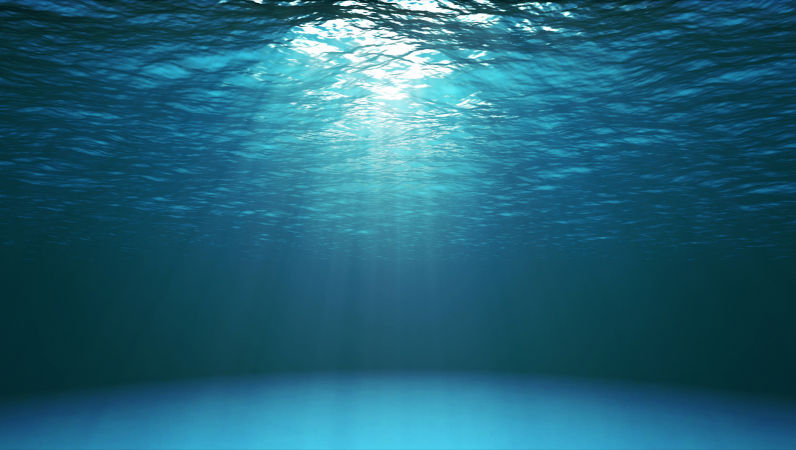
But this is only half the picture. Beneath the pier lies the Dionysian realm of danger and exposure, where sharks lurk and life and art reveal their indifference to human designs. Nietzsche believed that modern Western culture has become dangerously one-sided, clinging to Apollonian order while denying the Dionysian forces on which it rests.
The safe, highly structured, and widely popular music of Taylor Swift and Ed Sheeran suggests that his diagnosis still holds. An exception can be found in the 1960s counterculture, particularly the music of The Doors and the life of Jim Morrison, where intoxication, danger, and the loss of control are treated as sources of truth and vitality.
This points to the fact that the Dionysian is not merely destructive or terrifying; it is also life-giving and creative: the source of renewal, transformation and vitality, the force through which rigid forms are broken apart so that new meaning can emerge. Nietzsche believed that cultures must periodically return to this Dionysian realm if they are to remain alive and healthy rather than safe, orderly and repressed, unwilling to confront the death drive.
In contemporary culture, encounters with this Dionysian reality rarely arrive directly. Instead, they are mediated through warnings and instructions designed to remove danger from experience altogether. What disappears is not risk itself, but our capacity to remain with it long enough for it to reveal anything at all.
Only recently have I recognised that each summer at Lorne I am taking part in a ritual that allows engagement with the dangerous, unpredictable and unforgiving ocean. That is, a ritual understood as a repeated, carefully structured sequence of actions that alters our orientation toward life and death, often without requiring full conscious understanding.
Freud and Nietzsche provide a way of understanding this ritual. What appears as reckless or dangerous behaviour reflects both the death drive and a necessary engagement with the Dionysian underpinnings of life. These dimensions of lived experience have not disappeared, but often pass without lasting cultural recognition, even when they take place in public. The tension between safety and intensity, order and terrifying elation, is easily forgotten in a culture that treats danger as a problem to be eliminated rather than a condition to be lived with.
For almost two thousand years, Western culture relied on a public symbol capable of holding these tensions in check: the crucifix. At the centre of public rituals, churches and shared moral imagination, this symbol did not deny danger, suffering, or terror, but placed them at the heart of human existence. Death was not bypassed but endured, and life emerged not despite suffering but through it. This symbol offered a form of psychic integration, one that acknowledged vulnerability without collapse and affirmed life without promising immunity from suffering.
In modern Western culture, that balance has largely been lost. We are left with the empty cross: resurrection without crucifixion, transcendence without ordeal. Suffering is medicalised, managed therapeutically, or avoided altogether.
Through my own experiences over successive summers, I have come to see that the capacity to hold tension through shared public symbols and rituals has weakened, even if it has not disappeared altogether. While the recent pier-to-pub swim is a tightly managed but notable exception, this capacity more often re-emerges in highly structured individual rituals that allow people to encounter danger within an otherwise regulated and risk-averse culture.
I have come to call this modern ritualistic orientation “DARK Spirituality”. I first introduced the term in response to a growing unease I encountered among students and the wider culture that contemporary accounts of wellbeing, resilience and meaning were missing something essential. The acronym DARK names what modern Western culture struggles to acknowledge: that Difficulty, Ambiguity, Revelation and Kinesis are not irrational states to be eliminated, but conditions through which meaningful ritual can bring about a reconnection with the life-giving Dionysian elements. Taken together, these states describe a way of engaging in life that accepts danger, uncertainty, insight and restlessness as necessary rather than pathological.
In this sense, DARK Spirituality does not oppose the modern world; it responds to it. It takes seriously Freud’s recognition that life is inherently difficult and disturbing, and that human beings are aware of this through the death drive. It also answers Nietzsche’s warning that cultures which deny danger and extremity become lifeless rather than secure. The Apollonian pier offers structure and reassurance, but it cannot, and should not, try to abolish the Dionysian depths beneath it. My experience at Lorne illustrates how a summer ritual allows those depths to be approached without being consumed by them.
DARK Spirituality does not deny the need for caution or responsibility, but it rejects the illusion that human experience can be made safe without engagement with the darker aspects of life. The ocean remains unpredictable and unforgiving, whether we acknowledge it or not.
Perhaps the deeper purpose of summer was never simply rest or recuperation, but the chance to take part in a ritual that helps us to feel dangerously alive. To deliberately engage in a difficult and discombobulating situation is to return renewed rather than diminished.