The US is powerless to push China out of Latin America
January 21, 2026
Trump’s move on Venezuela signals a wider push to squeeze China out of Latin America. But Beijing’s trade, investment and infrastructure ties may prove hard to unwind.
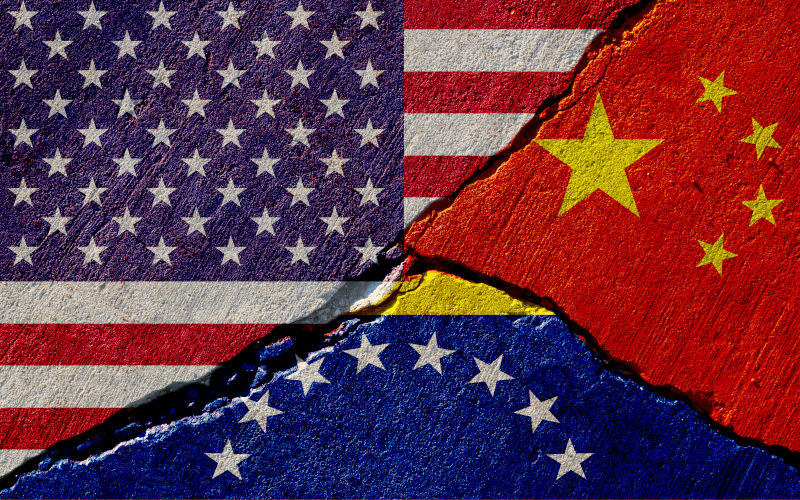
Following his surprise actions against Venezuela, US President Trump repeatedly and publicly stated his intention to push Chinese interests out of Latin America. This arrogant ‘Donroe Doctrine’ clearly underestimates the scope of China’s interests and the strength of its partnerships in Latin America, and serves as a reminder for China to prepare contingency plans for a new round of countermeasures against the US.
The scale of China’s investment and the depth of its cooperation in Latin America far exceed Trump’s imagination. China has already established a comprehensive framework in Latin America based on trade, supported by investment, empowered by finance, linked by infrastructure, and strategically coordinated. This is a crucial support for the stability of China’s global supply chain, resource security, and multipolar strategy, representing a significant and indispensable presence for China.
By 2025, the total trade volume between China and Latin America will once again exceed $500 billion, approximately 35 times the $15 billion in 2001. Although this $500 billion is significantly lower than the $1.2 trillion in US-Latin America trade, it’s important to remember that US-Mexico trade accounts for two-thirds of the total US-Latin America trade.
If we simply consider South America, China’s importance already surpasses that of the United States. For example, Brazil’s exports to China account for 28 per cent of its total exports, while exports to the US only account for 13 per cent. China is also the largest trading partner for countries like Chile, Peru, and Uruguay, far exceeding the United States.
China’s accumulated investment in Latin America (approximately $650 billion) is approaching that of the United States (approximately $1 trillion), but China’s investments are largely focused on energy, mining, infrastructure, and new energy. China’s contracted engineering projects in Latin America have exceeded $300 billion, far surpassing those of the United States. If the US tries to stop China’s investments, it’s likely that local Latin American communities will object.
The US is accustomed to treating Latin America as its geopolitical “backyard,” using various trade rules to deeply integrate Mexico and Central America into its sphere of influence. However, in South America, China’s economic influence has already surpassed that of the United States in many areas.
In 2024, China imported 65 per cent of its soybeans, 40 per cent of its copper, and 30 per cent of its lithium from Latin America. China is investing in new energy, manufacturing, and ports in Brazil, Chile, and Peru, accelerating localisation, creating local jobs, and reducing logistics costs. China exports machinery, automobiles, home appliances, and 5G equipment to Latin America. These are pragmatic collaborations that benefit Latin America and serve as an irreplaceable stabilizer in bilateral relations.
I have visited Brazil, Peru, Chile, Argentina, and Ecuador many times and deeply felt the local people’s welcome of Chinese investment and their genuine embrace of the Chinese market.
Some 90 per cent of Chilean cherries are sold to China. The Chancay Port in Peru, completed in 2024, shortened the shipping time from Peru to Asia by 12 days, leading to a doubling of export value for many commodities and generating over $200 million in additional tax revenue for Peru in the first year. Chinese-invested and constructed hydropower plants, hospitals, and schools are genuinely creating local well-being.
It is estimated that if Latin America loses the Chinese market, its GDP will decline by approximately 1 per cent, resulting in the loss of 1.5 million jobs. If Chilean cherries are not sold to China, it would lead to the bankruptcy of fruit farmers, a sharp decrease in foreign exchange earnings, and even social unrest.
The economic interdependence between China and Latin America is a rigid constraint, and they are already deeply integrated. For many South American countries, exports to China account for one-third of their total exports. The US market cannot replace China, and the strategic autonomy demands of these countries naturally lead to resistance against US power intervention.
Most Latin American countries are tired of US hegemony and pursue diversified diplomacy. After the release of the China Policy Paper on Latin America and the Caribbean in 2025, 12 countries expressed their willingness to deepen cooperation, highlighting a consensus against “Monroe Doctrine-style” policies.
More importantly, China’s investments in key sectors such as energy, mining, infrastructure, telecommunications, and agriculture tend to enhance local self-sufficiency, such as the hydropower plant in Ecuador, the electric taxi project in Colombia, agricultural technology cooperation in Brazil, and the Phoenix Industrial Park in Trinidad and Tobago.
US aid to Latin America is limited (the 2025 budget for aid to Latin America is only $12 billion), making it difficult to replace the scale of Chinese investment in infrastructure and energy. Some Latin American countries have high levels of debt, for example, Argentina owes the IMF $44 billion. Loans provided by China without political strings attached are therefore more attractive. China’s cooperation with Latin America is fundamentally different from the resource plundering model of the 17th and 18th-century colonial period, and also completely different from the strategic intentions of the 19th-century Monroe Doctrine.
The US’s geopolitical competitive thinking regarding China’s presence in Latin America clearly falls into a theoretical void and a limited mindset.
The ingrained habit of power-realist thinking fails to understand the driving force behind the surge in China-Latin America cooperation over the past 20 years. China has no military bases in Latin America, no power to coerce; it is entirely market-driven. China, through a new model of win-win cooperation, locks in its interests and security through stable resource supply, guaranteed investment returns, and unobstructed strategic channels.
These inherent driving forces have no political strings attached, no hegemonic coercion. The idea that the “Monroe Doctrine” could stop bilateral trade between two other countries with a mere administrative order or a Trump tweet is undoubtedly wishful thinking.
Of course, it must be acknowledged that Trump will exert political pressure by supporting pro-American regimes in some Latin American countries, use rule-based mechanisms for economic coercion, spread misinformation through fabricated narratives such as the “debt trap” fallacy, and restructure supply chains through nearshoring and tariff measures.
In countries close to the US, such as Mexico and Central America, Chinese investment is subject to stricter constraints under the USMCA agreement and may be forced out of industries such as automobiles and electronics. In countries considered “hostile” by the US, such as Cuba, Chinese investment faces the risk of sanctions.
These tactics are not new and are within the expectations of Chinese regional researchers, just as Trump’s trade war against China in 2025 was also anticipated by China.
For China, countermeasures against US interference have long been prepared.
If the US attempts to exclude Chinese interests through a “salami-slicing” approach, China will certainly adopt a composite strategy of defensive counterattack and strategic escalation, focusing on economic integration, financial empowerment, rule restructuring, diplomatic coordination, and risk management, to both protect existing interests and expand new areas of cooperation, solidifying the “irreplaceable” China-Latin America community of shared interests.
China’s toolbox for countering the US contains many new weapons that Trump did not anticipate. In Trump 1.0’s first round of trade war against China in 2018, the US 1.0 did not win. Even if Trump 2.0 launches a second round of trade war against China in 2025, the US will not win.
The current US-China tariff truce itself demonstrates the weakness of American trade capabilities. The power struggle in Latin America will inevitably further expose America’s superficial strength and underlying weakness.
If Trump were truly wise, the best approach would be to cooperate with China, jointly invest in Latin America, and do business with Latin American countries. After all, in Latin America, the relationship between the US and China is not a zero-sum game.
