What does it mean to be bold on the economy?
January 19, 2026
Australia’s export mix is dangerously narrow. A mission-led industrial strategy is needed to build competitive advantage and lift productivity.
When the government is under pressure, Paul Keating used to say, “you have to flick the switch to vaudeville”.
It’s a great line but hardly an option for the Albanese government in the wake of tragedies at home and abroad. That said, the pressure remains to develop a bolder change narrative for Labor’s second term, if it is to justify a third, let alone beyond.
What do we mean by bold in this context? Simply that it’s not enough to tinker at the edges of the fundamental challenges facing Australia’s economy when we need to confront them head-on, without being swayed by powerful vested interests.
We know very well what the challenges are – stalled productivity with real wage stagnation, climate change and the massive task of energy transition and growing social inequalities holding us back as a modern progressive democracy.
We also know that old orthodoxies die hard and can stand in the way of new ideas and approaches. It’s hardly a surprise that while the rest of the world moves on, the generals here are fighting the last war, which in 1980s Australia was to internationalise an over-protected and under-performing economy.
The new war is to take whatever steps are necessary to transform Australia’s narrow, outdated trade and industrial structure – currently heavily weighted towards unprocessed raw materials – with a radical, far-reaching diversification of our export mix.
But the old orthodoxies are making it difficult even to identify this as a strategic objective, as became evident in last year’s Economic Reform roundtable, an event which was supposed to be about productivity but got taken over by a deregulation agenda.
Essentially, the attachment of policymakers to a doctrine of comparative advantage has allowed the resources sector to crowd out the prospect of achieving competitive advantage in higher value, knowledge-based goods and services.
This predicament is highlighted in the Harvard Atlas of Economic Complexity, which measures the diversity and research-intensity of a country’s exports. It finds that Australia’s global ranking has fallen from around 50 in the 1990s to 105 last year out of a total of 145 countries.
Some economists don’t see this as a problem and dismiss the Harvard Atlas methodology. As one put it recently, “Some people make apples and some people make oranges, and they trade with each other. What’s not to like about that?”
But it does become a problem, even an existential threat, when apples are the main or only product a country can sell, and the crop then fails. Or when apple production runs into diminishing returns while the country with oranges pursues value-adding innovation and exports on the global technology frontier.
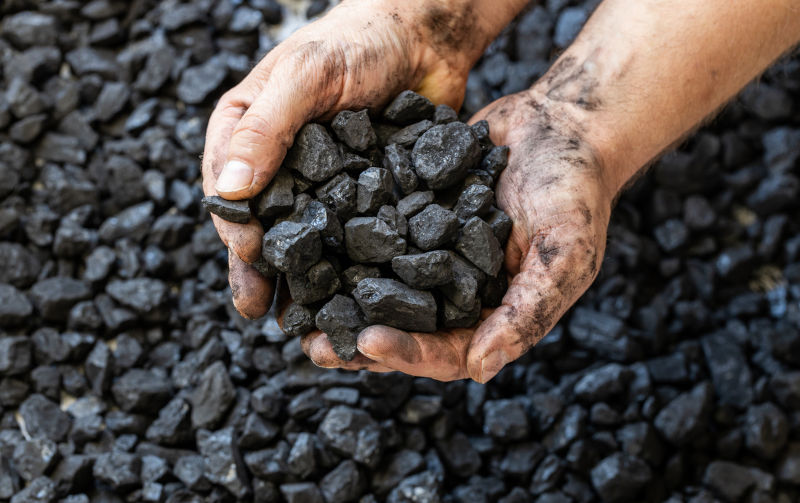
Australia has a “comparative advantage” in resources such as iron ore, coal and gas, but the fact that these amount to more than half its exports in value terms makes the economy dangerously vulnerable to commodity price volatility, shifting trade patterns and geopolitical uncertainty.
What happens, for example, when China sources its iron ore needs from west Africa and no one wants Australia’s coal? The resulting gap is unlikely to be made up by services exports, which comprise higher education, tourism and financial and professional services.
Nor by critical minerals unless in the medium to longer term the processing can be done onshore. Currently Australia produces 50 per cent of the world’s lithium, exports 90 per cent, mainly to China, and captures a mere 0.53 per cent of its final value.
The urgent task and opportunity is to move beyond a preoccupation with comparative advantage and, like other advanced economies, to evolve a mission-led industrial strategy. This will enable us to identify existing and potential areas of competitive advantage in the largest and fastest growing global markets and value chains.
The federal government has made an important start with its Future Made in Australia plan and associated funding mechanisms, such as the National Reconstruction Fund. But it recognises that there is much more to be done in the post-mining boom context.
It will require the application of knowledge and ingenuity to the development of sovereign manufacturing capability in areas like agrifood, defence, resources value-adding and the energy transition. These areas must then be supported by sophisticated services ecosystems, including embodied artificial intelligence.
An early finding of the government’s Strategic Examination of Research and Development (R&D) was the close correlation between the decline of manufacturing, the decline of business expenditure on R&D and the decline of productivity growth. This is the vicious cycle that must now be reversed.
However, it will not be reversed by imagining Australia as a services economy underwritten by resources exports. This recalls the 1929 Brigden report’s famous representation of the country as a “giant sheep run” which had to cross-subsidise industrial protection – an unsustainable model.
Similarly, the idea that Australia’s productivity performance will be transformed by selling each other residential housing, bitcoins and piccolo lattes in a brutally mercantilist world will consign us to the prospect of dollar depreciation and debt servicing at sky high interest rates.
The great economist J M Keynes is reputed to have said, “When the facts change, I change my mind. What do you do, sir?” A bold new approach?
*Emeritus Professor Roy Green AM is Special Innovation Advisor at the University of Technology Sydney.