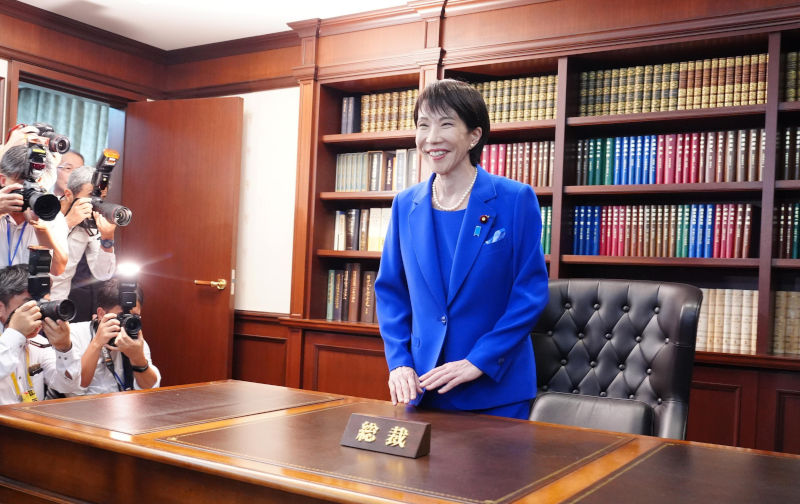
Does Takaichi's victory herald a new age for women in Japan's politics?
February 19, 2026
Japan’s Liberal Democratic Party has secured its biggest electoral victory in decades under Sanae Takaichi. While her leadership marks a historic first, the result raises questions about whether symbolic change translates into broader political representation and reform.
Japan’s Liberal Democratic Party (LDP) won the general election on 8 February 2026 in the biggest win for any Japanese party since the LDP’s formation in 1955. It captured 316 seats in the Diet’s lower house, well above the 233 seats needed for a simple majority. The LDP now also holds majorities in all 17 parliamentary committees, giving it immense power over decision-making.
But the real election winner was Sanae Takaichi, who first became prime minister in October 2025. Pre-election polls, conversations with LDP candidates and YouTube viewing data suggested that her popularity underpinned a significant portion of the LDP’s vote. When Takaichi called the election on 19 January 2026, she wanted a stronger mandate for her leadership. The results show she has it.
Japanese voters have been hungry for something different from the elderly male leaders who have long headed the LDP. Takaichi is certainly different.
She is a woman, the first to lead the LDP and Japan’s first female prime minister. The country was ready for a woman at the helm. She also comes from a non-political, non-wealthy background. For many voters, she has put the ‘representative’ back in representative democracy. Her public speaking and decisive style appealed to voters, and her widely publicised jam with South Korean President Lee Jae-myung also bolstered her image.
The same cannot be said for the confused – and confusing – main opposition party, the Centrist Reform Alliance (CRA), formed only weeks before the election when the left-leaning Constitutional Democratic Party of Japan merged with Komeito – the Buddhist-backed former LDP coalition partner. Both party leaders are over the age of 65 and have struggled to project dynamism. You know you are in trouble when the LDP looks cooler and more diverse than you.
The CRA is not based on a shared political ideology, but on electoral strategy. Important disagreements between its two constituent parties cast doubt over the longevity of the union. The public response was muted from the start. Pre-election polls showing only lukewarm support from moderate voters proved accurate – the CRA failed to capture the centrist vote.
Before the election, the two parties held a combined 167 seats. That number fell to just 49, further weakening an already fragmented opposition. Failure to provide centrist voters a united and dynamic alternative – combined with the LDP absorbing many of the opposition’s key policies – has further narrowed the difference between the ruling conservatives and smaller opposition parties, including those on the left. Key areas that continue to set the left apart from Takaichi include her position on strengthening Japan’s defence and security framework, introducing anti-espionage legislation and actively pursuing constitutional revision.
The scale of the LDP’s win also raises a broader question on whether a female prime minister translates into more women in politics or more feminist policies. Western debate about Japan’s gender policies has typically focused on the legal requirement for married couples to share a single surname – a policy that Takaichi is not keen to change.
Yet Takaichi has taken a step that could have a positive effect on sexual politics more broadly and improve protections for vulnerable women and girls. In November 2025, she instructed the Ministry of Justice to consider a law that would punish those who pay for sex, following reforms adopted in countries including Sweden, Norway, France and Northern Ireland.
The ministry has announced it will establish an expert panel in March 2026 to discuss amending the Prostitution Prevention Law, which only penalises those who sell or publicly solicit sex, but not buyers. Outreach organisations such as Colabo have pushed for change for years and concern has grown amid a rise in sex tourism as Japan has become a cheaper travel destination. If the law is amended to penalise buyers, her government will have delivered a remarkable, radically feminist outcome. It is hard to imagine these discussions gaining momentum without a female prime minister.
While this potential legal change gives many women in Japan reason to be optimistic, the tiny proportion of female candidates the LDP ran suggests Takaichi is not overly worried about the gender imbalance in the Diet or her party. The share of women candidates in the election was 24.4 per cent, the largest yet with a 1 per cent increase from the previous general election.
But in the LDP – which fielded the most candidates by far – only 13 per cent of candidates were women. As for its successful candidates, 12.3 per cent were women. Given the LDP’s dominance in the Diet, its low share of women candidates remains a key reason for the stubborn lack of gender parity in Japanese politics.
In a pre-election survey of political parties, the LDP did not provide specifics on what it was doing to increase female representation. This is despite Japan’s 2020 Fifth Basic Plan for Gender Equality, which committed to a goal of 35 per cent female political representation across all levels of government by 2025. The plan is only a guideline and places responsibility on political parties themselves.
The LDP’s own 2023 ten-year plan aims to increase the number of female Diet members to 30 per cent, exposing its failure to meet guidelines created under its own administration. Though it is a more achievable target, it also points to the limits of Takaichi’s breakthrough – Japan may get its first female prime minister without getting many more women into parliament.
Republished from the East Asia Forum 15 February 2026