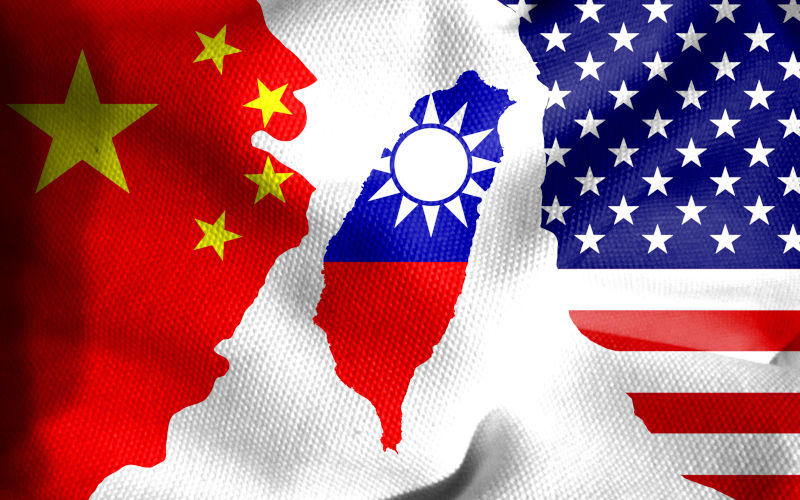
Playing deputy sheriff on Taiwan comes with costs Australia will wear
February 16, 2026
Calls for Australia to take a more forward-leaning stance on Taiwan repeat a familiar pattern – moral symbolism paired with strategic vagueness. Past experience suggests the applause is loud, but the economic consequences are real and largely borne alone.
Another report, another invitation to play deputy sheriff – with the risks written in transparent ink.
Australia, according to the latest report cited by the ABC from the United States Studies Centre, must deepen its defence and diplomatic ties with its 12th-largest trading partner – worth about 3 per cent of total trade – even if this provokes its largest, which accounts for over 35 per cent of Australian exports, delivers a healthy trade surplus, and underpins everything from iron ore royalties to lobster farms.
The report urges Canberra to take a “more forward-leaning posture” on Taiwan. That means attaching defence officials to Taipei, removing longstanding diplomatic guardrails, and stepping closer to what Beijing considers a red line – all in the name of deterrence, values, and middle-power responsibility.
What the ABC story doesn’t include is what Australia should do after the chestnut is pulled from the fire.
What would retaliation look like?
Which sectors would be first to suffer?
What’s the plan for insulating exporters?
No. Just the usual nod to “short-term risks” before the gaze lifts heroically toward the horizon of shared values.
It’s stirring stuff, until you remember we’ve done this before – and the burn scars are still visible.
The ABC report breathes heavily on the importance of our trade relationship with Taiwan.
“While Taiwan is one of Australia’s top trading partners, the federal government is constrained by its decades-old One China policy, which recognises the People’s Republic of China (PRC) as the legal government of China and ‘acknowledges’, without necessarily conceding, Beijing’s position that Taiwan belongs to the PRC.”
Yes, that’s the direct quote. Interestingly, while calling Taiwan one of our “top” trading partners, it never mentions that Australia exports over $325 billion worth of goods and services to China each year, counting hundreds of thousands of jobs.
And Taiwan, with all respect, accounts for barely one-tenth of that.
One is our economic lifeline.
The other is a valued partner – yes – but not one with the capacity to replace the scale or structure of our dependence on the Chinese market.
And yet, we’re told, we should consider risking the former to cultivate the latter, and this is presented not as provocation, but as diversification.
A similar story produced by The Age also indicated Taiwan’s semiconductors could be Australia’s next great opportunity. The implication is that Australia could gain access to supply chains – possibly even forge a tech alliance.
What’s left unsaid is that Australia doesn’t make chips. We don’t fabricate them. We don’t have the ecosystem for advanced manufacturing. We’re consumers, not producers.
Meanwhile, China dominates the sectors where Australia does operate: critical minerals processing, solar panels, green hydrogen inputs, EV battery precursors. Want to lead a clean energy transition? Best not burn your industrial bridges with the world’s largest supplier.
The thing about strategic courage is that someone always has to go first.
In 2021, that someone was Lithuania.
Vilnius allowed Taiwan to open a representative office using the name “Taiwan” instead of the diplomatic fig leaf “Chinese Taipei”. It was framed as a gesture of democratic solidarity. A small nation standing tall.
China responded quickly with trade sanctions. Lithuanian exports cratered. The EU filed a WTO case then quietly dropped it. Supply chains adjusted. The applause faded. The semiconductor industry promised by Taiwan never happened. And Lithuania’s prime minister and president found themselves regretting that they “really jumped in front of a train and lost”, and publicly asking Beijing for reconciliation.
No backup. No bailout. Just the quiet realisation that being brave only matters if someone else is willing to stand beside you when the music stops.
The same thing happened in 2020 – right here, right on top of us.
Tariffs, bans, and “technical barriers” followed. Barley, wine, lobster, beef, coal, timber – all hit. Billions lost.
And what did we get in return?
Praise. Solidarity.
And a surge in American beef and Canadian lobster exports to China.
Allies cheered us on – from the other side of our lost market share.
No one sold us out.
They just sold.
That’s how international trade works when speeches meet spreadsheets.
The report argues that Australian actions can help “deter” conflict in the Taiwan Strait.
That’s a big claim – resting on a much smaller reality.
Australia is not geographically close to Taiwan.
It is not a primary actor in the cross-strait balance.
Its military, though capable, is not decisive.
Its logistics footprint in the region is negligible.
Sending a defence attaché to Taipei, hosting Track 2 dialogues, maybe offering logistical support – none of that shifts Beijing’s strategic calculus.
But it might shift Beijing’s impression of ours.
That’s the problem with symbolic escalation: you still get the reaction, you just don’t get the leverage.
Even one of the report’s own contributors, former DFAT Secretary Peter Varghese, rejected the central proposal.
Defence-to-defence ties with Taiwan, he said, would carry serious costs without sufficient benefit.
When your most senior expert taps the brakes, maybe the rest of us should listen.
What will Canberra do? Likely nothing. Not out of cowardice – but memory.
It took quite some time for the Albanese Government to clean up the mess and stabilise our China relation, and hopefully both sides of the parliament have learned that moral applause doesn’t pay exporters.
That allies are excellent at issuing statements, less so at underwriting consequences.
That being first to jump is only admirable if you’re not also first to fall.
So are we really going to reach out for that chestnut again – beating our chest like a nut in the process?
Do we genuinely believe that symbolism will save us from sanctions, that the same markets we rely on won’t notice, or that applause will insulate jobs in Port Hedland, Griffith, Margaret River?
Or – here’s a thought – we could do something radical.
We could politely nod, shelve the think tank report quietly, and save everyone’s time, money, and job.
Let the panel sessions run. Let the think pieces flow. Let the authors brief whoever they like.
And trust the adults in Canberra remember the simple rule of national interest:
The monkey gets the chestnut. The cat gets the burns.
And this time, we don’t have to be the cat.