Japan's dramatic election result carries dangers
February 12, 2026
Japan’s ruling party has secured another overwhelming victory. But beneath the spectacle lies a troubling mix of demographic denial, fiscal illusion and rising geopolitical risk.
Landslide victories in Japan’s lower house elections are no rarity in Japan, which is rather strange since the US-supported and initially-financed, ruling Liberal Democratic party has held power almost without a break since World War 2. It only suffers defeats when its corruption reaches levels that even the conservative Japanese voter cannot tolerate. Then we see landslides.
I was once part of one, for the opposition, in 2019. But it soon collapsed.
This election was surprising in that the LDP, with its pre-election slush funds, leadership crimes and discovery of ugly reliance for votes and money on a rapacious South Korean cult-religion, had reached unsurpassed levels of corruption.Yet with its coalition partner, the oddly and somehow sinisterly named Japan Ishin (or ‘Innovation’) Party (the name Ishin, meaning renewal, is a throwback to Japan’s prewar political naming), it has won a landslide victory.
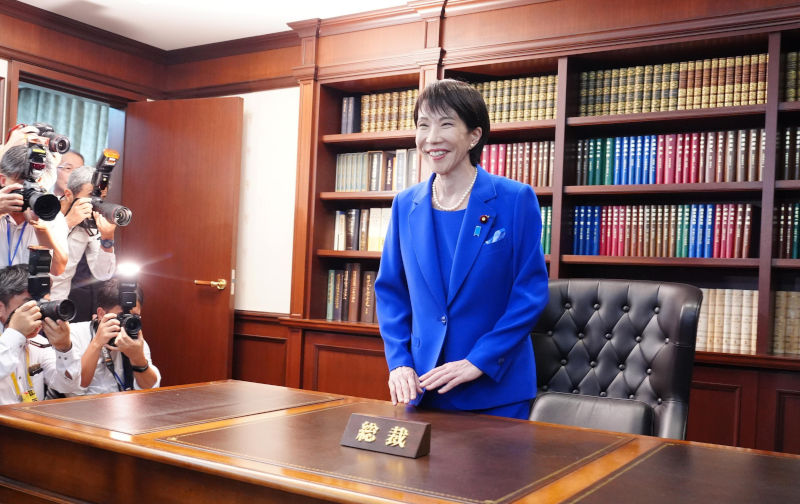
That tells us some important things about Japan. First, when it comes to LDP corruption, memories are short. Also that fads win voters; Japan’s new leader Sanae Takaichi had no shortage – a liking for drums, hip-hop, motorbikes, work slogans, handbags and even a rather soiled president Trump. Much of this appealed to younger voters who reportedly came out in droves
But most all was the poverty of the policy debate. The pundits, mostly Western, have seized on Takaichi’s economic slogans – “aggressive yet responsible” fiscal and security policies – as the new path for Japan.
Sounds good and Japan, with a monstrous national debt equal to more than double its GNP handed down by earlier air-headed regimes, may need stimulatory fiscal policies to emerge from its economic bog. But ultimately they push it even deeper into the fiscal bog.
What Japan needs should be obvious – imaginative policies to revive stagnant demand. By far the best way to do this is by tackling the main problem pressing the nation – declining population. A rising or recovering population stimulates demand in the best possible way. But so far we have heard little about this problem, and less about its solution.
Takaichi’s move to counter the strongly right wing, anti foreigner, Sanseito, by moving to their policies of curbing immigration push Japan in the opposite direction.
But the real problem comes when Takaichi begins to realise her fiscal stimulatory policies are not working and she looks for other areas of support. She already seems to have some support for her dangerous policy of provoking China over Taiwan – the public seems not unduly worried by the heavy fall-off in Chinese tourists and visitors that has resulted. The temptation will be for her to go further along that road, even further than that of her mentor, that assassinated former prime minister, Shinzo Abe.
Abe was always careful to keep one leg in the China conciliation camp. The foreign policy amateurish Takaichi seems unnerved, even pleased, by the strong threats of retaliation coming from Beijing. She may want to venture even further into the anti-China camp – first, stronger assertion of claims to disputed South China Sea territories, then the nationalist plan for an alliance with Taiwan. From there it may be only a small jump to embracing the ultra-nationalist idea of extending the alliance to a growingly anti-China Philippines.
With Russia, too, it could be the same. Abe was always careful to keep Moscow onside, playing down territorial disputes and making a friendly visit in 2019. It remains to be seen if Takaichi realises the need to restrain the military hawks itching to jump from Hokkaido bases to take over the weakly-defended Russia-claimed Kurile Islands which Japan also claims.
For Australia, the test will be her denial of wartime atrocities. She is a regular visitor to the controversial Yasukuni Shrine with its endorsement of atrocity-making generals. She has no real apologies for Japan’s war in the Pacific; she says it was a natural result of the clamps on raw material and food supplies by Australia and others to prewar Japan.
Australians forget that the ANZUS treaty they embraced in 1952 , and still embrace, was initially drawn up to ease Canberra’s fear of renewed Japanese militarism, not alleged Chinese militarism. Let’s hope we do not have to go back to the former.