Australia’s moral failure over women and children in Syria
February 24, 2026
Australian citizens and their children remain stranded in Syrian camps as political fear eclipses care, responsibility and legal obligation – with damaging consequences for public decency.
Last week Anthony Albanese made some truly remarkable statements about a group of Australian women and their children who are stranded in the Al-Roj refugee camp in Syria and can’t get home. He blamed the women for their plight (“ I have nothing but contempt for them”) and cited the old adage about having to lie in the bed one has made.
His words flew in the face of many things – recent history and our sense of decency, in particular.
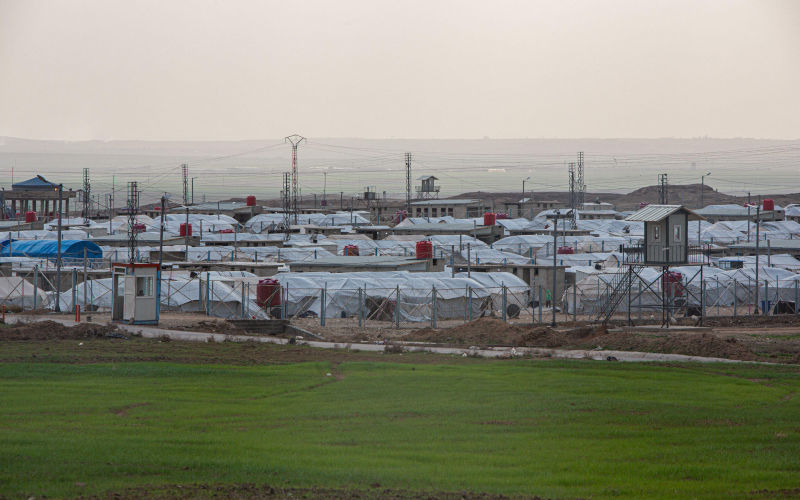
Let’s take the history first. A decade ago some girls and young women, swept up in an ideology most Australians would abhor, travelled to the Middle East to join their ISIS husbands or to marry ISIS men. They became caught up in a dreadful conflict and finished in tents in refugee camps. Years later, they remain in the camps still.
They appear to be desperate to get out, but Australia has turned its backs on them. Seemingly spooked by the increasing popularity of Pauline Hanson and her rising poll numbers, Albanese gives the impression in dealing with these people of having lost his sense of humanity. He is prepared to abandon the children because of the sins, as he sees them, of their mothers. He forgets that these mothers were very young – some of them possibly not even of marriageable age in Australia – when they left this country. Some, in fact, it was suggested at the time, might have been pushed into their marriages or had their youthfulness otherwise exploited. They might have made no more than an error of youth, if indeed they had real agency at the time. Their children, of course, are without guilt.
Even Scott Morrison recognised that the children of these women are not to blame for the situation they find themselves in.
The mothers, Australian citizens, are still our legal responsibility, the children surely no less so. The difficulties they and their mothers might pose on return are not impossible to address. We need to bring them home, deal with any crimes the mothers might have committed, monitor their behaviour closely and help the children to adjust to life in Australia. That might include having to attempt to de-radicalise them. No doubt there will be challenges in all that. But to do less is to abandon them to very difficult futures.
Worse, to follow the path Albanese has taken is not to care. As John Frew argued last week in P&I, care binds freedom to responsibility. It is a critical moral element that is in danger of being lost in moments of policy or political difficulty.
Australia has endured a difficult period since the events at Bondi Beach on 14 December. A debate on hate and hate speech seemed to be overtaken in our legislative processes by a concern for a particular manifestation as embodied in antisemitism, exhibited in particular by neo-Nazis and some Muslims. But Islamophobia also involves hate, and it too persists in this country as the threats in letters to the Lakemba mosque and the behaviour of some people towards hijab-clad women in the streets of Sydney have recently demonstrated. The sense arose, as the national parliament considered the problem of hate speech and sought to address it, that one form of hate transcended others.
Now we are in danger of losing sight of the nature of care.
It is not hard to see that Albanese will be forced by the legal process to back down on his hard-line stance with regard to the women and children in Syria. It probably won’t happen through public opinion. He might even see that aligning himself with Hanson is politically counter-productive as well as morally bereft. He should leave that alignment to Angus Taylor and his ‘Shut the door’ mantra.
Albanese has missed the politics badly here, and the decency. So has Taylor. Sadly, neither is being much called out for the moral vacuousness of the position taken. Meanwhile, one gets the impression that Hanson is being applauded by many as she taps the racist element that ever lurks close to the surface in Australian society. We are demeaned by this moment.