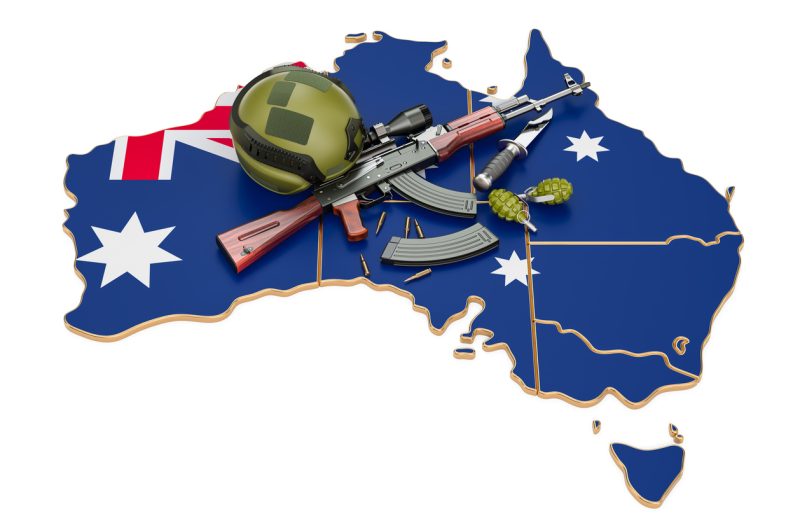
Plan B: towards an Australian model of military self-reliance
February 3, 2026
Australia’s defence posture remains shaped by expeditionary assumptions at a time when alliance guarantees are less certain. Building a credible Plan B requires a renewed focus on territorial defence, resilience and self-reliance.
John Menadue is right to warn of an accelerating rupture in the international system. Australia’s vulnerability is now structural rather than hypothetical, yet our strategic posture remains uncertain and reactive. A credible Plan B must be grounded in sovereignty, restraint, and genuine military self-reliance.
For several decades the purpose of the Australian Defence Force has been shaped disproportionately by expeditionary assumptions – by the expectation of deploying alongside the United States in distant theatres. Force structure, preparedness, and spending priorities have followed accordingly. The result is an ADF less well configured for the direct defence of Australia at precisely the moment when the regional order is becoming unstable and alliance guarantees less assured.
A reorientation toward territorial defence does not require doctrinal nostalgia, but it does require intellectual openness. The Swiss experience is instructive – not as a template to be copied, but as proof that alternative preparedness and force-generation models are feasible. During the Cold War, Switzerland maintained credible deterrence at modest cost through a reserve-heavy system built on rigorous training, disciplined leadership, and a compact professional core. Despite defence spending comparable to, or lower than, Australia’s, Switzerland generated far greater land combat mass optimised for national defence rather than overseas intervention.
Australia’s circumstances differ. Universal conscription is politically unattractive, and governments value the flexibility of regular forces. Yet the central lesson remains: professional standards do not require permanent full-time service. Australia already has a capable Army Reserve. Properly strengthened – along Swiss lines – it could generate meaningful scale and resilience, while allowing regular forces to focus on leadership, specialist capabilities, and rapid response.
Force-structure debate cannot be separated from alliance politics. AUKUS, in its current form, undermines the prospect of self-reliance. A defence strategy centred on territorial denial, mobilisation, and resilience cannot sit comfortably alongside a $360 billion program that entrenches dependence on foreign factories, technologies, and political decisions. Far from strengthening sovereignty, AUKUS deepens dependency.
Reliance on allies with a record of strategic abandonment does little to enhance national resilience. Australia’s experience in Afghanistan is instructive. Despite sustained commitment and the loss of Australian lives over two decades, our contribution was ultimately of negligible strategic consequence to Washington – a reality made explicit by senior US leadership. Such episodes should temper assumptions about alliance reciprocity in future contingencies.
Australia faces a clear choice: continue to prioritise expeditionary participation in allied campaigns, or build an independent, scalable, and visibly capable force designed first and foremost for national defence – just in case we are left to fend for ourselves in an era of strategic uncertainty.