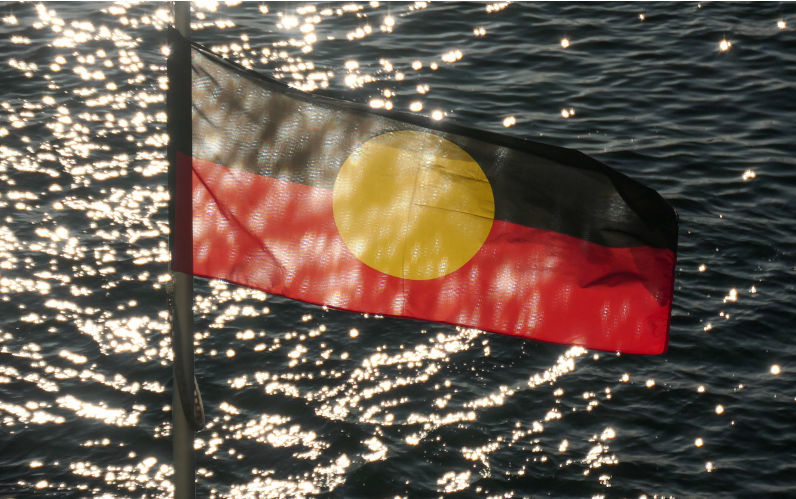
The Apology sets the standard
February 18, 2026
The National Apology to the Stolen Generations modelled dignity, responsibility and mutual respect. Its spirit now stands in sharp contrast to the tone of Australian public life.
The anniversary of the National Apology to the Stolen Generations is bittersweet. It remains a model and a reminder of what the relationship between Indigenous and non-Indigenous Australians, and indeed between all groups of Australians, should be. It has been a source of pride.
At the time, too, it stirred hope among Indigenous Australians that this relationship would shape the attitudes and conduct of Australian governments and people in the future. That hope, however, has been disappointed. They remain discriminated against and abused, as indeed do many groups in Australian society seen as different. The discrepancy between the gracious relationships choreographed in the Apology and the mean ones enacted in political and popular behaviour is marked.
In the Apology, the representatives of the major political parties and the Indigenous leaders did not shout at one another about the significance of the event. They came as leaders of the government and of the opposition and representatives of the Indigenous community to acknowledge and ask pardon for the racist thinking behind the removal of children from their families and for the lasting cost paid by the children and families affected by it. The Prime Minister made the Apology in person to representatives of the Stolen Generations. He was supported by the Leader of the Opposition.
In doing so, he recognised that all Australians are equally entitled to respect, and that the government is responsible for ensuring that all Australians are treated equally regardless of their race and history. The symbolism of the Apology also recognised that Indigenous Australians have a special place in Australia as the First Peoples. They are not the objects of Australian policy but persons who have the right to be agents in their own lives.
That decent and respectful shaping of relationships between Australians and the willingness to acknowledge, to ask pardon for, and to forgive indecent actions stands in judgment over our current national life. It was gracious, embodying both memory of past wrong and the promise of more just behaviour in future.
In Australia today, the attitudes to people in minority groups, whether Jewish, Muslim or Indigenous, are mean. In social media and in much political speech it is an open season on them. This vitriol and coarseness is characteristic also of much public conversation and comment. Politicians do not try to engage but shout at one another. In social media, instead of respect we find abuse. Instead of a commitment to truth, we see the dissemination of lies.
In contrast with the irenic choreography of the Apology, the abiding image of demonstrations is one of Nazis wearing masks who threaten to harm members of groups they hate and their supporters.
“The dignity and mutual respect involved in the Apology need to be kept in mind both in negotiating the relationship between different groups of Australians today and in responding to the social fragmentation evident in public life. They need to be enshrined in public life and in the day-to-day conduct of politics.”
The rhetoric is one of abusive slogans, calls to cancel from public conversation those with whom we do not agree, of polarisation, of contempt, and of demands for partisan laws. The exchanges between political parties are not directed at truth and reconciliation and the welfare of the people affected by past injustice, but at scoring points against one another. Some politicians, too, seem to trade in xenophobia.
The conviction and decency of the Apology must be rediscovered and replace the disrespect for people who are different which is prevalent today. The Apology shows that this can happen.
The removal of children was dictated by the disrespectful claim that the children were defined not by their shared humanity but by their inferior race. The claim was then used variously to justify massacres, displacement, expulsion from land and the cultures it nurtured, violation of sacred places, removal of children from their families, discrimination enshrined in law and in custom, racism and condescension within Australian life, and imposed marginalisation. It obscured the heroic story of endurance, resistance, guarding of culture and language, organisation, pride and constant struggle for justice that were also part of Indigenous experience. And yet that attitude was eventually publicly disowned.
The dignity and mutual respect involved in the Apology need to be kept in mind both in negotiating the relationship between different groups of Australians today and in responding to the social fragmentation evident in public life.
They need to be enshrined in public life and in the day-to-day conduct of politics.
This will not be easy. In Australia, many citizens have lost relatives and friends in armed conflict and killings in Gaza and elsewhere. Their anger and enraged words and call for partisan support in the conflict are understandable.
It feeds, however, the popular resentment felt by struggling Australians at the precariousness of their lives caused by gross inequality and the failure of governments to address it. It encourages populist anger and rhetoric.
These tensions make it all the more important to embody in our national institutions and forms of address the domestic habits of saying please, sorry and thank you in daily and public life. Taking responsibility, apologising without caveats, accepting apologies, inviting and not demanding agreement, and thanking our various rivals for their generous actions and courtesy are the food of living, the medicine of healing and the bricks of building within families.
They must also become so in public life. They might then induce shame in people who speak and act meanly and injuriously against members of minority groups within Australia.
The Apology was a step towards reconciliation. Despite the scars left by the conduct of the referendum on the Voice to Parliament and the shameful legislation directed against minority groups, the memory of the Apology can encourage hope in reconciliation.
The gap between the rituals of the Apology and those of public life today, however, shows the path to reconciliation will demand great change. To accept and to implement that change is our personal and national challenge.
Republished from Eureka Street on 12 February 2026
