The pivot to Asia within the transitional rules-based order
February 5, 2026
As US leadership becomes increasingly erratic, claims grow that the rules-based international order is breaking down. But China and India may yet help guide its transition rather than preside over its collapse.
In 2011, former Prime Minister Julia Gillard hailed the Asian Century, in particular, China’s capacity “to reshape global power and prosperity.”
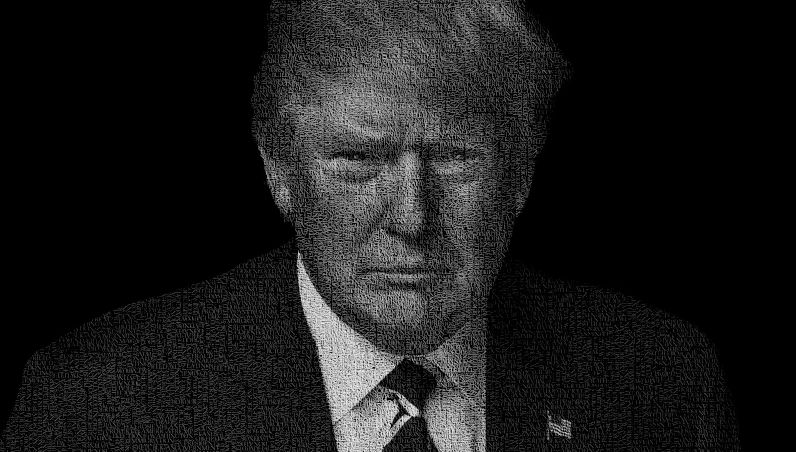
‘Re-shaping’ has of late become an urgent existential matter. ‘Trump Disorder Syndrome’ (TDS) is now head-on challenging the existing rules-based international order. Canada’s Prime Minister Mark Carney received widespread accolades for his Davos speech, suggesting what is now taking place must be treated as “rupture” rather than a “transition” and that the “old order”, which was always “part fiction”, is now “fading away”. Rejecting “going along, to get along”, Carney recommended building “what we claim to believe in, rather than waiting for the old order to be restored.”
It can, nonetheless, argued that even in the distressing context of debilitated American leadership, the existing order has a long history of development and is undergoing transition rather than rupture. It has proven capable of rejuvenation and remains the only credible alternative for dealing with today’s global multidimensional issues. Moreover, its successful transition may be supported by a pivot to Asia.
There is bad and good news. First, TDS has wreaked havoc as an unresolved gestating state of mind that broadcasts culture-war, manipulates strategic instability, and preaches absolute truth within the indecent politics of Manichean retribution. Super-opinionated policy is incontinent.
An American tragedy is unfolding before our eyes. Trump likes direct, highly personalised bilateral relations, which he can sensationalise and dominate. His September UN speech gave just about everybody in the hall an ad hominem thrashing. He claimed to have stopped “unendable wars”, adding, “It’s too bad that I had to do these things instead of the UN…” His super intuition makes professional briefing unnecessary. I’ll-blow-your-house-down diplomacy can be conducted 24/7 on Truth Social.
In December, 2025, he recalled 30 “woke” ambassadors, leaving 100 embassies without senior leadership. In a January interview, Trump binned the constitution, spruiking his executive power as above the law, and limited only by his own [self-described “very high grade”] mind and morality. The same day, he stopped funding to 66 international organisations, including 31 UN agencies. Withdrawing from the World Health Organization, he cited its COVID leadership failure. Trump treats climate change as “the greatest con job ever perpetrated on the world.” Withdrawing again from the Paris Agreement, he dismissed it as a “rip-off”. In January, he claimed that his Peace Board for Gaza “may ultimately supplant the UN.”
It is as if he is prepared to financially cripple the UN, in his personal competition with the UN for world leadership.
Secondly, there is also good news. As Trump downgrades Asia’s regional priority to focus on the Western Hemisphere, both India and China have more space to defend the UN Charter’s core values. In his Davos speech, Trump claimed that the US is a stabilising force even as he unilaterally proclaimed with reference to Greenland, “America must secure that it needs.” TDS does not facilitate a compellingly coherent value system. It is vulgar in comparison with the Chinese and Indian views on international cooperation.
Comparing the Davos speeches of Modi and Xi, both are concerned about their countries’ economic development, but both value collective security, common development and the “rules-based international order” in contrast with Trump’s gruff transactionalism that contradicts the Asian preference for patient consensus between modest equals. Their nationalism is not zero-sum. Both seek equity. Neither accepts harmful protectionism. Both are full parties to the Paris Agreement. Both avoid formal, balance-of-power treaties of alliance in favour of strategic partnership. Both increasingly draw on their respective civilisations to reinforce the peaceful elements of the Westphalian heritage. Their original subscription to the “five principles of peaceful coexistence” is now grounded in Confucian harmony and Indian dharma. Prime Minister Modi highlighted “Vasudhaiva Kutumbakam” (all the world is one family) in his Davos speech and adopted it as the theme of India’s 2023 G20 presidency while Xi Jinping has drawn on Confucianism to support a “community of shared future for mankind” (renlei mingyun gongtongti).
In his 2017 Davos speech, Xi Jinping stressed 50 years of commitment to the UN multilateralism while observing the “new normal” in terms of changes to “growth rates, developmental models, economic structures and drivers of growth”. Rejecting the “clash of civilisations”, he viewed civilisational diversity as a “driver of progress”. In his 25 July 2018 speech on BRIC, Xi addressed the issue as to the continuation of the existing world order, saying: “The current international order is clearly not perfect. But as long as it is rules-based, equity-oriented and facilitates a win-win outcome, it should not be disregarded at will, still less should it be dismantled and rebuilt all over again.”
At Davos in January 2021, Xi criticised the “waving of a big fist” and insisted: “Multilateralism should not be used as a pretext for acts of unilateralism. Principles should be observed and rules, once made, should be followed…”
Xi would likely disagree with Carney’s “rupture”, as distinct from “transition”. And China and India’s commitment to the UN Charter goals contrasts with Trump’s war on “diversity, equality and inclusiveness”.
Warmed over “Monroe Doctrine” is seriously out of date. American exceptionalism is enabling sour zero-sum budgetary games and the rise of hard, and the decline, of soft power. What happens in the event of the default of US leadership? The US fathered the UN, but India and China may yet become its greatest patrons. The existing order can transition in the face of existential change. A related Asia pivot is possible. China and India are now in a position to offer more progressive leadership than the US when it comes to promoting a rejuvenated international order.

