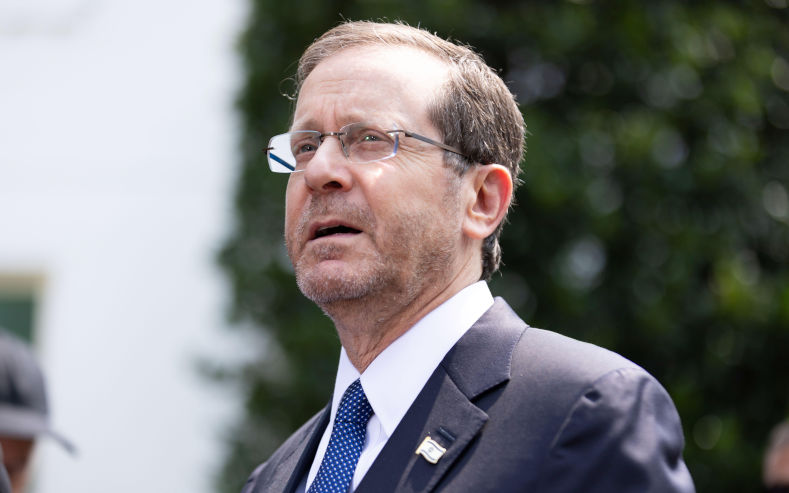
Why is the Australian government hosting the President of Israel?
February 6, 2026
As President Isaac Herzog prepares for an official visit, Australia faces serious questions about international law, diplomatic process, and the values it claims to uphold.
How does the Australian Government justify an official visit by the President of Israel when the Netanyahu regime has ignored legal warnings to prevent genocide in Gaza, and the International Court of Justice has named this government for gross breaches of international humanitarian law ?
The initial invitation for President Herzog to visit Australia came from the Executive Council of Australian Jewry indicating “the visit would bring tremendous comfort to victims” in the aftermath of the Bondi tragedy. Such an invitation is not in dispute but there is a major difference between a private visit by President Herzog to support the Jewish community and an official state visit to Australia at this time of continued violence against the Palestinian people.
The Netanyahu regime has created a global view that Israel has become a rogue state because it consistently defies international humanitarian law and continues to disregard a negotiated ‘ceasefire’ in Gaza allowing its military forces to continue killing and maiming innocent civilians.
The death toll and devastation of Gaza is an international outrage which should have led to Australia suspending diplomatic relations. Yet, instead, our government has allowed its leaders to be manipulated into an official state visit opposed by many thousands of Australians.
On Christmas eve Australians were told an official invitation was issued by the Australian Prime Minister in a phone call with Prime Minister Netanyahu after the Bondi attack, but it appears few details were confirmed at that time.
In the past, the process of inviting a Head of State on an official visit to Australia has involved careful diplomatic coordination by the Department of Foreign Affairs and Trade and is considered an honour extended to Australia’s closest partners. A presidential visit of a foreign national leader is a significant occasion which relies on a range of pre-determined protocols, and information that enables the Australian community to be informed about the purpose of such a visit.
On 15 January the Sydney Morning Herald published a statement signed by 50 organisations and 500 Australians detailing the reasons why the President of Israel should not be officially welcomed to visit at this time.
The Australian Government should have understood that an official visit by President Herzog was ill advised because the International Court of Justice has ruled that Israel’s occupation of Palestinian territories is illegal, that its settlement policies amount to annexation, that it must end its illegal presence and respect Palestinian self determination, and that Israel should provide reparations while prohibiting actions like resource exploitation and forced displacement, all based on international law – especially the Fourth Geneva Convention.
Furthermore, as a signatory to the Geneva Convention, enshrined in Australian law, the Australian Government should have responded to the UN Commission of Inquiry announcement in September 2025 that concluded Israel had committed genocide in the Gaza Strip. Yet ministers ignored eminent Australian human rights lawyer Chris Sidoti whose independent international role has been significant in gathering all the essential evidence
If the Australian Government values its reputation as a responsible international citizen , it should not be hosting President Herzog at this time when he represents a state that is contributing to the breakdown of the international rules-based order.
Ahead of President Herzog arriving in Australia there has been more detail issued by the Jerusalem Post in Israel than from official Australian government sources. Is the Australian Government trying to hide its own shame that this inappropriate visit is imminent?
Civil society organisations and groups opposed to this visit are planning to protest in marches, rallies and silent vigils of shame but they have found it difficult to confirm dates and venues. There is to be a ‘ceremonial welcome’ at Parliament House, Canberra on Sunday 8 February but as yet there has been no confirmation this president will be allowed to address the national parliament. Any such decision would stain Australia’s international reputation for many years to come.
When President Herzog arrives in Australia on an official visit many Australians will record their total rejection of this government decision. They will actively demonstrate that they refuse to be complicit with the illegal actions of the current Israel administration. The Australian Government must decide whether it is serious about advocating for compliance with international law and whether it is prepared to challenge those allies, like Israel, which are actively working to undermine the international rules-based order .
It is a sad commentary on the priorities of the current federal government that it shuffles its diplomatic cards rather than categorically dealing with the reality that Australians will not compromise our values to protect humanity. Prime Minister Albanese still has a few days to consider how he will greet this unwelcome visitor next week.
Will Australia succumb to pressure for President Herzog to address our Parliament?
Will our political leaders raise compliance with international law as fundamental to any ongoing relationship with the state of Israel ?
Will the prime minister clearly articulate that Palestinian statehood is an Australian priority ?
Will there be negotiations about how best Australians can assist the well being of Palestinians through medical evacuations, education scholarships, family reunions and urgent restoration of homes, schools and hospitals?
Unfortunately, we are unlikely to receive any answers to these questions, but we do know that next week’s official visit by the President of Israel will not contribute to peace and security for the Palestinian people, nor will it enhance social cohesion in Australia.