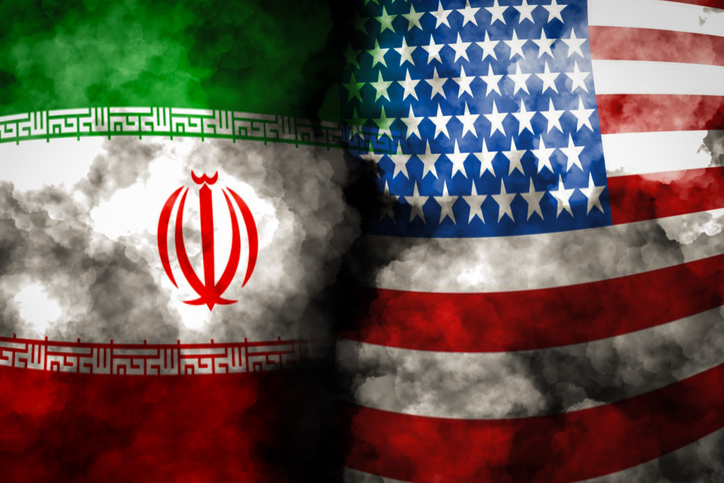
We have been here before – and we never learn
March 4, 2026
From Afghanistan to Iraq and Libya, repeated military interventions have weakened rather than strengthened US power. With new strikes on Iran launched without congressional authorisation, the pattern of executive overreach and strategic miscalculation deepens.
Afghanistan did not merely defeat two superpowers. It contributed materially to the collapse of one of them.
The Soviet-Afghan war, which began in 1979 and ended in humiliation nine years later, drained the USSR of treasure, demoralised a generation of soldiers, and accelerated the credibility collapse of the entire Soviet project. The USSR ceased to exist two years after its withdrawal. The graveyard of empires had claimed another.
The United States watched every moment of that unraveling and then entered the same country, fought for 20 years, spent over $2 trillion dollars and left with the Taliban controlling more territory than when it arrived. Same enemy. Same terrain. Same outcome. Twice. In living memory. Perhaps worse, the USA left to die those Afghanis who helped the US military while in-country… guides, translators, etc.
That pattern, the certainty that this time will be different, or that this technology, this administration, this doctrine will produce what no prior effort could, is not uniquely American. It is the recurring pathology of great power thinking. But Americans are paying for it now, in blood and in treasure, and are about to pay for it again.
The strikes on Iran on 28 February, 2026, the largest American military operation in the Middle East since the 2003 invasion of Iraq, were launched without a declaration of war, without congressional authorisation, and in direct violation of the War Powers Resolution of 1973, which requires the president to seek congressional approval within 60 days of committing forces to hostilities. Senators from both parties said so immediately and explicitly.
Senator Rand Paul called the strikes an unconstitutional act of war. Senator Chuck Schumer noted that Congress had not authorised military force against Iran under any existing legal framework. Representatives Ro Khanna and Thomas Massie introduced resolutions invoking the War Powers Act within hours. The bipartisan reaction was not partisan theatre; it was the straightforward observation that Article I of the Constitution assigns the power to declare war to Congress, not to the executive, and that no authorisation covering Iran exists.
This is not the first time. It is not the fifth. The War Powers Resolution has been invoked, ignored, and litigated across administrations of both parties for 50 years. Congress has been complicit in its own irrelevance, systematically preferring silence to the political risk of accountability. But seven simultaneous unauthorised military engagement – in Yemen, Somalia, Syria, the Red Sea theatre, Venezuela, and now Iran – represent something beyond the incremental violations of prior administrations. They represent the functional abolition of congressional war power by accumulated executive assertion.
The fiscal dimensions of this accumulation have received almost no serious analysis. The administration that promised tariff revenues would reduce prices for American families is now operating a military budget approaching $1 trillion dollars – the largest in American history – while simultaneously giving the largest tax cut to the wealthiest and while arguably conducting an eighth war domestically: ICE agents with masks are imbued to arrest or shoot on site those believed to be in the country illegally without going before a judge first. Many legitimate citizens have been flown to faraway countries to be imprisoned without a hearing. The Fifth Amendment of the Constitution applies to persons, not citizens. “No person shall be deprived of life, liberty, or property without due process of law.” The money is going to wars the president promised would never happen and the deportation he said would be limited to criminals has gone way way beyond.
Iraq had its government destroyed entirely. What followed was sectarian fragmentation, the expansion of Iranian regional influence, and eventually ISIS, a strategic environment categorically worse than the one the intervention claimed to fix. Libya had its leader removed after he surrendered his weapons program. The result was a failed state and open slave markets. Afghanistan has been documented above. Brown University estimates the ‘Global War on Terror’ has cost more than $8 trillion.
Iran is not a modern political construct that happens to have a difficult government. It is Persia, a civilisation 3,000 years old that has survived Macedonian conquest, Arab invasion, Mongol devastation, and repeated western interference, including the CIA-backed coup of 1953 that destroyed Iran’s democratic government and produced the conditions for the 1979 revolution. The idea that air strikes will fundamentally alter its strategic trajectory reflects a historical illiteracy that the region has punished, consistently and at great cost, every time it has been attempted.
The Soviet Union did not survive the lesson Afghanistan taught it. The question now is whether the United States, with a trillion-dollar military budget, seven simultaneous unauthorised foreign conflicts with the War Powers Act violated in plain sight, an illegitimate domestic conflict with the Fifth Amendment rights violated in plain sight, and the full history of Middle Eastern intervention visible in the rearview mirror is in the process of learning the same lesson, the hard way, one more time.
History suggests it is. History also suggests we will be surprised when it does not go differently.