Renewables winning the energy race – but losing the messaging battle
March 12, 2026
Clean energy investment is accelerating rapidly worldwide, but the fossil fuel industry is spending billions each year shaping public debate and attacking renewables.
The head of energy policy in the world’s fourth biggest economy says the fossil fuel industry is spending billions of dollars each year promoting its own technologies and demonising renewables – far more than the wind, solar and battery storage industries combined.
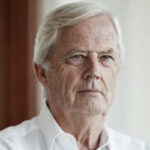
David Hochschild, the chair of the California Energy Commission, who leads energy policy in the world’s fourth biggest economy, says the renewables industry needs to learn how to stand and fight against the more than $US4 billion ($A5.7 billion) spent each year by the fossil fuel industry on communications and public affairs.
“Solar is the single biggest investment on the global electric grid annually,” David Hochschild told a Climate Week event in Sydney on Monday.
“It’s in excess of half a trillion dollars, and we’re just getting started. The prices are still coming down. We’re going to win, but we want to win fast, and so I think we have to push back against a tidal wave of hostile messaging coming at us.
“You know, I just got this statistic a few weeks ago in the United States, the fossil fuel industry budget for communications and public affairs is $US4 billion a year.
“The entire renewable energy industry is $US150 million okay … we’re getting outspent like 27 to one … And so we have a lot of work just to get the message out about the basic facts.”
Hochschild says the fossil fuel industry is desperately fighting for its existence, and cited the extraordinary progress of solar and battery storage – including in Australia – as a prime example.
Minister for Climate Change and Energy Chris Bowen had said earlier that Australia had taken 10 years to put in the first six gigawatt-hours of household storage, and eight months to put in the second six gigawatt-hours of household storage.
Hochschild cited similar accelerations in China.
“In 2004 it took a year to build a gigawatt of solar. In 2010 it took a month globally to build a gigawatt of solar. In 2016 it took a week, in 2023 it took a day and in 2024 it took half a day.
“And now solar is the single biggest investment on the global electric grid annually. It’s in excess of half a trillion dollars, and we’re just getting started.
“There’s no precedent in history, in the entire energy industry, for what’s happening now, which is the rate of growth for solutions is so fast, and so it actually is possible to make a transition quickly and affordably.
“And I would highlight what’s going on right now is that fossil fuel prices across the world are spiking because it’s war. So we can do a lot to advance climate solutions and to insulate consumers from high prices.
“And I think that the message that this is good for the planet and it’s good for the pocketbook, we have to get that out far and wide, and you have a great story to tell, because this transition that’s happening now is so fast and so successful, I think it’s actually the perfect place.”
David Hochschild said the US clean energy and climate sector had taken a hit under the Trump administration, but had not stalled, and he compared it to a “political COVID-19” pandemic.
“It has hit us all really hard,” he said. “But also we are going to make it through this, as we made it through COVID.”
He said reality was also catching up with the administration as it grappled with the massive energy needs of a fast-growing data centre sector.
“Solar and batteries were much faster to build than fossil-fuel plants,” David Hochschild said. “You want to build a new natural gas power plant United States? That’s seven years."
Hochschild is also spruiking AusTestBed, the Australian pilot of a Californian scheme credited with attracting nearly $500 million in investment into the US state.
The trial, which would ideally attract federal support to expand, would remove the cost of testing promising technology in laboratory equipment, providing startups with hard data to take to investors.
“You might have an entrepreneur with a great idea, but they don’t have the resources," Hochschild told AAP.
“You end up leaving a lot of good ideas on the sideline.”
AAP also contributed to this report.
Republished from Renew Economy, 11 March 2026