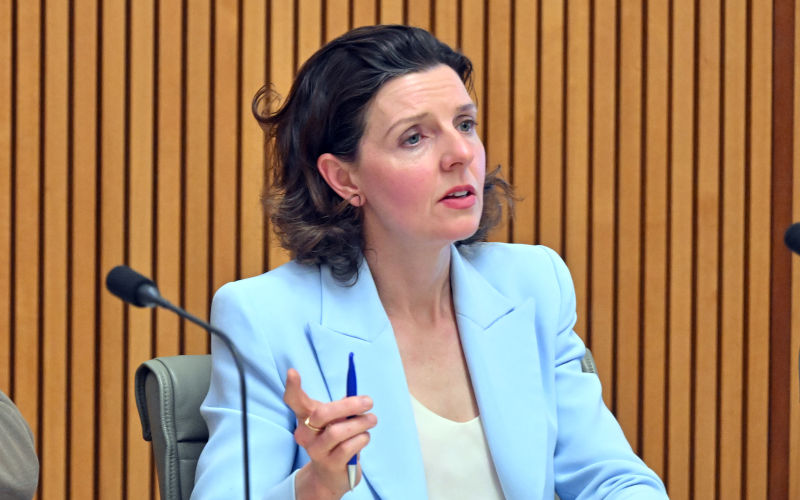
Allegra Spender reopens the tax debate – but the real divide is wealth, not generations
March 16, 2026
Australia’s tax debate often frames reform as a struggle between younger and older generations. But the real divide lies between wage earners and those who derive growing advantage from assets, wealth and capital income.
Allegra Spender deserves some credit for reopening the tax debate. In a timid political culture where both major parties have too often treated reform as radioactive, it matters that someone is willing to question the capital gains tax discount, negative gearing-style deductions and the broader bias against wages.
Her 2024 Tax Green Paper argued that the system taxes labour too heavily relative to investment income, and her latest 2026 package proposes cutting the capital gains tax discount from 50 to 30 per cent, limiting deductions on non-labour income to non-labour income, and using the proceeds to fund lower income tax rates in a budget-neutral package.
But the paper’s deeper logic is still wrong. It is wrong in diagnosis, wrong in politics, and too conservative in remedy.
Its core error is to frame the tax problem primarily as a matter of intergenerational equity. Spender’s own material repeatedly presents tax reform as a way to stop younger Australians “falling behind” and to deliver for “future generations.”
That sounds modern and compassionate. But it is also a category error.
Australia’s central tax divide is not fundamentally between young and old. It is between those who live mainly from wages and those who derive increasing advantage from assets; between households with modest incomes and wealth, and households with high incomes, large wealth holdings, trusts, capital gains and property portfolios. Some of those people are older. Some are younger. Many older Australians are not wealthy. Some younger Australians are already protected by family wealth. The main fault line is not age. It is class, income, wealth and the source of income.
Once that is clear, the weakness of Spender’s frame comes into focus. A generational story encourages Australians to think of tax reform as one cohort’s grievance against another: younger workers versus older asset holders. That is divisive, because it turns a structural question of political economy into a moral quarrel between age groups. It invites resentment where solidarity is needed.
The better question is not: why should older Australians pay more for younger Australians? The better question is: why should people with the greatest capacity to contribute not pay more, regardless of age?
That is why the paper is not just divisive but conservative.
Spender’s package is presented as budget-neutral. Tax more capital income here, return it as lower income tax there. That may be more rational than the status quo, but it still accepts a narrow, transactional view of tax. It remains trapped in the politics of swapping burdens between groups rather than building collective capacity. It asks, in effect, how to produce a fairer deal for individual taxpayers. It does not ask forcefully enough how to gather more revenue from those at the top to strengthen the common good.
That is the real limitation. Australia does not only need a tidier tax mix. It needs a stronger public realm. It needs more capacity to fund productivity, housing, health, education, care, climate transition and poverty reduction. A serious reform agenda would therefore start not with generations, but with the concentration of income and wealth. It would look harder at capital gains, trusts, superannuation concessions at the top end, inheritances, land and property wealth, resource rents and other forms of unearned advantage. And it would use that revenue not simply to cut tax elsewhere, but to enlarge the social wage for everyone.
That is the difference between a politics of “what’s in it for me?” and a politics of “what’s in it for we?”
Spender is right that the tax system is skewed. She is right that labour is taxed too heavily relative to some forms of capital income. She is right that younger Australians are struggling. But she is wrong to make generation the central lens. That obscures the deeper truth: the biggest divide in Australia is not between old and young, but between private privilege and public fairness.
The country does not need a more sophisticated politics of generational grievance. It needs a tax politics grounded in solidarity: tax according to income, wealth and capacity to pay, irrespective of age, and use that revenue to build a better society for all.
That would move the debate from young versus old to wealth versus fairness.
And that is the argument Australia should be having.