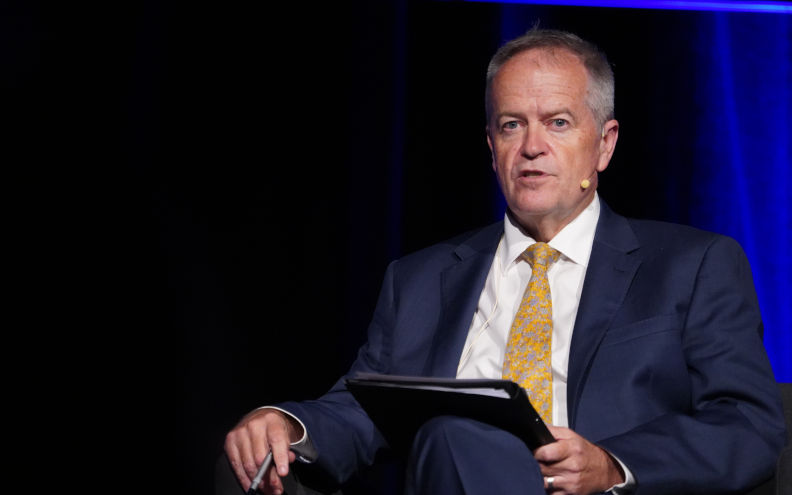
Bill Shorten’s university proposal breaks the deadlock – but design will decide its value
March 20, 2026
Bill Shorten’s proposal for a university fund tackles a long-standing funding problem – but its impact will depend on how it is designed and delivered.
Last week, Bill Shorten stood at the National Press Club and called for a new deal for Australian universities.
The University of Canberra vice chancellor and former Labor leader proposed a sovereign wealth education fund, capitalised by a one per cent levy on company profits, which he estimates could raise around $5.2 billion a year. The fund would be jointly governed by government, industry and universities, and directed toward national priorities including research capability and critical skills.
The Dawkins reforms of 1989 dismantled free university education and shifted the cost progressively onto students. The student share has grown while the federal contribution – once around 90 per cent – has fallen below 50 per cent in recent years.
Universities responded by pursuing alternative revenue streams – property, philanthropy, commercial ventures – but it was international student fees that came to fill the gap most substantially.
For two decades this political settlement held. The domestic politics of immigration and housing have now made large-scale international enrolments politically difficult, and the federal government has imposed caps. The resulting funding pressures have fallen unevenly across the sector. Some universities are pivoting toward transnational education – branch campuses and offshore partnerships that bring the university to students in their home countries – but this is no substitute for a structural funding solution.
Governments could cut student fees and compensate universities directly, but this is expensive and does nothing to improve the sector’s underlying financial position.
Reducing student debt – as the Albanese government did with its 20 per cent HECS reduction – is more fiscally palatable and popular with graduates, but it, too, leaves university finances unchanged: it is relief for individuals, not revenue for institutions.
Raising student fees would help university budgets but is electoral poison; the Morrison government’s Job-Ready Graduates restructure, which increased humanities fees, contributed to a decline in enrolments, and left university finances no better off. Increasing base public funding is the structurally correct response, but it is costly, invisible and produces nothing a minister can point to.
Shorten’s fund breaks through this political impasse. It is not a student charge and is designed to avoid diverting money from other budget priorities – funded by a levy on corporate profits, with a name attached, and a political story to tell. That combination is harder to achieve than it sounds, and raises several design questions around its architecture.
Shorten’s proposal contains two different funding models that need to be distinguished. The first resembles the Medicare model: a named levy that generates a revenue stream directed toward a public purpose. The second is closer to the Future Fund model: a capitalised investment vehicle that funds its purpose from returns rather than ongoing contributions. These are genuinely different instruments, and which model the proposal adopts determines almost everything else about its design.
The Medicare model is simpler and faster. A levy on corporate profits flows to universities as an ongoing annual stream. But is it new revenue on top of the existing rate, or a reallocation of one per cent from within it? The distinction matters: the first is genuinely new money, though it would face resistance from a business sector already subject to one of the higher corporate tax rates in the OECD; the second delivers no new money: existing tax receipts are simply redirected under a different label, leaving a gap in general revenue that would need to be filled from somewhere else in the budget.
Either way, Australia has typically used levies as top-up funding. The Medicare levy raises less than Australia actually spends on Medicare – the gap simply comes from general revenue. A university levy might create a floor, ensuring universities receive at least what the levy raises, and could produce a short-term increase in funding. But over time there is a real risk that future governments offset the levy by reducing other public spending on universities, leaving the sector no better off than before.
The Future Fund model is more ambitious but carries its own risks. Unlike the Future Fund itself – capitalised instantly with a $60 billion lump sum from Telstra privatisation proceeds and budget surpluses in 2006 – a higher education fund built from an annual levy would need many years of accumulation before generating meaningful returns. In the interim, if the fund needs to borrow to invest, it creates contingent liabilities that sit off the government’s balance sheet but are no less real for it – and history suggests that off-budget borrowing of this kind carries its own financial risks.
Most fundamentally, the Future Fund model makes university funding dependent on market performance rather than on public commitment, reintroducing a form of financial risk into a sector that already carries too much of it, and normalising the idea that the case for investing in education must ultimately be made in the language of financial returns.
Shorten has done something genuinely valuable: he has broken open a debate that had stalled, named the structural problem with clarity, and put a concrete instrument on the table where none existed. He has also identified the credibility problem the sector must confront – that universities behaving like profit-maximising businesses undermine their own claim to public investment. The fund, if well designed, is a way out of that trap.
The proposal needs to choose between its two models and be honest about what each costs. If it is the Medicare model, the critical question is whether the fund’s structural guarantees are strong enough to prevent the levy simply substituting for other public spending over time. If it is the Future Fund model, the question is whether tying university funding to market returns is the right way to rebuild a public good.
Either way, the fund needs governance that is accountable beyond government, industry and the sector – to a broader democratic constituency that has a stake in what universities are for.
Shorten has started the right conversation. The next step is to build the strongest possible version of what he has proposed.