Climate denial has deep roots in Coalition politics
March 23, 2026
From Howard to Abbott, senior Coalition figures have repeatedly dismissed climate science – favouring belief over evidence and weakening public debate.
What is it with conservative ex-Prime Ministers of Australia when they get in front of Nigel Lawson’s misleadingly and cynically titled Global Warming Policy Foundation – an avowedly sceptical forum on matters of climate change?
In 2013 John Howard spoke at the Foundation in London, pouring cold water on climate change and noting that he felt “instinctively” that claims about the future impacts of climate change were exaggerated. But instinct, or gut feeling (or political preference), are surely not what counts. What counts are evidence and reasoning.
Howard in his speech in 2013 went on to say that those who argued that climate change might be taking us in problematic directions were “sanctimonious”, had “nakedly political agendas” and were trying to “intimidate” politicians. Not only were they wrong, he was saying, they were self-serving.
A few years later, Tony Abbott used the same forum to push further his 2009 statement that ‘Climate science is crap’. This time he argued that warming is probably a good thing, partly because of its potential positive effects on plant growth and therefore on agricultural productivity, and partly because cold snaps kill more people around the globe than do heatwaves. And he made the statement that photographs of Manly Beach over the past century – presumably mostly ‘happy snaps’ of people enjoying themselves – provided no evidence of sea level rise. Could they really have been useful in measuring anything?
Abbott was blind to science, and to any sense of the future. He simply expressed his preference with the most simplistic of justifications. His photographs of Manly Beach could not have indicated that sea level has risen. To imply otherwise would lower the intellectual level of the discussion alarmingly.
Where does one start on such statements as Howard’s and Abbott’s? First, it must be noted that global average temperatures have, without doubt, increased over the past 150 years and the momentum for further increases appears well established. The fact that average sea levels have increased over that time period, the rate of rise itself increasing lately, is well established and well understood. Any increase in plant growth is likely to be of only short-term benefit if warming continues – enhanced evaporation will become a factor here too – and the impact of further sea level rise on low-lying island societies is easy to predict as is the effect on many of the world’s coastal cities.
About half of our more than 500 cities with populations of a million or more are on coasts. Several are already battling to manage the effects of sea level rise.
The volume of evidence on these trends over recent decades is considerable, and the momentum behind them is clear. If they ‘run away’, with temperature and sea levels continuing to increase for decades as some scientists fear they might, there will indeed be serious consequences.
Another of Abbott’s views was that ‘Coal is good for mankind’. He missed completely the possibility that, regardless of coal’s role in past economic development, burning more and more of it is problematic. And his statement that ‘Climate science is crap’ is no more than a refusal to engage the real issue and a denigration of the scientists who are researching it. Howard was no different.
Neither showed an understanding of the timeframes over which climate change is known about or the need to think of the long term, not just the immediate future. Neither recognised that we might be in an inter-glacial era following the end of the last Ice Age or that over the past couple of centuries a new factor has emerged which might be influencing the earth’s climate: industrialising humankind, now numbering more than eight billion people.
Abbott and Howard were victims of an illness which is not new but which appears increasingly to infect political discourse – the tendency to believe what one wants to believe regardless of the evidence. All that counts is one’s beliefs. Reasoning becomes faith-based. And if somebody disagrees, just denigrate. Donald Trump does this relentlessly.
What we need is argument based on logic and evidence, and without the selective plucking of the latter. Unreasoning denial and attacking those who disagree with one’s preferences are unhelpful to public discourse.
The debate on climate change is about where we appear to be going and where we wish to go or avoid going. We should coolly, calmly and intelligently evaluate the threats we face and the opportunities we have. But Howard and Abbott have let themselves down by allowing mere beliefs, poorly supported by evidence, to parade as considered positions. They have not served the public debate well.
Moreover, they have been unprincipled and inconsistent. Howard made it clear in London that his support for an emissions trading scheme at the 2007 election was cynical politics. He was never a believer; he was only reacting to the fashion of the day. And Abbott’s government ratified the Paris agreement and introduced the first renewable energy target, both of which he then attacked.
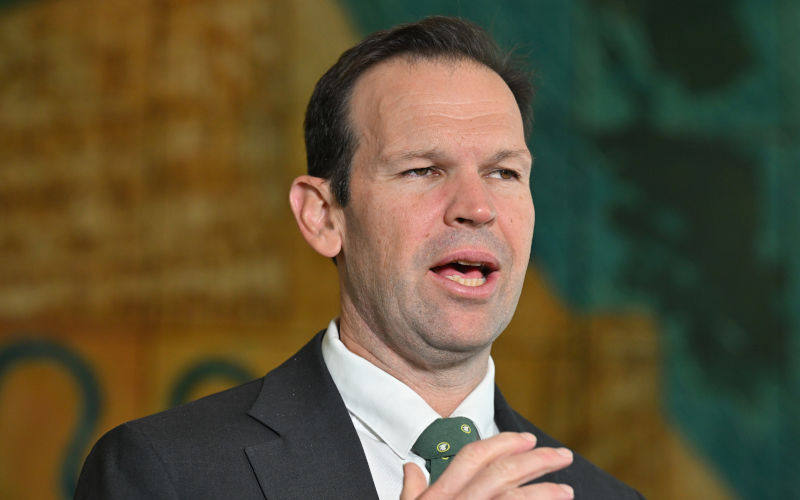
Now there is a new federal leader of the National Party, Matt Canavan, who disdains renewables and wants to build more coal-fired power stations. Denialism about climate change and what contributes to it are deeply embedded in the Nationals’ mind-set, as any delving into the statements of many of their parliamentarians indicates.
The Coalition has a history of defying the science on energy and climate, Malcolm Turnbull and a few others apart. They are not for turning, part of the rump of Australian opinion that does not accept climate change as established and problematic. They are building their own irrelevance, lately foreshadowed in many polls.