Does Iran already have a nuclear deterrent?
March 26, 2026
Iran may already have the materials and delivery systems to deter a nuclear strike – raising the stakes in an escalating conflict.
Media speculation on whether the US or Israel would launch a nuclear attack on Iran as the Middle East crisis escalates out of control begs the question: does Iran already have the capacity to deter such an attack?
The answer would appear to be yes.
Donald Trump’s hyperbolic assertion that Iran’s nuclear enrichment program had been “totally obliterated” was, like most of his claims, untrue.
Three days before the US bombed the nuclear enrichment site at Fordow in 2025, a line of empty trucks was observed by satellites at the facility. Intelligence assessments indicate these were tasked to carry 408 kilos of highly enriched (60 per cent purity) uranium, part of a larger cache of 8.4 tonnes of uranium, to a place of greater safety.
If so, this leaves Iran with the capability, not only to create several basic nuclear bombs, but more particularly, a whole bunch of ‘dirty bombs’ which, while destroying nothing, could still shed radioactive poison over a very large area.
Enrichment
Enrichment is the process of converting the abundant isotope U-238 into the far rarer isotope U-235, needed to power reactors and make bombs. Highly enriched uranium – anything above 20 per cent U-235 – becomes more suited to bomb-making. Above 60 per cent U-235 the material becomes far more suited to bombs than civilian uses, with 90 per cent + purity being the most efficient in terms of nuclear yield.
Enrichment is carried out by large cascades of centrifuges which separate the U-235 from the U-238, and constitute the most costly, time-consuming and industrial part of the process. However, even 60 per cent U-235 can be used to make a lower yield bomb in a matter of days.
However, all of it can make a ‘dirty bomb’ – a nonexplosive device that simply scatters radioactive material far and wide across the landscape, aided by wind and rain.
And that is not the only source. Radioactive isotopes like cobalt-60, caesium-137, and iridium-192 from medical and industrial sources can also be used. The half-life of U-238 is 4.5 billion years while the half-life of U-235 is 740 million years. The others decay on time scales ranging from years to several centuries.

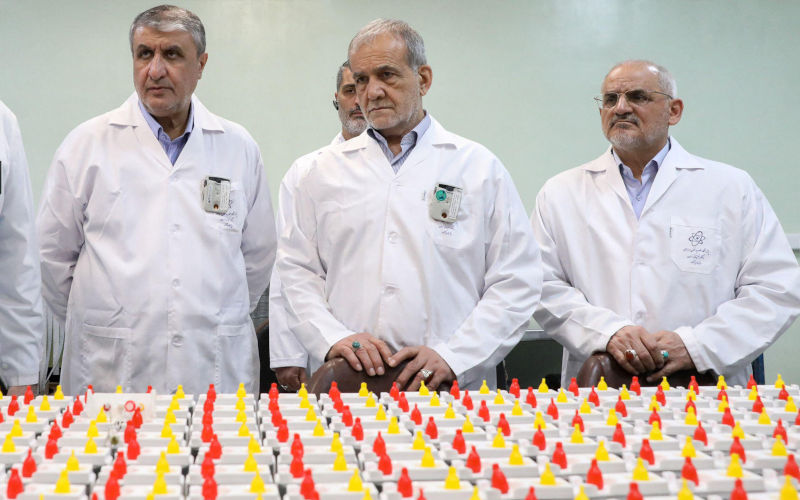
Figure 1. Uranium enrichment centrifuge.
Health risks
According the US Centers for Disease Control, enriched uranium is both radioactive and chemically toxic. Its radioactivity primarily comes from alpha particles which can cause serious damage if inhaled or swallowed.
Exposure to high concentrations may trigger lung cancer, bone cancers or liver damage and can harm the kidneys even at low doses. Environmental contamination from uranium dust, water, or soil thus poses long-term health risks lasting generations.
Delivery systems
From the above it can be seen that Iran has enough material to make dozens, if not hundred of dirty bombs. Whether of not they would do so depends on how threatened they feel by Israeli or US nuclear arsenals and leaders.
It is frequently observed by nuclear experts that nuclear weapons are defensive rather that weapons of attack. This is because any attack may provoke an equal or worse riposte, under the doctrine of Mutually Assured Destruction (MAD). However, this doctrine, which has kept the nuclear peace for 80 years, may be at the point of breakdown as the nuclear arms race enters a new phase, dominated by AI, disinformation and irresponsible leadership.
Building a nuclear device is only half the problem. It also has to be delivered.
In that respect experts consider that Iran now has a range of super-powerful new missiles which could carry nuclear warheads over ranges from 2000-6000kms at supersonic speeds. These include the Khorramshahr-4, recently noted for its ability to deliver a payload of 80 separate small warheads. Such an ability may also make it suitable for scattering scores of small dirty bombs across tens of kilometres of urban landscape.
Expert opinion is divided on whether Iran would institute such a program. One school argues it would be a waste of its highly enriched uranium, which is more suited to making atomic bombs – if that remains the strategic goal of the regime. Its present stock is probably enough to make 14 bombs. Or 200-300 dirty bombs.
That might be enough to deter Israel from launching a pre-emptive nuclear strike, provided the Israeli leadership has not lost its head. The US is a different problem, but even that is not beyond the reach of a 1-2kg dirty bomb, though it would have to evade many layers of border security. But if several tonnes of cocaine and fentanyl can do it every year, so can small dirty nukes.
Undoubtedly these thoughts have occurred to all sides – but the US and Israel have shown themselves prepared to gamble rashly on escalating the conflict from the word go. So it would not be surprising if a notably patient and strategic Iran had not thought out the next moves in this deadly game of nuclear chess.