Environment: Carbon credit markets benefit the participants but not the climate
March 15, 2026
Carbon markets still promise big but deliver little, the Global North’s economic development path will not work for the Global South, an uncontrolled sale of rat poison is needlessly killing native wildlife.
Carbon markets – a get-of-jail-free card for big polluters
I have ranted and raved about the inadequacies of carbon offset schemes on several occasions but their inbuilt structural and procedural deficiencies (rather than minor irritating glitches) are too serious to be covered once and then forgotten.
The Voluntary Carbon Market (VCM) is the global system that facilitates the sale of carbon credits by their producers to organisations that (for the most part) want to offset rather than reduce their greenhouse gas emissions (GHGs). A carbon credit represents one tonne of CO2 removed from or not emitted to the atmosphere. Voluntary, I assume, refers to the fact that the sellers and buyers are participating of their own volition rather than as a legal requirement. Alternatively, the buyers could, for instance, choose to reduce their emissions.
The attraction of the VCM to the participants is that the credit producers and the accrediting agencies get paid, the emissions producers can claim to be “carbon neutral” or “Green” or “net zero” without reducing their emissions and governments can say they are doing something to combat climate change.
Since the concept of ’net zero’ emerged, the VCM has been very popular with governments and the private sector. It even features in the Paris Agreement, where it has been the subject of much criticism and dispute over the years. Many evaluations of the VCM have demonstrated that most carbon offset projects have failed to remove CO2 from the atmosphere and there have been several attempts to fix the repeated failures in the VCM.
So where do we stand now? Have the fixes worked? Is the VCM now helping to reduce the concentration of CO2 in the atmosphere or is it still a flimsy veil attempting to cover up the uncomfortable fact that most carbon offset projects are failing to reduce emissions or increase removal of CO2 from the air? Is it delaying real climate action by permitting polluters to keep emitting GHGs for as long as possible while allowing governments to say, “Of course we’re serious about combating climate change. Look at the system we’ve established!” – eg, the Safeguard Mechanism in Australia.
An analysis (aptly named Built to Fail) of 47 of the world’s largest carbon offset projects in 2024 confirms that the whole edifice is still a crock of wombat scat:
- 80 per cent of the offset credits purchased and then traded in by a polluter were “problematic” (i.e., did not reliably deliver the promised emissions reductions). These 48 million credits, representing almost a quarter of the entire VCM, originated from 43 problematic offset projects.
- 40 of the 43 problematic projects were located in the Global South but all four of the VCM registries (of which Verra is by far the largest) that set the rules that carbon offset projects must follow, review and approve projects and issue carbon credits are in the Global North.
- Allegedly “independent” project auditors (“verifiers”) assess whether projects meet registry standards and deliver real emissions reductions. Seventeen verifiers were involved in approving the 43 problematic projects.
- The repeated and large-scale failures of the registries and the verifiers suggests that systems for ensuring high project integrity are nowhere near stringent enough and that problems are widespread.
- The 38 projects in the forestry and land use and renewable energy categories were the ones most frequently associated with problematic credits.
- Within the problematic projects the most common problems were non-additionality (the benefits reported would have happened anyway – observed in 60 per cent of projects), over-crediting (generous counting of the CO2 removed – 50 per cent), leakage (eg, deforestation prevented at the project site was transferred elsewhere – 45 per cent) and non-permanence (eg, trees that were planted burnt down in a forest fire five years later – 40 per cent).
- Carbon offset projects frequently cause harm to local communities, Indigenous Peoples and ecosystems.
After decades of trial and error, the Voluntary Carbon Market remains fundamentally flawed and the carbon credits produced, sold and retired are still not delivering the promised and urgently needed reductions of either GHG emissions or the concentration of atmospheric CO2. The VCM’s continued failure means that it is highly likely to be contributing to climate action delay by postponing implementation of worthwhile policies to decrease global GHG emissions urgently and permanently.
Wouldn’t it be nice if a senior politician were to give us an honest answer as to why they continue to support this global scam rather than legislating a rapid exit from fossil fuels. To which Darryl Kerrigan would respond “Tell him he’s dreamin’”.
Economic catch-up for the Global South is impossible
“The western development trajectory during the last two centuries was based on ecological exceptionalism, or more accurately, on ecological imperialism. It rested on the net appropriation of the resources of the Global South and the externalisation to the Global South of the ecological costs of capitalist expansion.
“If economic catch-up were to happen, Global South citizens would have to achieve the same levels of consumption and waste as the average citizen in the Global North. The planet could not afford the universalisation of the unsustainable European way of life.
“There is logically no sustainable development for Africa and the Global South in a world of unequal ecological exchange. Even the commendable UN sustainable development goals are not sustainable in practice. They still cling to the economic catch-up view and do not acknowledge the unequal ecological and economic realities of developing countries.
“Another development path is a necessity, a delinking strategy prioritising the needs of the peripheral countries over the demands of the global economic system. It means implementing policies that lead to greater local control over (i) the reproduction of the labour force, (ii) the domestic market, (iii) natural resources, (iv) technology, (v) the financial system and flows, and (vi) the ability to direct domestic investment.
“It consists of implementing projects based on domestic real resources (eg, land, labour, equipment) and financed essentially in the national currency (ie, not the US dollar or similar). This development path creates prosperity for the majority while reducing external dependency.
“To be successful, it requires renewed forms of democratic and collective leadership, pan-African solidarity and international solidarity.”
Extracted from ‘Live as African’: the Relevance of Thomas Sankara’s Agenda for Economic Liberation by Ndongo Samba Sylla in Can Africans Do Economics? (2024, 111 pages).
I also greatly enjoyed Grieve Chelwa’s chapter Development as Emancipation –emancipation, that is, from the indignities of colonialism and the scourge of neocolonialism.
Noteworthy New Zealand blue fungus
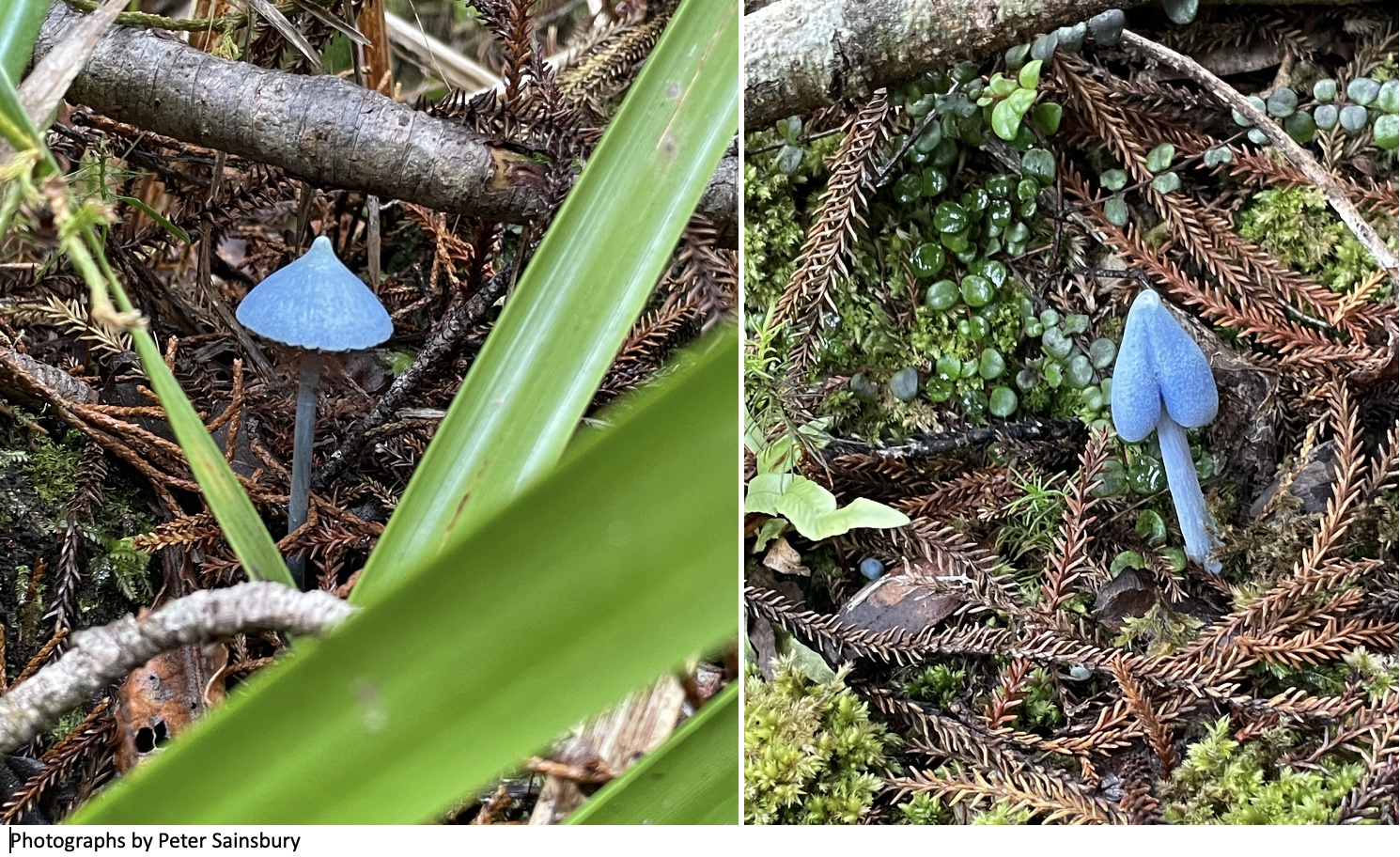
I recently spent a week walking on the west coast of our neighbour’s south island. On our perambulations, we came across half a dozen examples of Entoloma hochstetteri, more colloquially known as the blue pinkgill or sky-blue mushroom. It is native to NZ and reasonably widespread. The Māori name is werewere-kōkako because the blue colour is similar to the wattle of the kōkako bird.
New Zealand is rightfully proud of its blue fungus and is apparently the only country to feature a fungus on its banknotes.
Each of Australia’s banknotes features a wattle and a native bird, although governments are actively destroying the habitat of the threatened Masked Owl on our $100 note.

Rat poison found in all 13 dead Masked Owls
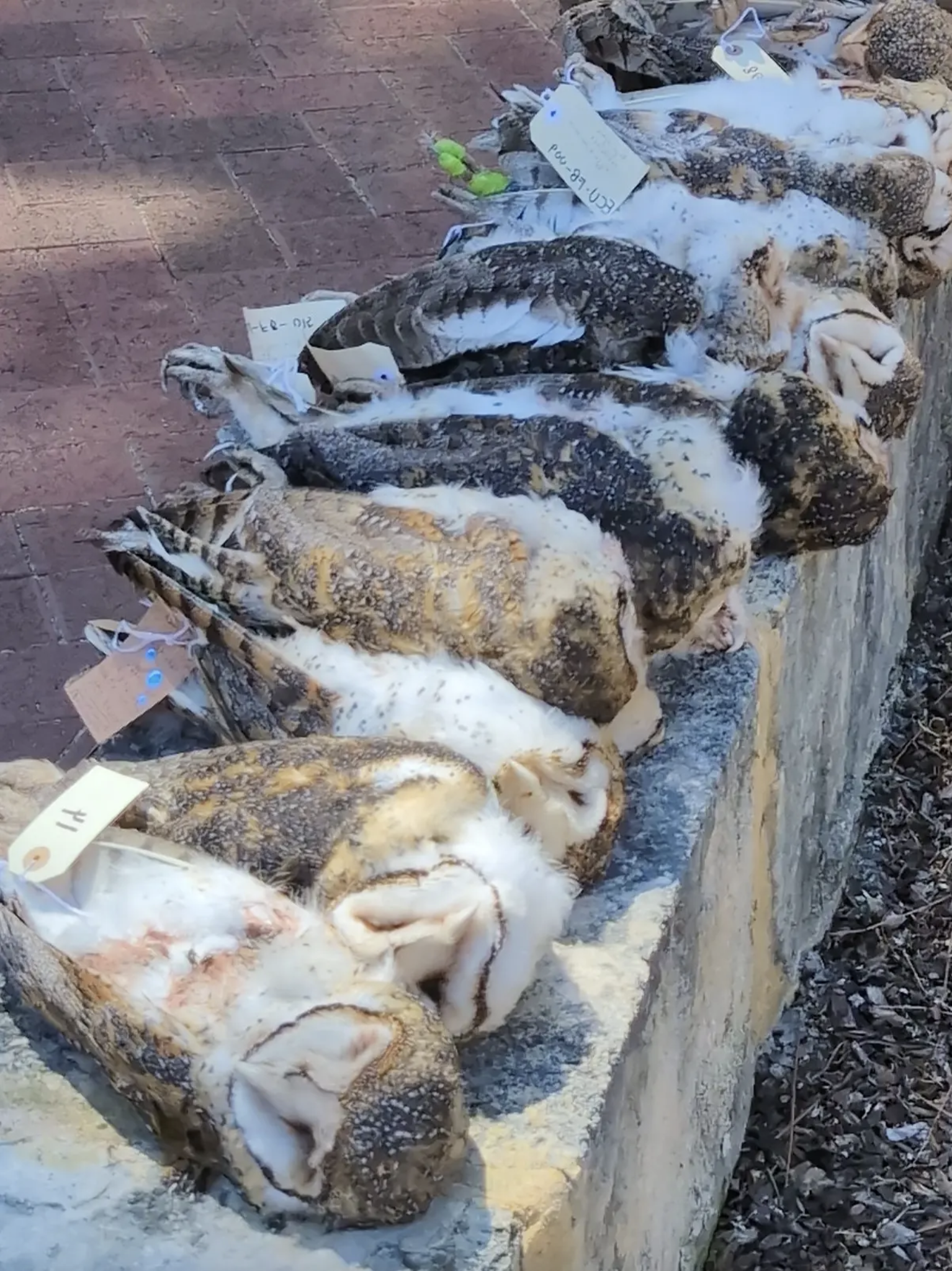
And it’s not just habitat loss that is killing Masked Owls. All thirteen Masked Owls found dead in Perth and south-western WA contained lethal or toxic levels of second generation anticoagulant rodenticides (SGARs), poisons contained in publicly available rat baits. This adds to considerable existing evidence of the dangers posed by SGARs to native wildlife.
There is no denying that rodents are a problem in urban and rural areas but it’s irresponsible of governments to allow common brands of rat bait to contain highly toxic SGARs.
BirdLife Australia CEO Kate Millar said: “Shoppers should be able to walk into a store with the confidence that products for pest control won’t also kill native animals. But that is simply not the case. Rat bait that kills owls must be banned from public sale. Safer, effective alternatives already exist on the very same shelves.
“While there may be very specific, tightly controlled situations where trained professionals need to use these products, their routine and widespread sale is causing unacceptable wildlife mortality on a national scale. The reforms currently proposed by the Australian Pesticides and Veterinary Medicines Authority (APVMA) are weak and will utterly fail to prevent the death of birds, from powerful owls and magpies to the beloved tawny frogmouth. ”
The problem is not limited to owls. Other wildlife that eat rodents (reptiles, quolls and Tasmanian Devils, for instance) are exposed to exactly the same dangers.
The APVMA is currently seeking submissions on the regulation of these dangerous rat poisons. Submissions close on 16 March. If you’re quick, you can tell them to ban the public sale of SGARs.
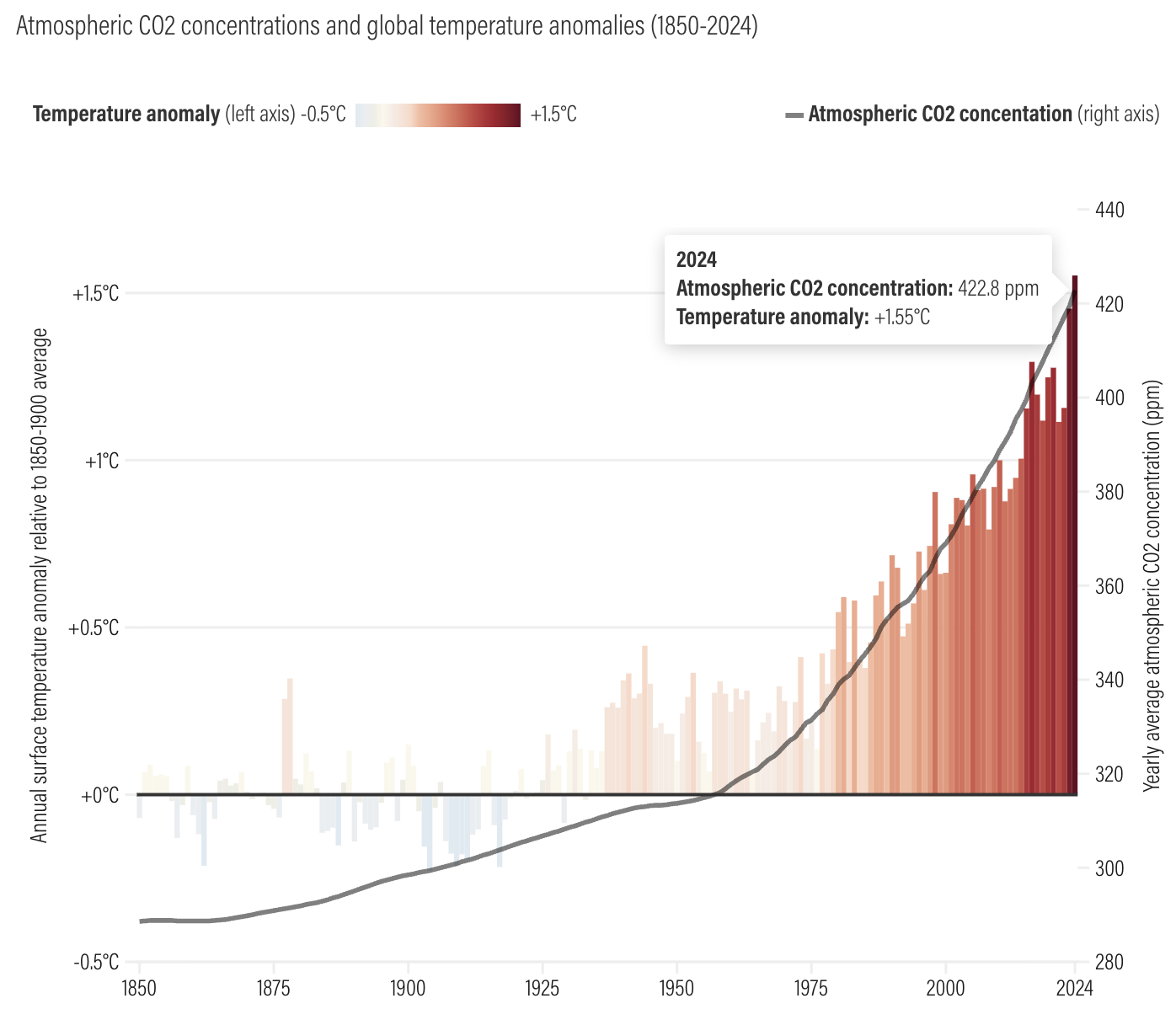
Rising global temperature shadows rising level of CO2
I know that you’ve all seen graphs similar to this one before and I know that association isn’t causation but I do think that this graph very clearly demonstrates the matching increases of CO2 in the atmosphere and rising temperatures over the last 170 years.