Environment: Industry’s carbon capture fantasy is climate action’s nightmare
March 29, 2026
Carbon capture and storage continues to fail for the climate but keeps fossil fuels and profits flowing. Renewables are taking over the US power system despite Trump.
Chevron’s Gorgon CCS project fails to deliver
There’s a widely held view among many highly respected climate scientists and energy experts that modelling consistently shows that even if global greenhouse gas emissions were to be reduced dramatically and rapidly, we’ll still be unable to keep global warming below 1.5oC and even 2oC without reducing the concentration of CO2 in the atmosphere by increasing the amount that is captured from the air and then permanently stored away somewhere.
There are several ways of achieving carbon removal but I’m going to crudely boil it down to three:
- Helping the plant world to increase the amount of CO2 that it naturally absorbs from the atmosphere to fuel photosynthesis – often referred to as a nature-based solution. This can be achieved by halting the destruction of forests, grasslands, mangrove forests, seagrass meadows, etc., and restoring many of those that have been destroyed or degraded.
- Using modern technologies to suck CO2 from the atmosphere and then permanently sequester it somewhere, for instance deep underground or in surface rocks or the oceans. This is referred to as Direct Air Capture (DAC).
- Capturing the CO2 that is produced at various industrial sites (e.g., coal-fired power stations – generating the myth of “clean coal”, natural gas processing facilities and cement works) before it actually enters the atmosphere. Although the term carbon capture and storage (CCS) can be used generically to refer to all three of these processes, it seems that it is most commonly used with specific reference to this third approach, which I focus on below.
(Just to be clear, I’m ignoring the use of CO2 that is captured from extracted oil and gas and injected back into the ground to increase the delivery of oil from underground. Globally, over 80 per cent of the CO2 captured and buried underground has been used for enhanced oil recovery – i.e., to increase oil extraction and the production of greenhouse gases. Somewhat unlikely to restrict global warming, I’d say.)
CCS has been discussed since the 1970s and has long been a favourite of the fossil fuel industry who keep telling everyone that once they’ve perfected the technology (always “just around the corner”) we’ll be able to keep burning coal, oil and gas with no worries until it’s all gone. It’s also a favourite of petrostate governments (including our national and some state and territory governments in Australia) who want to keep fossil fuel jobs and revenue flowing for as long as possible. There are just three small problems: no one’s been able to get CCS to work even moderately well at industrial scale, the energy demands are enormous and the costs are prohibitive.
Chevron’s Gorgon CCS project on Barrow Island, WA, was designed to capture the CO2 that comes up with natural gas extracted offshore and then permanently bury it over 2 kilometres underground in sandstone rocks. It began operations in August 2019 and is planned to operate for at least 40 years. It is the largest CCS project in the world.
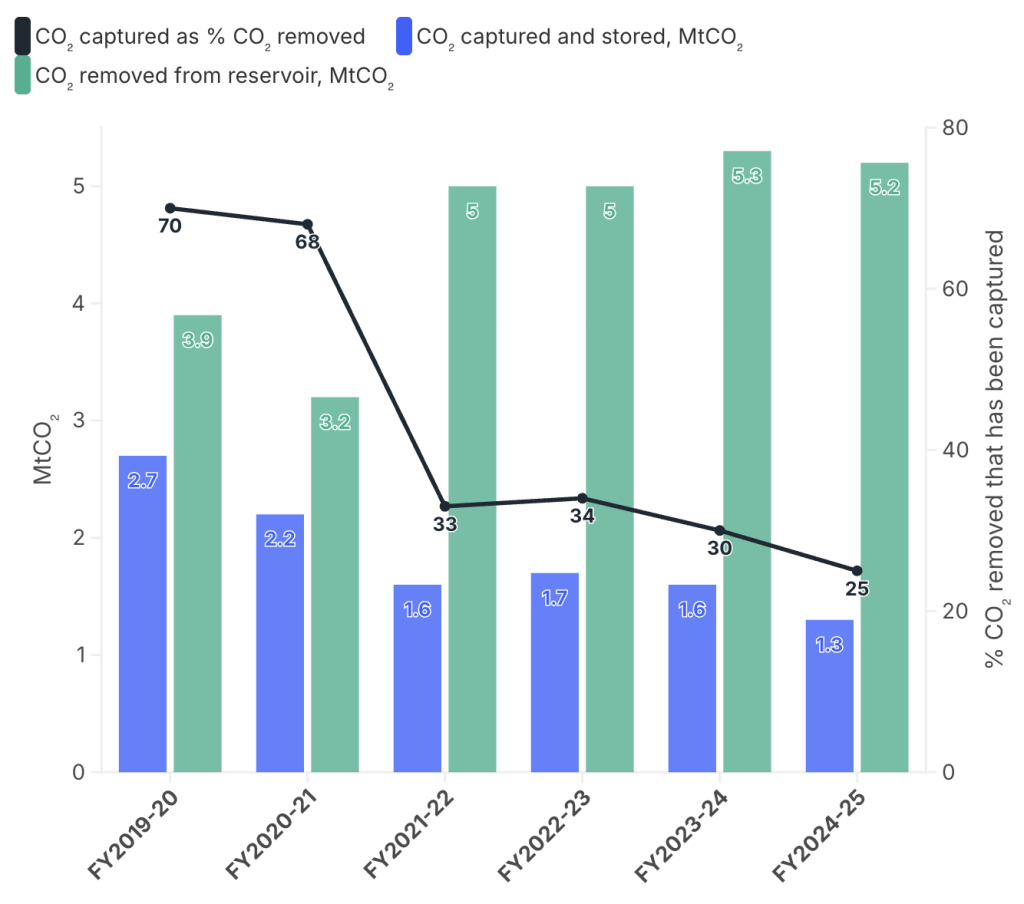
Unfortunately, things aren’t going well. As the histogram below demonstrates, in 2019-20 the project captured 2.7MtCO2 (blue columns), 70 per cent of the total CO2 in the gas extracted (green columns). That was the high-point. In 2024-25, the project captured 1.3MtCO2, 25 per cent of the total CO2 in the gas extracted. So in six years of operation the amount captured has halved and the percentage captured is a little over a third of the first year. Since the beginning, Gorgon’s CCS project has dumped more than twice as much CO2 into the air as it has stored underground.
Meanwhile, the cost has increased from $70/tCO2 captured at the beginning to $265/tCO2 now. This is vastly more expensive than most other ways of stopping CO2 entering the atmosphere or removing it once it’s there.
For every tonne of CO2 that Gorgon falls below its storage target, Chevron has to buy carbon offset credits. I described a few weeks ago how unreliable carbon offset schemes are at actually reducing emissions.
But wait, that’s not the half of it. All we are talking about here is the CO2 that comes up with the gas, not the CO2 released when the gas is burnt (Scope 3 emissions) which make up about 90 per cent of all the emissions related to natural gas.
Putting it all together, the Gorgon CCS project currently captures about 2.7 per cent of all the emissions produced by extracting, processing and burning their gas. The project was planned to capture 4MtCO2 per year but even were it to function as planned, it would still capture only 8 per cent of total emissions.
Gorgon’s failing, greenhouse gas emissions continue, the carbon offset credits are crap, Chevron’s laughing.
… and worldwide?
Almost every CCS project that was proposed between 1972 and 2017 never materialised into an operational facility. A few did and at the moment all the CCS projects around the world are designed to capture 11.6MtCO2 per year. Let’s generously assume that they are actually capturing 10Mt. That is 0.00026 per cent of current global fossil fuel-related emissions – i.e., of every 400,000 tonnes emitted, one tonne is captured. What a relief, humanity is safe!
Technology and cost aside, how much CO2 could be buried deep in the world’s sedimentary rock basins? Scientific estimates are in the range of 10,000-40,000GtCO2 – note this is gigatons now, not megatons. The industry is working on finding suitable rocks to store 14,000Gt, but sites for 13,400Gt of this remain undiscovered.
An analysis that has taken a harm prevention approach and considered the geological, environmental, human and policy risks associated with carbon storage reckons that the prudent planetary storage limit is more like 1,500GtCO2, 70 per cent of which would be onshore and 30 per cent offshore. The authors conclude that “current climate policies will not only overshoot the 1.5°C limit of the Paris Agreement by a wide margin but also may prohibit returning to it thereafter” (my emphasis).
Even the _British Medical Journal_ weighed in earlier this year. Having reminded readers of the continuing efforts of vested interests to stress the need for CCS to avoid prolonged overshoot beyond 1.5oC (pushers seemingly believing that needing something guarantees it will happen), the article referred to CCS as a “distracting, dangerous scam”. The authors highlighted CCS’s operational problems and pointed out that even if CCS were to eventually capture CO2 successfully, it would still totally fail to capture all the other dangerous air pollutants released when fossil fuels are burnt or used in other ways – pollutants that have serious consequences for human health.
Trump’s failing energy policies
From all the President’s bluster about the future being in fossil fuels and his efforts to halt the roll out of wind and solar power, you would think that the US is investing big in new coal and gas powered electricity-generating plants. But the US government’s own figures show a very different story. Solar (51 per cent), battery storage (28 per cent) and wind (14 per cent) account for 93 per cent of the planned 86 gigawatt (GW) increase in utility-scale electricity generating capacity in the US during 2026. The other 7 per cent will be natural gas.
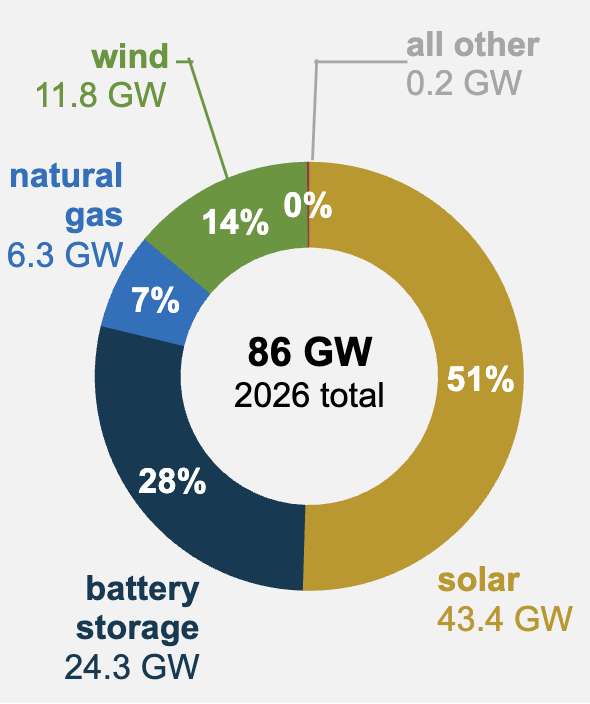
During 2026, the US plans to retire 11 GW of electricity generating capacity, coal making up 58 per cent and natural gas 42 per cent.
The rapid increase in liquefied natural gas (LNG) exports by the US will, however, continue. In 2015 LNG exports were zero. In 2025 they were approximately 15 billion cubic feet per day (Bcf/d) and in 2027 they are projected to be 18 Bcf/d.
Despite all Trump’s bombast on energy, he is failing domestically and his administrations have not been responsible for the US’s LNG export boom. Neither of these facts will change his rhetoric but they may provoke him to close the fake news-prone US Energy Information Administration.
Postscript: During the past week, France’s TotalEnergies, having sniffed the Presidential wind, has accepted an offer of A$1.3 billion from the Trump administration to relinquish its east coast offshore wind leases and invest the money in US’s LNG-export industry, most notably to build a new LNG processing facility and export terminal on the Texas Gulf Coast.
Good news about toxic rat killers
Two weeks ago, I expressed concern that the proposals of the Australian Pesticides and Veterinary Medicines Authority (APVMA) to limit the sale of Second Generation Anticoagulant Rodenticides (SGARs) were totally inadequate for stopping the unnecessary killing of native animals.
I’m delighted to inform you that the APVMA has listened to the expert evidence and public concern and has amended their proposals to require the registration of SGARs as Restricted Chemical Products (RCPs) and to suspend the public sale of all SGARs. These recommendations now need the approval of two ministers. BirdLife Australia is recommending that concerned individuals write to the ministers to encourage them to endorse the revised proposals as soon as possible.
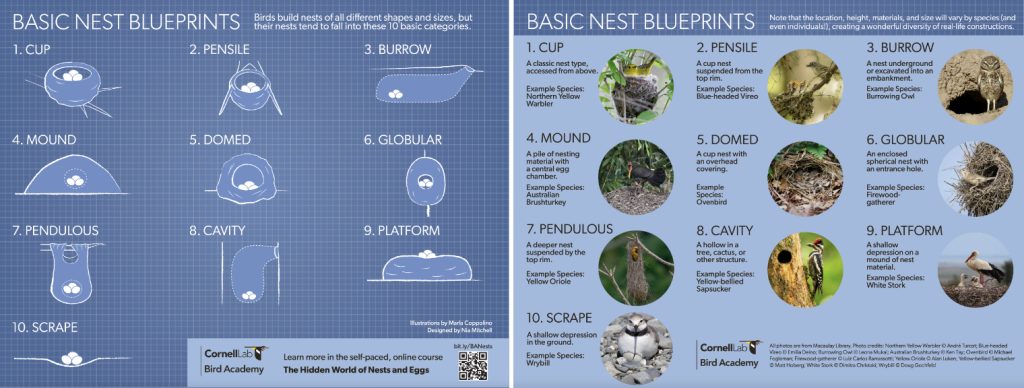
Ten types of birds’ nest
Who knew they came in so much variety? For how many of the blueprints can you name an Australian bird?