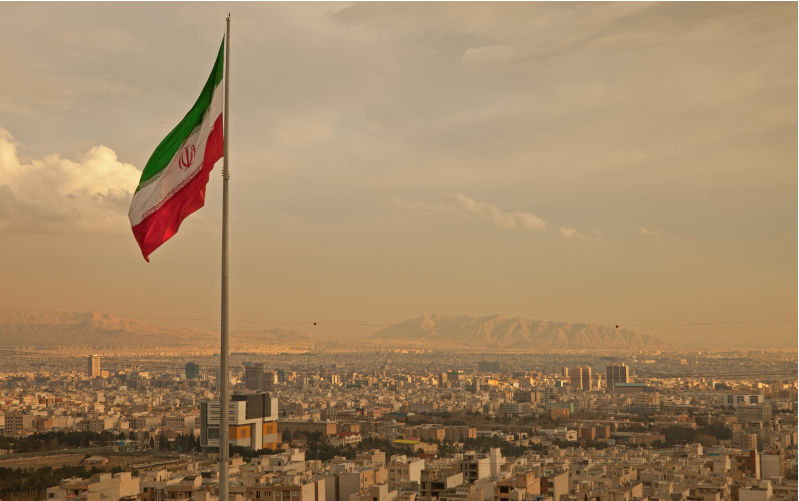
History shows Iran is not easily defeated
March 26, 2026
Iran’s long history shows a pattern of resistance and resilience against external powers.
The present conflict between Iran and its antagonists to its west has echoes of a very long stretch of time in which Iran’s enemies underestimated its resilience. Is this another such time?
The conflict means an increased number of Australian citizens are now familiar with the geography of Iran and the Strait of Hormuz, and we assume the same is true of Americans, who now find themselves inexplicably at war with a distant nation. But the history of Iran (Persia) demonstrates a long, dramatic and powerful position in its relations with its external rivals.
In the conflict that began on 28 February with Israel and the USA attacking Iran, a tragedy – another tragedy – is the apparent likelihood that the brave internal Iranian opposition to its ruling theocracy will not gain from the present situation. Having your nation bombed by Israel can bring its citizens together, if temporarily, rather than strengthen a domestic protest movement.
As Amin Saikal in Pearls and Irritations noted, the regime can remain strong. To progressive outsiders, it was another historic tragedy that liberal democratic reformers were unable to benefit from following the termination of the authoritarian reign of the Pahlavi family in 1976. Instead, it was the faction led by the Shia mullahs which came to acquire and quickly consolidate power, and the Pahlavi Shah went into his well-funded exile.
Memories are short: it is depressing that images of his son, the royal pretender Reza Pahlavi, feature in exile protests against the Iranian regime in Australian cities with their demands for his return to lead the country.
The Pahlavis came to power with a military coup in 1925 and assigned to themselves the old royal title ‘Shah’. Renowned for their authoritarian oppression and efficient secret police (the infamous SAVAK), they played their alliances with the west well. In Tehran I once listened unimpressed to the British ambassador taking the opportunity to praise the Shah and his regime. Earlier in 1953 Britain had joined with the USA in their coup against the elected prime minister Mohammad Mossadegh to ensure that a brief period of relative democracy, in which British control of Iranian oil was threatened with nationalisation, was brought to an end. Oil, always oil.
Iran’s natural environment would seem to contrast with its place in world history. The modern state is 85 per cent arid or semi-arid, and indeed a quarter is desert. But as Australia well knows it is what you have that makes you rich, not the less productive areas. (Half of Israel is comprised of the Negev desert).
The deep past of humanity owes more than a little to the western part of Iran, whose Zagros mountains provided the location for the first domestication of goats and sheep – as well as plant crops including wheat, barley, and lentils.
History presents many ironies. Israel and Iran may trade rockets and drones, while Jewish tradition celebrates mythical stories of David and Solomon, but the religious practices and features centred on Jerusalem, together with the edited books of the Tanakh (Old Testament), owe their origin to the Persians. For it was their ruler Cyrus ’the Great’, described in the Tanakh as a messiah, who conquered Mesopotamia and its possessions across Palestine and Syria in the mid-sixth century, allowing those exiles of Judean descent who wished to do so, to return and reestablish Jerusalem as a cult centre. A widespread Jewish diaspora remained, becoming in due course a major and significant part of the Roman Empire’s population.
The Achaemenid era of Persia which Cyrus founded became the largest and most powerful empire in the world. Remarkably the Persians were able to conquer Egypt in 525 BCE under Cyrus’ successor Cambyses who was named as pharaoh, and spread their influence through the country. (I briefly helped excavations of a Persian settlement in Egypt’s delta).
With conquests across all modern Türkiye they controlled the Greek communities of western Anatolia and on into the north of modern Greece. Their expansion south was famously halted by the battles of Marathon, Salamis, Plataea.
It was left to Alexander to defeat Persia and conquer their territory, with Alexander himself marrying the Persian king’s daughter. His successors in Persia, the family of Greek general Seleucus, ‘went native’ in seeking westward territory from their Persian base until blocked by Roman power.
Rome could not defeat their successor dynasty the Parthians, and the new Sasanian dynastic control of Persia from the third to seventh century CE found itself in constant battle with the forces of the ’new Rome’ – Byzantium.
Four centuries of conflicts between the Sasanians and Byzantines left neither the winner; it was the conquests by Muslim Arabs that changed the scene. Persia adapted the Arabic script and many Persians adopted Islam, but the Abbasid rulers of the Islamic world relied on Persia to gain power and relied significantly on Persians in their administration.
It was not western states but the Mongols from the north who destroyed Abbasid power in Persia, and thereafter competing local powers fought for their share of the territory of Persia and its neighbours. The Shia Safavids in the early sixteenth century united the large area of Iran and extended their control west to Mesopotamia (Iraq) until clashing with the Ottoman Turks to their west and conceding a treaty.
Their dynastic successor, the Qajars, clashed with the territorially ambitious Russia; the conflicts of the Russo-Persian wars continued from the 1650s, and only ended with a treaty in 1828, with Russia making some territorial gains. Thereafter, European powers sought to influence Persia diplomatically rather than by war and conflict, while Persia sought to exploit their differences.
Despite the optimism of the USA and its allies, Iran (Persia) has never been a land easy to defeat, crush or occupy. We may wish to see the rule of the mullahs over the Iranian people gone, but western rockets, western warships and western hubris seem unlikely to reduce Iran to a dependency of the west or dramatically change the balance of power with any permanence.