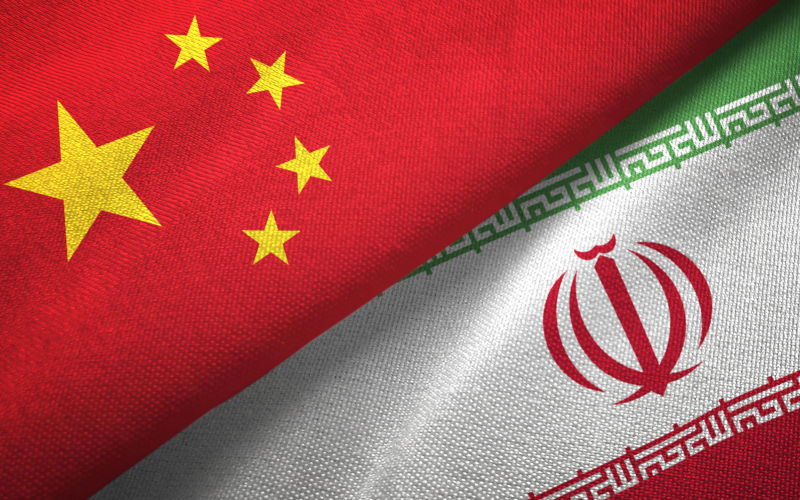
If China is Iran's 'most powerful ally,' then Australia must be China's
March 11, 2026
A media analysis asks why China hasn’t defended Iran. But the real puzzle is why anyone assumes Beijing has a military obligation to do so.
A recent ABC analysis piece on the Iran conflict opens with a question that sounds perfectly sensible: “ Why Iran’s most powerful ally is not coming to its aid?”
It is a tidy headline. It implies a mystery. It promises insight.
The only difficulty is that the premise – that China is Iran’s ally in any militarily meaningful sense – is never established, and the article never pauses to check.
China and Iran have a strategic partnership. They trade extensively in energy. They cooperate in forums such as the Shanghai Cooperation Organisation. These are real and significant relationships.
What they do not have is a mutual defence treaty, integrated military planning, or any alliance obligation resembling NATO’s Article 5.
In other words, China has no legal or structural commitment to defend Iran. None.
Treating Beijing’s non-intervention as a strategic puzzle therefore tells us less about Chinese foreign policy than about the assumptions built into the article.
There is a perfectly good word for a relationship built on extensive trade and political coordination without defence obligations. That word is usually called partner.
Occasionally, it is friend.
It is not, by any serious definition in international relations, “ally”.
When the entire analytical exercise rests on the question of why that “ally” failed to appear, the distinction becomes important.
Australia’s most trusted broadcaster, with a correspondent based in Beijing, might reasonably be expected to know that China’s foreign policy doctrine has emphasised non-intervention for decades.
This is not an obscure academic theory. In fact, it is one of the most frequently stated principles of Chinese diplomacy.
China did not militarily intervene in the Iraq War. It stayed out of the Syrian Civil War. It played no combat role in the Libyan Civil War. It has not fired a shot in Yemen.
Given that record, China declining to defend Iran militarily is not a geopolitical riddle.
It is simply China doing what China almost always does.
The article nevertheless treats this entirely predictable behaviour as if it requires elaborate explanation. The analysis therefore begins from an assumption — that allies fight wars for each other — and works backwards until China’s routine policy begins to look strategic.
That is an interesting way to construct an argument.
Here the framework encounters a small difficulty.
If large-scale trade and strategic cooperation are enough to make China Iran’s “most powerful ally”, then Australia’s relationship with China becomes rather awkward.
Australia, after all, also has a Comprehensive Strategic Partnership with China – a formal arrangement signed under the government of Tony Abbott. Last time I checked, it is still valid, and both parties are happy with it.
China is Australia’s largest trading partner by a considerable margin. It purchases Australian iron ore, coal and agricultural exports on a scale that underpins large sections of the Australian economy.
The volume of trade between Australia and China vastly exceeds anything that exists between Beijing and Tehran.
By the article’s own logic, this would make Australia one of China’s closest allies.
Yet somehow no ABC headline is asking why Australian container fleets have not joined Chinese roll-on roll-off ships in the Pacific. A “Freedom of Exportation” exercise against our sheriff’s global tariff, somewhere off the American west coast, should be our call of duty.
Western economic relationships are treated as ordinary commerce.
Similar relationships involving China and non-Western states suddenly become alliances with implied military obligations.
The framework works only if certain relationships are assumed to be normal while others require strategic explanation.
There is one question we might reasonably ask.
Do we actually want another war in the Middle East?
Australia joined the Iraq War alongside the United States on the basis of intelligence claims about weapons of mass destruction that were never ultimately found.
Hundreds of thousands of Iraqis died. Australian soldiers died. The central justification for the war collapsed.
This history is recent enough that most Australian journalists remember it.
That experience left a simple institutional lesson: when wars begin in the Middle East, the press should examine the premises carefully, rather than immediately asking what advantage another great power might gain from the conflict.
There is another possibility worth mentioning: that most countries would prefer the war not expand at all.
China certainly benefits from Middle East stability. So does Australia. Oil markets, global trade and shipping routes through the Strait of Hormuz make that preference fairly obvious.
On the narrow question of whether the region should descend into another prolonged war, the interests of Australia and China are not particularly opposed.
That might be a useful place for an ABC analysis to begin next time.
