In South Australia One Nation surges and the Liberals slide – but the shake-up has limits
March 25, 2026
A poor result for the Liberals and a surge for One Nation signal voter anger and fragmentation – but history suggests the insurgency may not last.
By no measure could it have been anything other than a disaster for the traditional conservative party that was already going into South Australia’s elections with a meagre record. Over two decades, the Liberals have been in power for a solitary term. Before ballots were cast for the May 21 poll, there were even psephologists and pundits willing to bet that no seats would be won. The party would cease to exist in the legislative chamber.
The extinction event did not materialise, though the return of five, possibly six seats, was a catastrophic result. This was ably assisted by hefty inroads made by the populist, right wing One Nation Party, which offered a more severe tonic of conservatism drawing strength from economic woes, the general cost of living, and anti-immigration. Votes that might have found themselves going to the centre-right Liberals were redirected in rumbling protest to One Nation, a party short on coherent policies but brimming with channels of grievance.
This led to two curious twists. The first was that the leader of the Liberals, Ashton Hurn, who often resembled a sharp Human Resources manager in search of fires to dampen, could advertise herself as having prevented the extinguishing of her party. She had, in effect, won something in not losing everything. The mantra seemed to be: Some of us made it. The pollster and director of the RedBridge Group Australia, Kos Samaras, politely called this “displacement”.
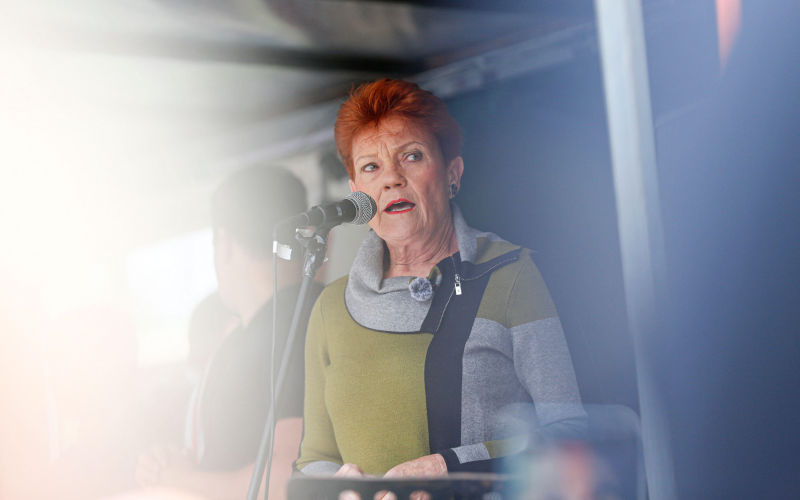
The second was how the One Nation results were to be read. The assessments by analysts and the press stable were almost hysterical with calls of an “earthquake” when tremor might have been more appropriate. The party’s national leader was certainly keen to press the seismic nature of her party’s gains. “Guess what, mate,” Pauline Hanson said referring to the returned Premier Peter Malinauskas in an address to supporters, “I’m going to leave you some landmines.”
Certainly, the rise of the party in a state that had never much cared for them was a mark of change. This suggests that in other states and federally, the Liberals are in marked trouble. With 30 per cent of the vote counted on the night, One Nation was netting a primary vote of 21.1%, placing the Liberals in third place. (That vote would rise to 22 per cent, with the Liberals languishing at 19 per cent.) But this was hardly surprising, seeing as the Liberals, as a conservative force, have all but ceased to be relevant. Parties that always talk about a “return to values” often teeter on the edge of oblivion. Bickering with the Nationals, their coalition partner, has also presented a disunited front.
The demographic profile behind One Nation voters was instructive. Samaras captures it rather well: “outer-suburban communities under mortgage and rental stress, lower formal education attainment, industrial and logistics employment belts, and regional towns carrying deep anti-establishment sentiment.” Where One Nation surged, education levels tended to be lower.
While the Liberals were being banished to third and in some cases fourth position across a brace of seats, the One Nation push did not see an avalanche of parliamentary returns. The intrinsic nature of preferential, as opposed to proportional voting, made sure of that. At this point, two gains are likely: the Yorke Peninsula seat of Narungga and Hammond, around Murray Bridge. The upper house saw at least two One Nation successes, including the former Liberal and dyed-blue conservative Cory Bernardi, he of such enlightened views as same-sex marriage leading, eventually, to the legalisation of bestiality.
The victorious Labor Party of Malinauskas, despite winning at least 33 seats of the 47 strong lower chamber, was facing its own subplot. It had clearly convinced educated middle-class voters in Liberal seats such as Unley that they were the party of choice, while working class areas told a different story. In Elizabeth, the swing to One Nation exceeded 20 per cent; Labor only held it on preferences. The seats of Taylor, Port Adelaide, and Light, all vulnerable to the impression that immigration might be exclusively feeding the cost of living and a crisis in national security, saw a similar tale.
The premier could count himself fortunate that the centre-left vote had remained firm. The Greens failed to capture Labor seats. Overall, however, the Labor vote had hardly galloped ahead. Instead, its primary vote remained steady at 39 per cent. As former Nationals leader David Littleproud observed, “The reality is that no-one is sitting there with 40 or 50 per cent of the primary vote in any of the polling.” Voters, both at the state and federal level, were “angry – and if you look at where the polls are federally, they don’t like any of us.”
The One Nation performance in South Australia is certainly impossible to avoid. But at no stage in the party’s history has it demonstrated the organisational heft and presence of mind to last beyond blustery electoral cycles. The famous 1998 Queensland election saw impressive returns for the Orangeade army: the election of 11 One Nation members to parliament. Equally significant were the resignations of those same members over the next 18 months, eliminating the party as an oppositional force. While the addition of seasoned campaigners formerly of the major parties – Bernardi, for instance, and Barnaby Joyce, former Nationals leader – may add discipline and form, the internal flicker of difficulties are unlikely to go away. And that difficulty, as much as anything else, is the party’s national leader. Having left a few landmines of her own, the party will have to be careful not to tread on them.