A mosque, a meal and the strength of Australian community
March 12, 2026
A shared Ramadan meal in Canberra shows how everyday encounters and neighbourly goodwill quietly build social cohesion in multicultural Australia.
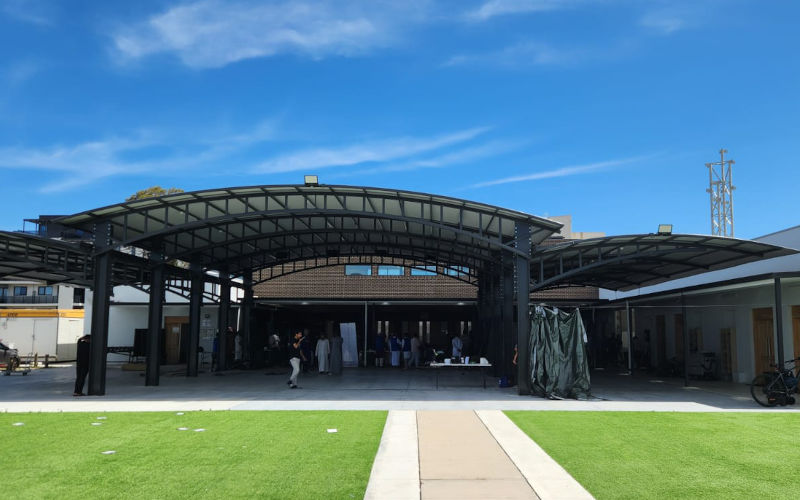
As the sun set over North Canberra last weekend, more than 500 people gathered on the carpeted floor of Gungahlin Mosque to break the Ramadan fast together.
Dates were passed from hand to hand. Water glasses were lifted. The quiet murmur of conversation filled the room.
When the fast was broken, Muslims, Christians, Jews, Hindus and Buddhists sat shoulder to shoulder and ate together.
For me, that moment was not just another community iftar. It was deeply personal.
Twenty five years ago, when Muslim families first began settling in Gungahlin, there was no mosque in North Canberra. During Ramadan we drove across the lake to Canberra Mosque in Yarralumla for the nightly prayers that often finished close to midnight. I still remember parents carrying sleeping children back to cars in the cold. Elderly uncles leaned on walking sticks after long evenings of worship.
In 2001, a small group of us gathered in a living room and formed what became the Canberra Muslim Community. We were public servants, teachers, IT professionals, doctors, engineers and small business owners. We were not developers or political activists. We were parents who wanted our children to grow up confident in both their faith and their Australian identity.
It took 16 years to turn that hope into bricks and mortar with the opening of the Gungahlin Mosque in 2017.
There were planning complexities, financial hurdles and court challenges. A small but vocal fringe group attempted to frame the Gungahlin mosque project as something alien and threatening. Anti immigrant slogans surfaced online and occasionally at public meetings. At times the language was harsh. At times it was hurtful.
Those were difficult days.
But what I remember most clearly is something else. Quiet support. Neighbours who said, we may not share your faith but you have every right to build your place of worship. Local residents who wrote submissions defending religious freedom. Ordinary Canberrans who understood that equality before the law is not negotiable.
That steady support carried us through.
When the Gungahlin mosque finally opened in 2017, I felt relief, gratitude and pride, not only as a Muslim but as an Australian. The building was not a symbol of separation. It was a declaration of belonging.
From the beginning, we made a deliberate choice. It would open outward.
We host school visits, community tours and interfaith gatherings. During Ramadan, our weekend iftars are open invitations. You do not need to be Muslim to attend. You simply need goodwill.
Last week, a local Christian pastor attending for the first time told me that sharing a meal like this dissolves assumptions and reveals how much people of faith have in common.
A rabbi who joined us observed that strong communities are built through encounter and that sitting together sends a powerful message about who we are as Australians.
Their words mattered. But what mattered even more was the ordinary ease in the room. Children played between families. Conversations moved easily from faith to cricket, backyard barbecues, football and local schools. We may not always agree on the cricket score or which team deserves our loyalty, but the laughter rose easily and naturally.
This is the Australia I know.
It is not the caricature sometimes painted by those who rely on division as a political device. It is not the dystopian narrative pushed by fringe voices who trade in suspicion of migrants and Muslims alike. Those slogans may generate noise. They do not reflect lived reality in suburbs like Gungahlin.
Here, integration is not an abstract policy term. It is neighbours sharing food. It is parents volunteering at local schools, at rotary clubs, at the cleaning Australia Day events. It is small businesses serving diverse customers. It is friendships that quietly disprove prejudice.
Australia’s Muslim community now approaches one million people. In Canberra, more than 20,000 Muslims live across the city, many in the north. We are doctors, engineers, tradies, teachers, public servants and entrepreneurs. We barrack for the same teams. We worry about the same mortgage rates. We stand in the same supermarket queues.
Gungahlin Mosque now sits unremarkably among townhouses, church, salvo shops, clubs, schools and town centres. That normality is significant. It reflects a city that has grown more diverse and more confident in its understanding of identity and belonging.
When I enter the mosque today, I see more than walls and carpet. I see perseverance through challenge. I see young families who no longer have to drive across the lake to Canberra Mosque for nightly prayers. I see neighbours who once had questions and now have friendships.
Social cohesion is often spoken about in policy documents and parliamentary speeches. In Gungahlin, it is practised on the floor of a mosque, over shared plates of food.