Refreshing the city – rethinking our greatest invention
March 17, 2026
Cities have shaped human life, yet rapid growth, changing work patterns and new expectations about community are forcing a rethink of how they function.
Perhaps humankind’s greatest invention is the city. Evolving in its multitude of forms, geographies and types the city has become an intrinsic part of our daily lives for over six thousand years.
We are intimately surrounded by the cities we live in though apart from a handful of urban focused professional thinkers we spend very little of our collective energies contemplating how they are made, maintained and evolve.
Perhaps our greatest invention needs a refresh.
Worldwide, cities are growing both in population numbers and with increasing densities. These increases put pressure on the overall systems of the city including transportation, provision of living environments and public amenity. Coupled with this the evolving nature of work and the continued advancement in technology mean that we can carry out our collective daily activities in never-before-seen flexible modes.
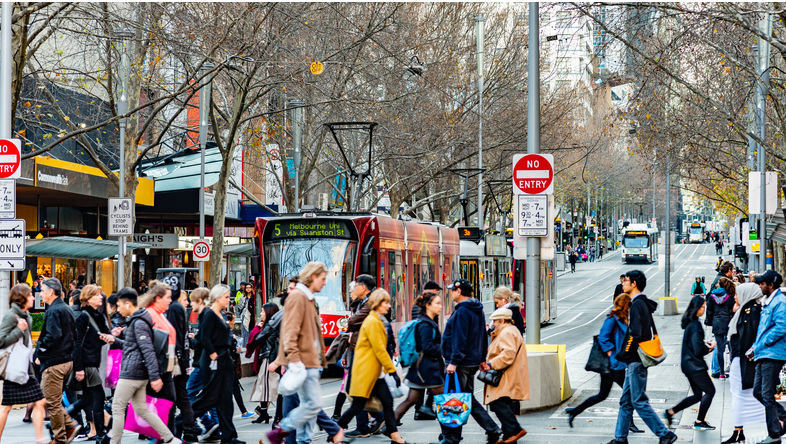
Better public transport systems are expected by communities to carry us between our working, living and recreational pursuits. The advent and embracement of the private motor car in the 20th century and early 21st century has shaped our cities worldwide. It has not always been for the best – creating isolated dormitory suburbs in many cases. In many cities good quality public transport often comprising rail, light and bus systems are currently redressing this isolation with better, faster, and safer connections.
Transport systems are now expected not to divide a community but rather to become true and meaningful connector of communities. This includes either the raising or lowering of traditional corridors to allow a free flow of communities across linear connections often including much needed access to publicly used spaces.
The creation of enjoyable communities is a cornerstone of enjoyable city living. Central to this is the imprint of public place making. As our societies evolve, we are seeing various trends embraced to better our communities. Issues such as gender equity, safety of spaces and a consciousness of walkability and wellness are now desired in our public life. The retention and creation of green spaces allowing our cities and communities respite and character should be an integral part of the way we design and create. The impact on our well being and collective psyches of quality green spaces ranging from riparian forms to pocket parks is profound.
The idea of polycentric cities speaks to the quality of life of the inhabitants of a city. The diversification of centres creating legible communities reduces travel times between work, living and social activities thus allowing citizens to focus on aspects of progress rather than mere survival.
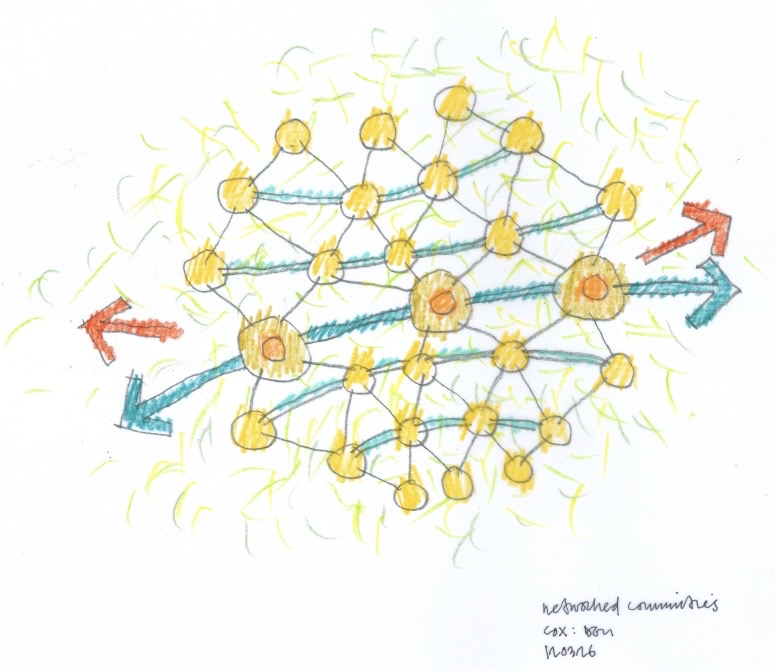
Cities as networked connected communities allow us to celebrate vibrancy, diversity, multiculturalism for the individual and our various collectives.
Having our greatest invention refreshed as networked communities seems an idea worthy of contemplation.