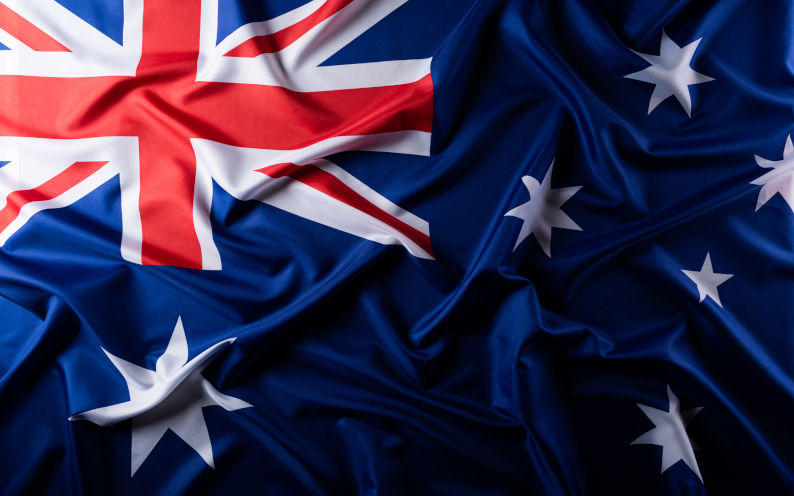
Patriotism or politics – the fight over the flag
March 25, 2026
As populism rises, the Australian flag is being used as a political tool – defining patriotism and drawing lines around national identity.
With the upsurge of populism in Australia there is also a renewed focus on the flag. In his victory speech on Saturday night, South Australian Premier Peter Malinauskas talked about Henry Lawson and patriotism: “We can and should wave our flag with pride”. But like Lawson, and unlike One Nation, said patriotism meant duty to a stranger and that diversity was our greatest strength.
In the run up to the election and with the surge in One Nation support, Malinauskas had said the concerns of outer-suburban and regional Australians must be a priority and “ I don’t think people putting the Australian flag on the aerial of their car should be looked at with disdain.”
In Canberra, new Liberal Leader Angus Taylor and new Nationals Leader Senator Matt Canavan have given their first press conferences in front of an array of ‘Aussie’ flags. No Aboriginal or Torres Strait Islander flags in sight – something welcomed by their Facebook followers.
Last year Senator Nampijinpa Price and Senator Pauline Hanson both wore Australian flags into the Senate on National Flag Day. Both have called for the burning of the Australian flag to be criminalised.
Green Senator Nick McKim complained about Senator Price wrapping herself in the flag and asked whether it contravened the Senate Standing Order that prevented props.
In response Senator Price said: “You don’t love this country like I do, certainly not like most Australians do.”
Populists now use devotion to the Australian flag as a test of patriotism (once it might have been the Union Jack). They accuse those who raise questions about Australian symbols as being elites with contempt for the values of ordinary people.
In 2004 then Opposition Leader, Peter Dutton called for patriotic Australians to boycott Woolworths for failing to stock Australia Day merchandise (such as hats or thongs with the Australian flag on them). He said Woolworths was “ spitting in the face of ordinary Australians”.
In the digital era the role of visual images in political communication has never been more important. Australia has no restriction on the use of the flag by political parties, unlike, for example, France where a logo incorporating the French flag cannot be registered and the use of the national emblem in electoral posters is prohibited.
The attitude of the Labor Party to the flag has varied over time. From 1979 it used a logo with a waving Australian flag, prominently displaying the canton with the Union Jack. It was a sign of the times. In the same year, design entrants for the new parliament house in Canberra were made aware that the flag was important and the winning entrant had a mast for the flag rising 81 metres above the building.
In 1995, when Paul Keating was Prime Minister, the Labor logo dropped the Union Jack but retained the Southern Cross from the flag, as did subsequent versions. Keating had made clear his dislike of the presence of the Union Jack in the Australian flag. In the same year the Flag Act was amended to include Aboriginal and the Torres Strait Islander flags as flags of Australia. Under the Albanese Government the Aboriginal and Torres Strait Islander flags have been positioned for the first time alongside the Australian national flag in the House of Representatives and Senate chambers.
In 1977 the Liberal Party adopted the logo it still uses today, with the corner block of the L consisting of the Australian flag. In general, it is parties of the right that present themselves as guardians of national symbols as well as of national sovereignty. In 1996 the Howard Government inaugurated the annual celebration of National Flag Day (3 September) and two years later amended the Flag Act to ensure the flag could only be changed through a public vote.
This conservative guardianship of the flag was again underlined in 2004 when the Howard Government made it a condition of federal funding that schools had a functioning flagpole and flew the Australian flag. The following year funding was announced for the flagpoles, on the condition that a representative of the government was invited to the flag unveiling and a photo appeared in the school newsletter. Allegedly some MPs failed to turn up meaning schools couldn’t be reimbursed for the flagpole.
The Nationals no longer include the flag in their logo, although they do use the national colours of green and gold and have the slogan ‘for Regional Australia’. They use the Australian flag for campaigning, as in their campaign against the Voice. In a previous referendum they used a logo with an Australian flag superimposed on a stylised image of Australia while proclaiming loyalty to the Australian flag and the constitutional monarchy.
In the run up to the 2025 Federal election the Liberal Party was making much of the flag issue. Shadow Minister Senator James Paterson pursued the question of why flags had been removed from photos of senior Home Affairs officials. In this instance he was concerned about removal of all three flags but shortly afterwards Liberal Leader Peter Dutton told Sky News that if elected to government he would not stand next to Indigenous flags. He said that standing next to multiple flags (as Prime Minister Albanese does) was "dividing the nation unnecessarily".
The new Liberal and Nationals leaders, like their backers on Sky News and Advance, are keen to campaign on symbols of national identity. The flag is one way to recruit patriotic emotion. However the future of the Coalition depends on more than conjuring national symbols; back to basics is needed both on policy and strategy.