Power prices set to fall as renewables ease pressure on the grid
March 23, 2026
Electricity prices are set to fall across Australia’s main grid, with the regulator pointing to increased renewable energy and storage as key drivers – though global risks remain.
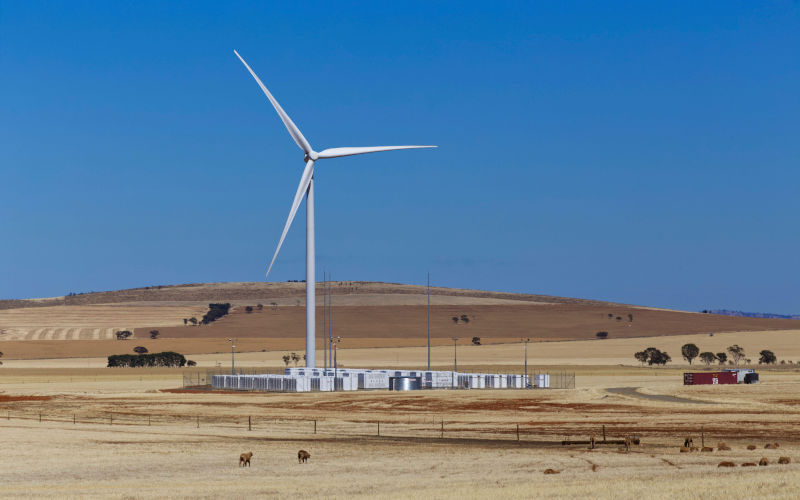
The cost of electricity looks set to fall for households and businesses in all of Australia’s National Electricity Market (NEM) states, the regulator has advised, as wholesale power prices are eased down by reduced volatility and bigger contributions from wind farms and big batteries.
In a draft decision published on Thursday afternoon, the Australian Energy Regulator (AER) is proposing reductions in the Default Market Offer (DMO) in New South Wales, southeast Queensland and South Australia.
If adopted, the AER says DMO annual prices for residential customers would fall by between 1.3 per cent and 10.1 per cent, while small business prices would decrease by between 7.6 per cent and 21.2 per cent, depending on the region.
The proposed power price cuts – a final determination will be made in May – suggest a welcome downward pressure on grid electricity prices amid a fresh flurry of rate rises and as the cost of petrol and gas head in the opposite direction fuelled by the threat of a new global oil crisis.
Just last week the Victorian pricing regulator made a similar call for that state, flagging cuts in all five of the state’s electricity distribution zones that could cut household energy bills by nearly $50 in the coming financial year and by around $170 a year for small businesses.
For the AER states, this week’s draft determination also introduces the Solar Sharer Offer, the federal government’s new opt-in electricity plan that includes three hours of free usage during the middle of the day to help households take advantage of abundant solar – and to help the grid to soak up excess energy.
The AER says the free usage periods are proposed to be 11am to 2pm in New South Wales and southeast Queensland (local time), and 12pm to 3pm in South Australia (local time).
All told, the broad promise is that households and businesses are set for some welcome relief as a growing share of renewables and storage put downward pressure on wholesale electricity prices.
“The reductions reflect easing costs across parts of the electricity supply chain, particularly wholesale energy where we’ve seen falling electricity contract prices, reduced spot price volatility, and increased output from wind and battery generation,” AER chair Clare Savage said on Thursday.
“Retailers have also reported lower retail operating costs, while reductions in the cost of environmental schemes have also had a positive impact on reducing prices.”
But Savage adds a less promising postscript that the AER is keeping a close eye on global energy market developments tied to the latest conflict in the Middle East.
“While Australia continues to invest in new sources of renewable energy, our electricity system remains significantly exposed to the international price of fossil fuels such as coal and gas,” Savage adds.
“The wholesale cost of electricity, included in this draft decision, was calculated prior to the commencement of the current conflict in the Middle East. Since the conflict began, we have seen increases in the price of forward wholesale electricity contracts for 2026-27.
“However, even at these recent elevated levels, these forward contracts are still currently lower than last year, and well below the levels seen during the 2022 energy market events.
“We will continue to monitor this closely before making our final determination of the Default Market Offer in May.”
Republished from Renew Economy, 20 March 2026
