War on Iran signals urgent need for Australia to end risky imported oil dependency
March 5, 2026
The widening conflict in the Gulf has exposed Australia’s extreme reliance on imported oil. With minimal fuel reserves and a $12 billion annual diesel subsidy to mining, energy security has become a national security emergency.
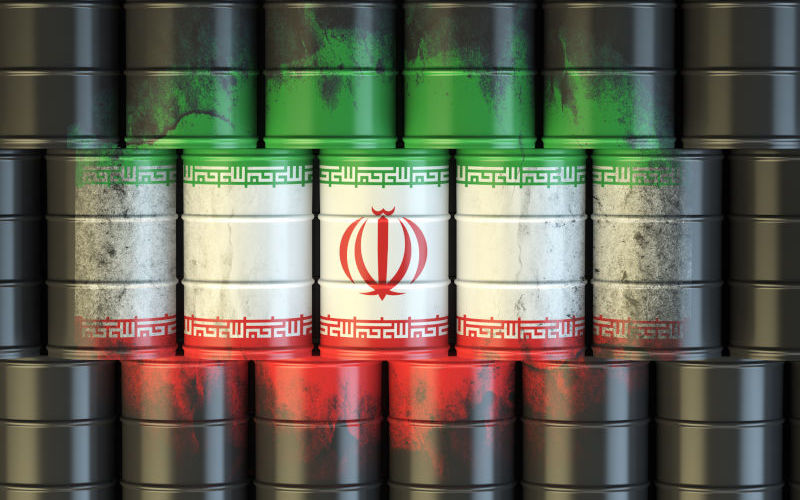
The last several days have underscored the existential risk Australia runs by remaining addicted to imported fossil fuels. On 28 February, the US and Israel launched a preemptive war against Iran. Iranian Supreme Leader Ayatollah Ali Khamenei was killed. The conflict is now widening regionally, impacting energy markets worldwide. Yet the Australian government provides a $12 billion annual subsidy to keep us addicted to imported diesel, undermining our clean energy-powered Future Made In Australia, energy security and decarbonisation objectives.
Tanker traffic in the world’s most critical energy chokepoint, the Strait of Hormuz, through which 20 per cent of the world’s oil supply is transported, has effectively halted. Brent crude surged as much as 13 per cent intraday to $82 a barrel. UBS analysts warn Brent could hit US$120 a barrel if the Strait remains blocked; and Barclays estimates a three-to-four week squeeze could push prices above US$100. On Monday, Qatar’s national LNG company, 20 per cent of global supply, halted production and Saudi Arabia shut its biggest domestic oil refinery after a drone strike.
Australia, watching all of this unfold in real time, has just 25 days of diesel reserves and 29 days of petrol coming into 2026. Australia imports over 90 per cent of its refined oil products – diesel, petrol, aviation fuel – as well as crude oil feedstocks. While our largest direct supplier is Singapore, those supply chains trace back through primary fuel extracted across the Gulf. We have essentially no buffer against what is unfolding.
Further, 20 years ago, Australia had eight oil refineries. Six of these have now closed, and the remaining two are increasingly dependent on imported crude oil.
From 2020 to 2023, average oil import prices into Australia rose 244 per cent – from COVID lows to the peak exacerbated by Russia’s invasion of Ukraine. Those prices smashed every household, every business, every freight operator. The price of energy was elevated to the central issue of the 2025 federal election. The cost of living crisis that has been plaguing Australians is, in no small part, an imported fossil fuel crisis.
The lesson is clear: fossil fuels are inherently volatile and expensive, and our dependence on oil imports puts us at serious risk. The Ukraine invasion, the June 2025 Israel-Iran 12-day war, and now this full-scale assault on Iran deliver the same message, again.
We need to decarbonise and electrify our economy, starting with the sectors most exposed and vulnerable to global fuel supply shocks. That means accelerating renewable energy deployment and grid-firming capacity, strong fuel efficiency standards for passenger vehicles, and EV incentives to replace our petrol-dependent fleet. But above all, it means tackling the single largest consumer of imported diesel in the country: our mining industry.
The technology to decarbonise heavy mining equipment exists today. In December 2025, 54 per cent of all heavy-duty trucks sold in China were new energy vehicles. Even as mining giant Rio Tinto and BHP claim electrification of mining haulage won’t be viable until next decade, their largest customer, China, is deploying this technology at scale right now. Fortescue, led by CEO Dino Otranto, is the outlier acting responsibly – partnering with XCMG to deploy world-leading electric mining equipment in Australia, trialling battery-electric locomotives in the Pilbara and rolling out wind and solar at scale to power its operations. Fortescue is proving the economics work.
Rio Tinto’s behaviour, by contrast, is appallingly myopic. In a letter to Treasurer Jim Chalmers obtained under FOI, Rio’s CEO of Australia, Kellie Parker, urged the government to leave the refund untouched, arguing the pathways to decarbonise mining were “technologically immature” and that cost-effective low-emissions solutions are unavailable at scale. This from the CEO of a company that posted US$25bn EBITDA (earnings before interest, taxes, depreciation and amortisation) in calendar year 2025, whose largest customer by a country mile is mass-producing the very technology she claims doesn’t exist. Rubbish – and a pathetic dereliction of responsibility.
Compounding this is that Rio Tinto and other big miners are the major beneficiaries of the federal Fuel Tax Credit Scheme, which refunds the 52.6 cents per litre excise payable on petrol and diesel. This $12bn annual subsidy is a top-20 Budget expense, drawing more from federal revenues than the air force, and twice the budget for foreign aid. Since the latest iteration of the scheme in 2006, the Australian economy will be deprived of an astonishing $185 billion in tax receipts by 2030.
In 2023-24 alone, CEF estimates BHP was refunded $627 million and Rio $416 million – over a billion dollars in one year ripped from health, education, childcare and aged services by two of the world’s most profitable miners, as we bankroll their imported fossil fuel usage.
The Chair of the Climate Change Authority has called out the insanity of this arrangement. CEF has consistently argued for $50 million annual cap per company on big miners’ diesel fuel tax refunds, with any amount above that redirected into decarbonisation of their mining operations – electrified heavy haulage, renewable energy, grid infrastructure – or foregone. Fortescue supports this and is acting on it, committing US$900-1,200 million capital expenditure for electrification and decarbonisation in the Pilbara for 2025/26. BHP and Rio refuse, despite their stated decarbonisation commitments, even as mine EV technologies rapidly advance.
The Minerals Council of Australia continues to run a deceitful disinformation campaign – that capping the rebate would devastate farming, tourism and trucking. The facts are that not one farmer, tourist operator or trucking business would be affected. Only the 15 largest mining sector claimants would be impacted by a $50 million per company annual cap, and would remain unaffected if they chose to use the refund to invest in their clean energy future.
The US-Israel war on Iran is the clearest signal yet that Australia’s dependence on imported oil is a national security emergency. This cannot be resolved without reform of the Fuel Tax Credit Scheme – the subsidy that incentivises big miners to keep guzzling imported diesel and acts as a massive headwind to change.
Australia is sleepwalking into the current and next crisis with 25 days of diesel in reserves while handing out billions to underwrite miners’ diesel habit. Our economic resilience, energy security, and energy independence – inextricable from our national security – depend on reforming this idiotic and unsustainable subsidy now.