Sanctioned Rubio to take part in Trump’s China trip
March 17, 2026
The US secretary of state, previously sanctioned by Beijing, is expected to accompany Donald Trump on a visit to China as both sides prepare for high-level talks.
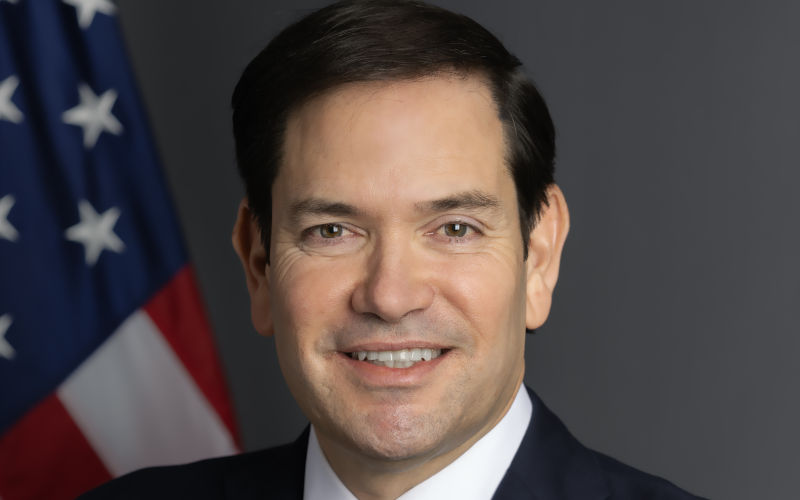
US Secretary of State Marco Rubio is expected to visit China with President Donald Trump later this month after appearing to show little interest in previous invitations from Beijing, the South China Morning Post has learned.
According to sources, speaking on condition of anonymity because they were not authorised to comment publicly on the matter, Rubio had been invited to visit but had not been receptive until recently.
Rubio’s attendance could smooth over some of the problems surrounding Trump’s visit to China. Frustration has been mounting in Beijing because of the lack of preparation for the trip.
Rubio is the first sitting secretary of state to be sanctioned by China.
The penalties were imposed in 2020 when he was still a senator – once in retaliation for US sanctions on Chinese officials over their alleged mistreatment of the Uygur ethnic minority group, and the second time in response to another round targeting mainland and Hong Kong officials in the wake of the 2019 protests.
China has yet to clarify whether the sanctions would be waived, but when asked about the matter in January last year, the foreign ministry said it was necessary to maintain high-level communication between Chinese and American officials.
Asked last month whether China would lift the sanctions so he could make the trip with Trump, Rubio replied: “We’ll find out when I go.”
Sources told the SCMP that one reason Rubio may have been reluctant to travel with Trump was that trade was the main item on the agenda, an area where Treasury Secretary Scott Bessent has taken the lead.
Bessent is scheduled to meet Chinese Vice-Premier He Lifeng in Paris later this week for a fresh round of trade talks, which are expected to focus on potential deliverables ahead of Trump’s meeting with his Chinese counterpart Xi Jinping in Beijing.
The sources said that Rubio’s long history as a hardliner on China was another reason for his hesitation about the visit because he was probably reluctant to be seen as softening his stance.
After his election to the US Senate in 2010, Rubio earned a reputation for his hawkish stance towards US adversaries – including China, Iran and Cuba – characterising Beijing as a threat to American interests.
He was one of the most outspoken senators on a wide range of issues that Beijing considers sensitive, including the Xinjiang Uygur autonomous region, Taiwan and Hong Kong.
Beijing sees Taiwan as part of China and has not renounced the use of force to reunite it with the mainland.
Most countries, including the United States, do not recognise Taiwan as an independent state, but Washington is opposed to any attempt to take the island by force and is committed to supplying it with weapons for its defence.
Rubio appears to have softened some of his views to align with Trump’s approach to international affairs. Despite the tariffs he imposed on China earlier in his presidency, Trump now appears keen to reach a deal with Beijing.
The sources said Rubio would not want to skip the Trump-Xi summit given its global importance.
Beijing has not confirmed that the trip will happen but the White House said it would take place between March 31 and April 2.
Assuming it does happen, Trump will be the first US president to visit China since his last trip in 2017.
Beijing did not specify what consequences Rubio would face as a result of the 2020 sanctions, but such measures typically prohibit targeted officials and their relatives from entering China.
The measures had prompted questions about whether Rubio – now also the US acting national security adviser – would be allowed on Chinese soil.
Da Wei, director of Tsinghua University’s Centre for International Security and Strategy, said it would be a “good thing” if Rubio visited with Trump.
“There are many issues between China and the US that need to be discussed, especially on matters beyond trade. Those would require Rubio or other officials appointed by Trump to engage with China,” he said.
Da said it was clear which officials were handling economic and trade discussions between the world’s two largest economies but that was not the case for diplomatic and strategic matters.
Rubio has met Chinese Foreign Minister Wang Yi twice since taking on his current role. On both occasions the talks took place on the sidelines of conferences held outside China, including their most recent meeting at the Munich Security Conference last month.
Ali Wyne, a senior research and advocacy adviser at the International Crisis Group, said Rubio wielded “inordinate policymaking influence” given his twin roles as secretary of state and national security adviser.
“Chinese officials would welcome the opportunity to convey that [Rubio] had accepted an invitation to Beijing that he would likely have taken great pride in rejecting as a sanctioned senator – and that, on account of political expediency, he had lent his imprimatur to a course of China policy that he would likely have denounced before assuming his present roles,” he said.
Republished from the South China Morning Post, 13 March 2026